

Most people understand SEO theory but struggle to translate those ideas into actual results. You need real-world proof to see what truly moves the needle. Modern search now extends beyond standard Google rankings into AI Overviews and complex answer engines. At Memorable Design, we combine technical precision, UX, and conversion-focused strategy to build sustainable organic growth. This guide delivers 25 real SEO examples, SEO case studies, ranking pages examples, and SEO templates to help you master search.
Key Takeaways
-
Learn how to replicate SEO case studies to drive measurable traffic growth.
-
Master the art of creating ranking pages examples that dominate search results.
-
Implement ready-to-use SEO templates to streamline your technical and content workflows.
-
Optimize your site for AI search and generative engines to capture modern traffic.
What Are SEO Examples and Why Do They Matter?
SEO examples function as your personal blueprints for digital success. You might know that page speed matters, but seeing a site improve its core metrics and watch its traffic climb by 30% makes the lesson stick. These examples remove the mystery from search algorithms. They show you the specific levers that industry leaders pull to win. You move from guessing to using a proven, data-backed process.
Why Google rewards practical SEO over outdated tactics
Google works to provide the best possible experience for every user. The current algorithm prioritizes websites that solve problems with speed and accuracy. Outdated tricks like keyword stuffing or low-quality link building do not work because they offer zero value. You must focus on intent. When you answer a user query thoroughly, Google rewards you with higher visibility. Practical SEO aligns your business goals with the genuine needs of your audience.
How SEO examples improve rankings, traffic, and conversions
High rankings do not matter if you do not turn visitors into customers. Real SEO examples show you the clear path from traffic to revenue.
-
Targeted Keyword Research: You find the exact phrases your audience uses to search.
-
Optimized Landing Pages: You match your content intent to the user journey.
-
Technical Health: You ensure your pages load instantly on every device.
-
Conversion Elements: You use strategic buttons and links to drive action.
So, when you study these examples, you gain a repeatable system for consistent growth.
SEO examples in the era of AI search and Google Core Updates
The rise of AI search changes how people find information. You now need to master Generative Engine Optimization (GEO). Your content must be accurate, concise, and structured so AI models can easily summarize it for the user. Google Core Updates prioritize helpful content that demonstrates deep expertise. You must establish authority in your niche. Memorable Design builds these modern shifts into every strategy, ensuring your site stays relevant as the search landscape evolves.
Types of SEO Examples
| SEO Type | Difficulty | Business Impact | Best For |
| On-Page SEO | Low | High | Improving existing content |
| Technical SEO | High | High | Fixing site crawl issues |
| Local SEO | Medium | High | Physical business growth |
| Ecommerce SEO | Medium | Very High | Online store revenue |
| AI SEO (GEO) | High | Medium | Capturing AI summaries |
| Content SEO | Low | Medium | Building topical authority |
| Internal Linking | Medium | Medium | Distributing link juice |
| Schema Markup | High | Medium | Winning rich snippets |
SEO Examples for On-Page Optimization That Actually Work
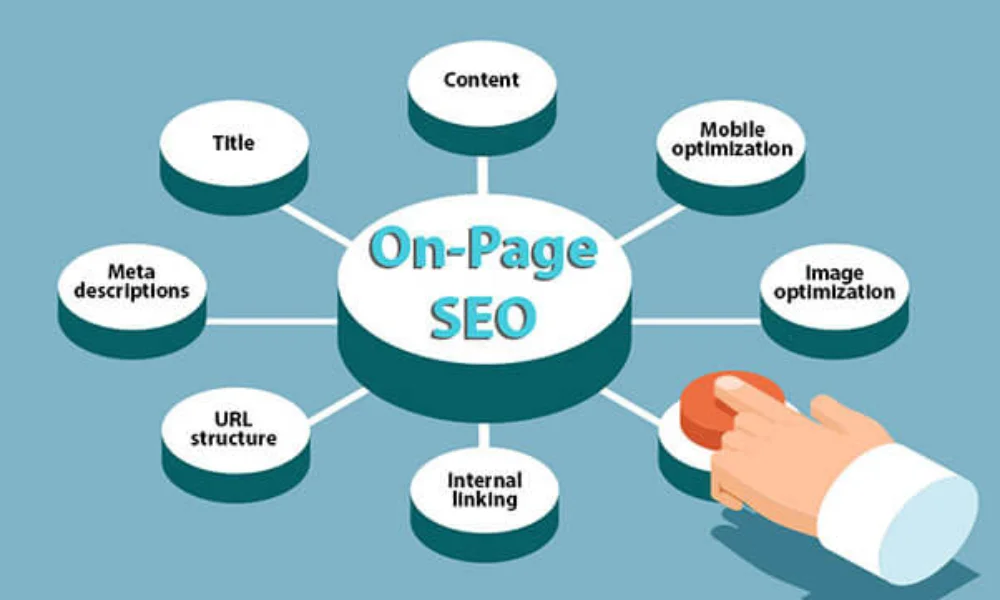
On-page SEO forms the core of your search presence. When you refine individual pages, you tell search engines exactly what your content offers and who it serves.
SEO examples for title tags
Think of this as the main headline for your business in the search results.
-
Before: Homepage
-
After: Custom Web Design Services | Professional SEO Agency | Memorable Design
This simple shift gives users and search bots clear context about your business and location, so they know exactly what you provide.
SEO examples for meta descriptions
This acts as a free ad space to convince people to click on your link instead of a competitor's.
-
Before: (Empty)
-
After: Looking for expert SEO strategies? Memorable Design delivers data-driven content and technical audits to boost your rankings. Click to view our results.
This includes a direct call to action, and it encourages people to visit your site.
SEO examples for H1 and heading structure
This creates a clear outline so search engines can scan and understand your content quickly.
-
Before: One main title, then random text sizes throughout the page.
-
After: One primary H1 title, followed by logical H2 and H3 subheadings that mirror a real book outline.
This layout helps search engines index your sub-topics and rank you for more specific questions.
SEO examples for keyword placement
You want to use your keywords in a way that feels natural for a human reader, not a robot.
-
Before: Stuffing SEO examples into every single sentence.
-
After: Placing your primary keyword in the first paragraph, the main title, and one subheading, then using related words throughout.
This avoids spam filters and keeps your writing smooth and easy to read.
SEO examples for image optimization
This helps Google understand what is in your pictures and brings extra traffic from image searches.
-
Before: Image file named IMG_001.jpg with no description.
-
After: Image file named on-page-seo-checklist.jpg with alt text describing the specific visual.
This allows Google Images to index your content, and it brings more eyes to your brand.
SEO examples for internal linking
These links act like a roadmap, guiding readers and search bots to your other important pages.
-
Before: Linking with generic words like click here.
-
After: Linking with descriptive words like read our guide on SEO templates.
This tells Google exactly what the target page covers, and it keeps users on your site longer.
SEO examples for semantic keyword usage
This means focusing on the whole topic rather than just repeating one specific word.
-
Before: Focusing only on the word SEO.
-
After: Including related terms like ranking factors, organic search, algorithm updates, and digital authority.
This makes your content highly comprehensive and much harder for competitors to outrank.
SEO Examples for Technical SEO Improvements
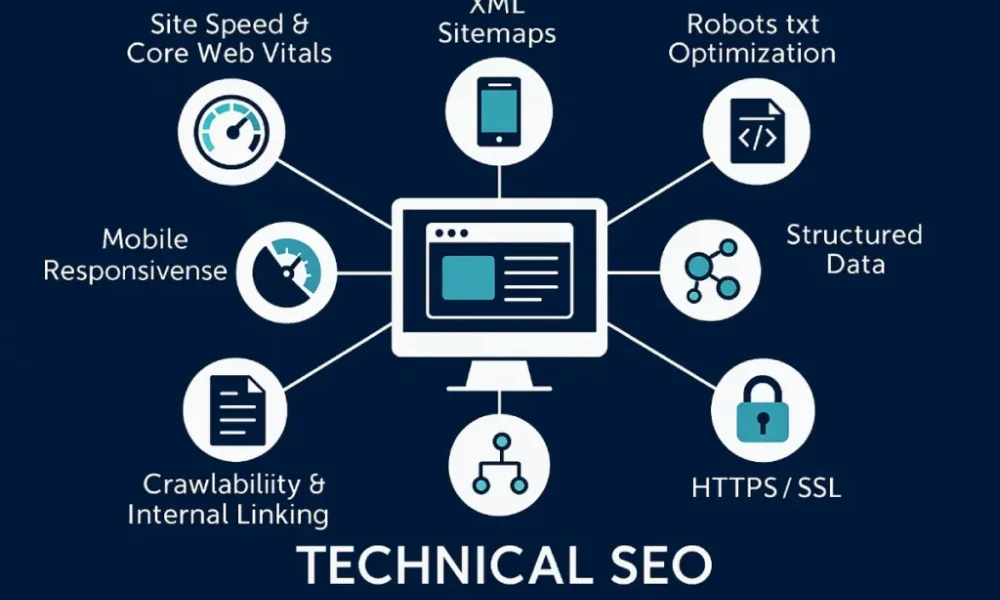
Technical SEO makes sure that search engines can actually find and process your site. If the engine cannot crawl your pages, your content will never rank regardless of how good it is.
SEO examples for Core Web Vitals
Google measures how fast your site loads and how stable it feels for the person reading it. Performance metrics determine user experience. Improving your Largest Contentful Paint (LCP) from 3.0 seconds to 1.5 seconds often leads to a direct increase in organic traffic because Google favors fast-loading sites.
SEO examples for crawlability
You need to make sure Google can reach your best content without getting stuck on useless pages. You must reduce crawl budget waste. Remove low-quality pages or use noindex tags on private pages so Google focuses on your most important content.
SEO examples for XML sitemaps
This is essentially a roadmap that tells Google every single page on your website. A clean sitemap acts as a map for Googlebot. Ensure you update it automatically whenever you publish new pages or posts.
SEO examples for robots.txt
Think of this file as a set of instructions telling Google which parts of your house are off-limits. Your robots.txt file gives specific instructions. Use it to block non-essential pages, like your site's admin login or search results, so the bot does not get lost.
SEO examples for canonical URLs
This tells Google which version of a page is the original if you have multiple pages that look the same. If you have duplicate content, use a canonical tag to point to the original version. This prevents keyword cannibalization where your own pages compete against each other.
SEO examples for structured data
This is a way to give Google extra details so they can display your site more attractively in the search results. Use Schema markup to highlight reviews, FAQs, or event dates. This creates "rich snippets" that stand out in the search results and earn higher click-through rates.
SEO examples for mobile-first indexing
Since most people search on their phones, Google expects your mobile site to be perfect. Mobile is the default. If your site looks perfect on desktop but breaks on mobile, you lose your rankings. Use responsive designs that scale seamlessly.
Technical SEO Problems vs Optimized Solutions
| Issue | Bad Example | Good Example | SEO Benefit |
| Slow Load Speed | Large unoptimized images | Compressed WebP images | Faster page performance |
| Duplicate Content | Same text on two URLs | Canonical tag on duplicate | No internal index competition |
| Broken Links | Links to 404 pages | 301 redirects to new page | Keeps your link authority |
| Missing Schema | No product info in code | Product Schema markup | Rich snippet visibility |
SEO Examples for Content Optimization
Good content must satisfy the person reading it and provide clear signals to the search engine. Move beyond basic keyword patterns and focus on the deeper needs of your audience.
Using search intent
The intent is the actual reason behind every query someone types into a search box. If a user searches for how to fix a leaky sink, they need a step-by-step guide, not a sales pitch for a new faucet. Look at the top results for your target topic to see if they are tutorials or product lists. Then, match your format to what the user wants to find.
Building topical authority
You need to prove that you are a true expert on a specific subject. Instead of writing one random article about a broad topic, create a series of deep dives into every related sub-topic. When you cover every angle, search engines view your site as a trusted expert in your field.
Using content clusters
This structure keeps your site organized and links your related topics together. Write one large page that covers the basics, then create smaller, detailed articles about specific parts of that same topic. Link all those smaller pieces back to the main page. This helps search engines understand that your site covers the entire topic well.
Using FAQs
Questions help you capture result boxes and provide quick, helpful answers. Identify the common questions your customers ask and include them in a simple list. By writing direct and concise answers, you increase your chances of appearing at the top of the results.
Optimizing for AI Overviews
Modern search tools prefer clear and direct answers. Summarize your main points in bullet points or short paragraphs at the start of your articles. When you organize information this way, smart search models can easily grab your data to answer user questions.
Using entity-based optimization
This involves using clear and connected terms so search engines understand how different concepts relate. If you write about a camera, also mention things like lens, shutter speed, and aperture. By grouping these related terms, you help the search engine grasp the full context of your writing.
Using original research
Search engines love unique data that nobody else has. Run a small survey or analyze your own internal data to produce a report with original charts or stats. When other websites cite your data and link back to your study, your authority grows naturally.
SEO Examples for Local Businesses
Local search is the fastest way to get noticed by people in your immediate area. You need to be specific and consistent across every platform.
Google Business Profile
Your profile is often the very first thing a local customer sees. Fill out every section, including your hours, services, and clear photos. Posting updates about local events or new offers keeps your listing active and visible to neighbors.
Local landing pages
These pages should focus on a specific city or region to capture nearby traffic. If you serve multiple areas, create a unique page for each location. Include details like local testimonials, nearby landmarks, and specific contact information to build trust with local searchers.
Using local schema
This is a bit of code that tells search engines exactly where you are and what you do. Add this to your website to highlight your business name, address, and phone number. This helps the engine display your location correctly in map results.
Using customer reviews
Real reviews act as social proof and show that you are a trusted business. Encourage happy clients to leave honest feedback. When you reply to these reviews, you show potential customers and the search engine that you are active and value your community.
NAP consistency
NAP stands for Name, Address, and Phone number, and it must be identical everywhere. Ensure your business information looks exactly the same on your website, your social media, and your business profile. Small differences can confuse search engines and hurt your local ranking.
SEO Examples for Ecommerce Websites
Online stores need a balance between helping users find products and ensuring the search engine can navigate your catalog. Focus on clarity and descriptive information.
Product pages
Your product pages need to be more than just a price and a picture. Write unique, helpful descriptions that explain the benefits of the product. Include clear sizes, materials, and shipping details to answer any questions a buyer might have.
Category pages
Category pages are often the main entry point for shoppers searching for broad items. Include a short, informative introduction at the top of these pages. This gives the user context while giving the search engine enough text to understand the page.
Product schema
This code helps your items stand out with extra details like price and stock status. Use it to show star ratings directly in the search results. This extra information often leads to more clicks from shoppers.
User-generated content
Customer photos and question sections add fresh, unique material to your store. Allow customers to upload their own photos or ask questions about products. This content is highly relevant and often uses the exact words your customers are using to search.
Faceted navigation
This allows users to filter products by size, color, or price without creating duplicate pages. Use a simple tag to point all your filtered views back to the main category page. This keeps your site clean and prevents the search engine from seeing too many versions of the same page.
SEO Examples for AI Search (GEO)
AI search experiences want fast, accurate, and trustworthy information. You must stop writing for old-school keyword lists and start writing for answer engines that summarize content for the user.
Optimizing for AI Overviews
AI tools look for concise, evidence-based answers. Start your content with a direct answer to the user question, followed by a list of supporting facts. This structure makes it simple for the AI to read your content and present it as a source.
Optimizing for ChatGPT citations
ChatGPT relies on high-quality and reputable sources to support its claims. Write content that cites industry reports, studies, or expert opinions. When you back up your statements with credible evidence, AI platforms are more likely to select your site as a trusted source.
Optimizing for Perplexity AI
Perplexity values comprehensive, factual, and well-researched information. Structure your articles to cover a topic in depth, providing clear facts rather than opinions. Using logical headers and citing your data ensures you remain a top choice for research queries.
Optimizing for Gemini
Gemini prefers content that shows deep knowledge and human insight. Write in a conversational but professional tone that directly addresses the user needs. Showing that you understand the nuance of a topic makes your content more valuable to Google.
Entity relationships
Help the AI understand how things relate to each other. Instead of just saying a tool is good, explain how it helps with specific tasks and improves productivity. By defining these connections, you make your content much more useful for an AI that is trying to build a complete picture.
Citation-worthy content
Write content that others will naturally want to reference. Create original guides, expert interviews, or data-driven articles. When you offer something unique and valuable, you become the primary source that AI engines turn to for accurate information.
Conversational search queries
People now ask their AI assistants complex questions. Write content that answers full, natural questions rather than just targeting single words. If you create a section in your article titled How to decide between X and Y, you are perfectly positioned to answer a direct, conversational search.
SEO Case Studies That Show Real Growth
Data speaks louder than theory. These summaries highlight how specific changes lead to genuine traffic and revenue growth. You can replicate these results by applying the same logic to your own digital properties.
Traffic growth
One technology blog struggled with stagnating visitors despite posting daily. They performed a content audit and pruned over 200 thin, low-value pages. Then, they redirected that link equity to their top-performing articles. Within three months, their total monthly organic traffic climbed by 45% because Google focused its crawl budget on their high-quality pillars.
Content optimization
A financial services firm noticed their articles ranked on the second page but failed to break into the top three. They revisited their top 50 pages and updated them with current statistics, original expert quotes, and clearer H2 headings. They also added a key takeaways section at the top of each piece. This simple update boosted their click-through rate by 22% in just six weeks.
Technical SEO fixes
A large news portal suffered from slow load times that hurt their rankings during peak hours. They migrated to a faster server and implemented a strict lazy-loading policy for all images. Their Core Web Vitals scores moved from poor to good in the Search Console. The result was a 15% increase in mobile rankings within one month.
Local SEO success
A local dental practice relied entirely on word-of-mouth until they optimized their Google Business Profile. They started uploading weekly photos, responding to every review, and adding location-specific service pages to their site. Six months later, their "near me" search visibility grew by 60%, leading to a consistent stream of new appointment requests.
Ecommerce SEO
An online apparel store dealt with massive keyword cannibalization. Their category pages competed with their individual product pages for the same search terms. They implemented canonical tags to point all variations back to the main category and added unique, helpful descriptions to every page. Organic revenue grew by 35% over the next quarter as the site structure became much clearer for search engines.
Using topical authority
A health and wellness brand decided to stop chasing random trending topics. They built a hub and spoke model, creating one central guide on metabolic health and linking it to 30 smaller, expert-led articles on specific diets and exercises. After one year, they became the dominant voice for their niche, earning thousands of monthly visitors from long-tail informational queries.
SEO Case Studies Summary
| Website Type | SEO Change | Result | Timeframe |
| Technology Blog | Pruned low-value pages | 45% traffic increase | 3 months |
| Financial Services | Updated content & structure | 22% higher clicks | 6 weeks |
| News Portal | Fixed load speeds | 15% higher rankings | 1 month |
| Dental Practice | Optimized Business Profile | 60% more local visibility | 6 months |
| Apparel Store | Resolved cannibalization | 35% revenue growth | 3 months |
| Health Brand | Built topical authority | Dominant niche rankings | 1 year |
Ranking Pages Examples From Different Industries
To win, you must look at what is already succeeding. These examples show why specific pages hold the top spot. Every page listed below hits a high bar for user experience and search authority.
- Ranking pages examples for SaaS: These pages rank because they match user intent by solving a specific problem, like how to automate workflows. They use interactive tools and clear product demonstrations to prove their value.
- Ranking pages examples for ecommerce: Successful category pages rank by balancing product lists with helpful advice. They include brief, expert-led descriptions that give search engines context while keeping the shopper focused on the goal.
- Ranking pages examples for agencies: Agency pages that reach the top position focus on results. They use detailed case studies and clear proof of success to build trust, showing clients exactly what to expect.
- Ranking pages examples for local businesses: These pages succeed by being hyper-local. They rank because they mention specific service areas and real customer experiences, signaling to Google that they are a trusted part of the local community.
- Ranking pages examples for blogs: Top blog posts act as resource hubs. They win because they are comprehensive, covering a topic from every angle so the reader never needs to search for another source.
These pages rank through sheer scale and trust. They maintain high standards for accuracy and provide consistent, fact-checked information that sets the standard for their industry.
Why These Pages Rank: The Core Formula
-
Search Intent: They give the user the right answer instantly.
-
UX: They are fast, clean, and easy to read on any device.
-
Internal Linking: They guide users to deeper, relevant information.
-
E-E-A-T: They show clear expertise and real industry authority.
-
Topical Authority: They cover a subject from every angle.
-
Content Depth: They provide so much value that the user stays on the site.
SEO Templates You Can Copy Today
Consistency is the secret to scaling your search performance. Using templates ensures your team follows the same high-quality standards for every page you publish. The table below outlines the core components you should include in your internal documentation to maintain authority and performance.
Essential SEO Templates and Implementation Guide
| Template Type | Primary Goal | Key Components to Include | Best For |
| Blog Posts | Build Authority | Quick Answer, H2/H3 outline, internal links, summary. | Long-form education |
| Service Pages | Drive Leads | Problem-Agitation-Solution, testimonials, CTA button. | High-intent traffic |
| Ecommerce | Sales | Benefit-led descriptions, feature bullets, FAQ section. | Product revenue |
| Local Pages | Regional Reach | Location, map, service radius, local landmarks. | Local businesses |
| Content Briefs | Strategy | Target keyword, search intent, competitors, word count. | Team consistency |
| Internal Linking | Site Power | Anchor text list, pillar page links, related posts. | Site architecture |
| Metadata | Clicks | Primary keyword, 60-char title, 155-char meta, CTA. | Click-through rates |
Conclusion
True SEO examples show that success comes from combining technical excellence, helpful content, and smooth user experiences rather than isolated tactics. The strongest results grow from real value and adaptability to modern AI-driven search. Use these templates and examples as practical frameworks for your strategy. Trust Memorable Design to turn your vision into sustainable visibility through modern SEO, website strategy, and conversion-focused design.
Frequently Asked Questions
What are SEO examples?
These are practical blueprints showing how to apply optimization to live websites. Studying these SEO examples provides proven methods to drive traffic, helping you move from theory to real growth.
What is the best SEO example for beginners?
Refreshing existing content is best. Update titles and descriptions on pages currently stuck on page two. It is a simple, effective way to test how specific changes boost your clicks.
How do SEO case studies help improve rankings?
They act as evidence-based roadmaps. You see how others fixed technical errors or built authority. Replicating their proven success saves time and helps you avoid costly mistakes.
What are ranking pages examples?
These are high-performing pages currently winning competitive search terms. Use them as benchmarks to see the exact structure, depth, and design required to claim the top spot.
How can SEO templates speed up optimization?
Templates turn complex tasks into simple, repeatable checklists. They ensure your work stays consistent and high-quality, saving you time by removing the need to start from scratch every time.
What is the difference between traditional SEO and AI SEO?
Traditional SEO targets manual clicks on search links. AI SEO, or GEO, structures content so answer engines can easily summarize it. Modern strategies must balance both to maximize your visibility.
What are the most common SEO mistakes?
Keyword stuffing, ignoring site health, and failing to match user intent are the biggest traps. Avoiding these errors ensures your site remains healthy, visible, and authoritative over the long term.
Which SEO examples deliver results the fastest?
Technical fixes offer the quickest wins. Improving load speed or fixing broken links removes barriers that prevent Google from finding your pages, leading to an immediate boost in your visibility.
