
AI Overview Optimization in 2026 builds on traditional featured snippet strategies by prioritizing clear, structured, and trustworthy content. Google’s AI still favors concise answers, lists, tables, and authoritative insights. Brands that focus on E-E-A-T, semantic depth, fast websites, and direct paragraph-style answers are more likely to earn AI citations and dominate modern search visibility.
If you’ve spent years mastering the art of the "Position Zero" win, you might feel like the rug has been pulled out from under you with the rise of generative search. However, the truth is much more encouraging: featured snippet optimization has effectively evolved into ai overview optimization, utilizing the exact same structural tactics to gain visibility. To rank in modern search, you must provide direct, well-structured answers that Google’s AI can easily parse and cite. At Memorable Design, we’ve observed that the transition from a traditional snippet to ai overview is seamless for those who prioritize clarity, authority, and structured data over keyword density.
The logic is simple: Google's AI Overviews (AIO) often pull from the same "canonical" answers that used to trigger featured snippets. By refining your paragraph snippet format and ensuring your content addresses the user's intent within the first few sentences, you aren't just optimized for a box—you are optimized for the entire future of search.
Why the Rules of Featured Snippets Still Apply to AI
When Google first introduced featured snippets, the goal was to provide an "answer engine" experience. Fast forward to 2026, and that engine has become more sophisticated, but its diet remains the same. AI models crave high-quality, structured information that is easy to summarize.
Featured snippet optimization is no longer a isolated task; it is the foundation of ai overview optimization. The AI isn't hallucinating answers from thin air; it is aggregating them from the top-ranking, most authoritative pages. If your content was already winning snippets, you are halfway to winning the AI Overview citations that now dominate the top of the SERP.
The main difference today is the breadth of the answer. While a snippet was often a single paragraph, an AI Overview might combine a paragraph snippet format from one site with a list from another. To stay competitive, your content must be the most "digestible" version of the truth available on the web.
The Structural Blueprint: Paragraphs, Lists, and Tables
To make the jump from snippet to ai overview, you must look at your page through the eyes of an LLM (Large Language Model). These models look for clear signals of expertise and hierarchy.
The Paragraph Snippet Format: The 50-Word Rule
The most common way to trigger an AI citation is the paragraph snippet format. This involves placing a concise, 40-to-60 word answer directly under a clear H2 or H3 heading. You shouldn't bury the lead; state the fact clearly, then use the rest of the section to provide the "Experience" and "Expertise" required by the 2026 Core Update.
Lists and Authoritative Tables
Google loves structured data because it eliminates ambiguity. If you are explaining a process, use a numbered list. If you are comparing two products, use a table. These formats are frequently pulled directly into AI summaries because they are inherently organized.
| Feature | Featured Snippet | AI Overview (AIO) |
| Primary Goal | Single, direct answer | Aggregated, multi-source summary |
| Optimization Need | Clear, concise definitions | Deep, contextual expertise |
| Format Preference | Paragraphs, lists, tables | Synthesis of multiple formats |
| User Intent | Fact-finding | Research and discovery |
E-E-A-T and the Trust Factor in 2026
The February 2026 Google Core Update doubled down on the "Trustworthiness" aspect of E-E-A-T. It’s no longer enough to just have the right keywords; you need to prove you are a real entity with real experience. At Memorable Design, we focus on adding "Experience" markers—such as original case studies, personal insights, and unique data to every piece of content.
When you perform featured snippet optimization, you are essentially flagging your content as the "definitive" answer. In the era of AI, that flag is only respected if your site demonstrates high authority. AI models are programmed to favor sources that are cited frequently by other reputable sites and those that provide "helpful, original, and trustworthy" content.
Avoid making bold, unverified claims. Instead, use phrases like "based on our internal data" or "estimated according to current market trends." This nuanced language builds trust with both the human reader and the search algorithm, making your transition from snippet to ai overview more likely to succeed.
Strategic Tactics for AI Overview Visibility
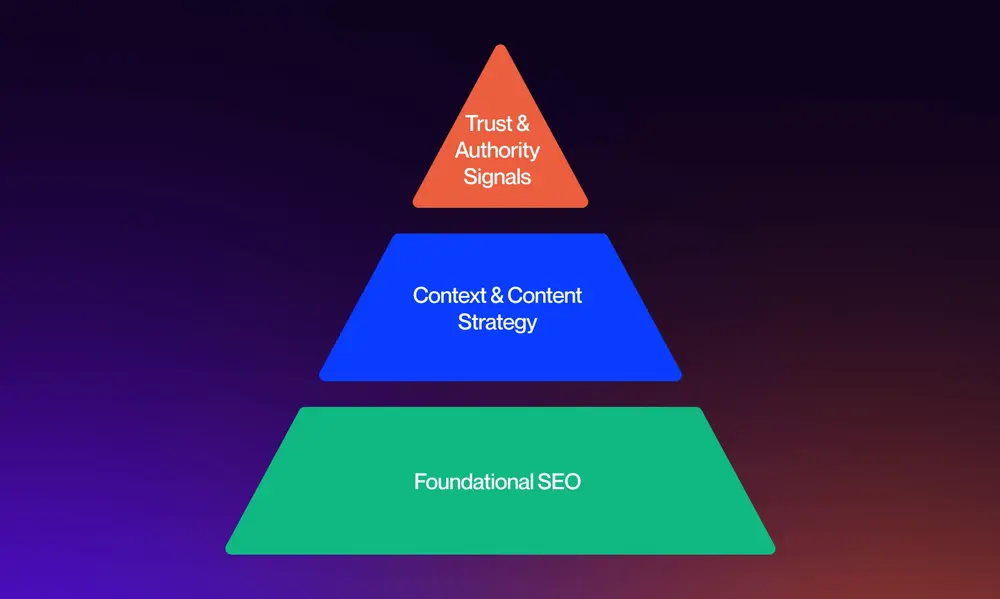
If you want to dominate the new search landscape, you need a proactive strategy that treats ai overview optimization as a multi-layered process. It isn't just about one paragraph; it’s about the entire ecosystem of your page.
- Header-Answer Alignment: Ensure every H2 is a question or a very clear sub-topic. Immediately follow it with a high-value answer.
- Semantic Depth: Use related terms that a human expert would use. If you are talking about "SEO," ensure you are also discussing "Search Intent," "Natural Language Processing," and "User Signals."
- Visual Integration: Use high-quality images with descriptive ALT text. AI Overviews often pull images to accompany text citations.
- Speed and Accessibility: A slow site is a low-authority site. Ensure your technical SEO is flawless so Google can crawl and index your "answers" quickly.
- Refining the Paragraph Snippet Format: Regularly audit your top-performing pages to see if your summary paragraphs can be made even clearer or more updated based on 2026 standards.
Mastering the "Snippet to AI Overview" Pipeline
To successfully move a snippet to ai overview, you must understand the "clustering" effect. In 2026, Google often clusters related questions together in a single AI response. To win, your page should answer the primary question and the top three related follow-up questions.
This is where featured snippet optimization becomes a broader content strategy. You are no longer just trying to win "What is X?"; you are trying to own the entire conversation around "How does X work?", "Why is X important?", and "How do I implement X?".
At Memorable Design, we recommend a "hub and spoke" model. Your main pillar page should provide the high-level paragraph snippet format answers, while deep-dive blog posts provide the granular "Experience" and "Expertise" that solidify your brand as the ultimate authority in your niche.
Conclusion: The New Standard of Search Excellence
The shift from featured snippet optimization to ai overview optimization isn't a pivot; it's a graduation. The same principles of clarity, structure, and directness that made you successful in the past will keep you relevant in the future. By focusing on a clean paragraph snippet format and providing original, trustworthy insights, you ensure that your brand remains visible in the increasingly crowded world of generative search.
The transition from snippet to ai overview is simply Google’s way of making search more conversational. As long as you continue to provide the most helpful and authoritative answers, you will find your site cited at the very top of the page. At Memorable Design, we are committed to helping brands navigate this new reality by creating content that resonates with both AI models and human hearts.
Frequently Asked Questions
Is the paragraph snippet format still relevant in 2026?
Absolutely. While AI Overviews are more complex than traditional snippets, they still rely heavily on concise, well-defined blocks of text. Using a clear paragraph snippet format remains the most effective way to signal to Google exactly what your content is about and which question it answers.
How does ai overview optimization differ from traditional SEO?
Traditional SEO often focused on keywords and backlinks. AI overview optimization focuses more on "Answer Engine Optimization" (AEO)—prioritizing the directness of the answer, the structure of the data, and the demonstrable "Trustworthiness" of the source. It requires a more human-centric, authoritative writing style.
Why did my featured snippet disappear?
In many cases, traditional featured snippets have been replaced by AI Overviews. If your snippet is gone, it’s likely because Google is now synthesizing an answer from multiple sources. To win back that visibility, you need to refine your content to be the "primary source" for that synthesized answer.
Can I optimize for both snippets and AI overviews?
Yes! Because they share the same underlying logic, the same tactics—like using structured lists, clear headings, and direct answer paragraphs—will help you rank for both. When you perform featured snippet optimization, you are inherently optimizing for the AI's summary engine.
Does Memorable Design recommend specific tools for AIO?
We recommend using tools that track "AI Visibility" and "Generative Citations." Since the market is evolving rapidly in 2026, the most important tool is your own data—monitor which pages are being cited in AIOs and double down on the formatting that works for those specific queries.
