
Visual storytelling in design helps websites connect emotionally with users through color, typography, imagery, and interaction. It guides perception before users read content, builds trust, and improves engagement. By combining brand narrative, creative direction, and purposeful design, websites become experiences that drive stronger conversions and lasting impressions.
The Websites You Remember Have One Thing in Common
Think about the last website that actually stopped you mid-scroll. Not because it was flashy. Not because it had a complicated animation. Because it made you feel something. That is not a coincidence -- it is the result of deliberate, strategic visual storytelling in design.
Visual storytelling in design is the practice of using imagery, layout, motion, color, and typography together to communicate a narrative -- not just information. It is how a website goes from being a digital brochure to an experience that builds trust, communicates identity, and drives action.
In 2026, it is also one of the most important competitive advantages a brand can build into its web presence. This guide breaks down how it works, what it looks like in practice, and how to apply it to your own website.
What Visual Storytelling in Design Actually Means
Most people think of storytelling as something that happens through words. Visual storytelling operates on a different level -- it communicates before the visitor reads a single sentence.
The moment someone lands on a page, they are already forming impressions. The weight of the typography, the warmth or coolness of the color palette, the amount of whitespace, the texture of the photography -- all of it is landing before conscious reading begins. That pre-verbal impression is what visual storytelling in design shapes.
Done well, it answers three questions in the first few seconds of a visit:
- Who is this brand?
- Is this for someone like me?
- Do I trust them?
When those questions are answered through visual language before the copy even loads, the visitor is already oriented. They are not starting from zero -- they are starting with a feeling. And feelings drive decisions far more reliably than feature lists.
The Building Blocks of Visual Storytelling
Color as Narrative
Color is the fastest story a brand tells. It sets mood, communicates values, and signals category before anything else.
A legal technology company that uses warm terracotta and handwritten typography is telling a very different story than one that uses deep navy and a geometric sans-serif -- even if their copy says identical things. The visual language creates a frame through which everything else is read.
Brand narrative is built or broken at the color palette stage. Choosing colors intentionally -- based on audience psychology and competitive differentiation, not personal preference -- is one of the highest-leverage decisions in the entire visual storytelling in design process.
Practically, this means:
- Identify the emotional territory your brand owns (trust, creativity, urgency, calm, premium)
- Map that territory to a color palette that signals it accurately
- Test the palette against your competitors to ensure you stand out, not blend in
Typography as Personality
If color sets the mood, typography defines the voice.
A brand that uses a high-contrast serif typeface communicates authority and history. One that uses a rounded, friendly sans-serif communicates approachability and modernity. Neither is inherently better -- the question is whether the typographic choice matches the story the brand is trying to tell.
In visual storytelling in design, typography decisions include:
- Typeface selection (the primary personality signal)
- Type scale (how headlines, subheadings, and body text relate to each other)
- Letter spacing and line height (the texture of reading)
- Type color and contrast (readability and hierarchy)
When all four are aligned with the brand narrative, the page feels coherent in a way most visitors cannot articulate but everyone notices.
Photography and Illustration Direction
The images on a website are not decoration. They are story elements.
A software company that uses stock photos of generic business handshakes is telling a different story than one that uses custom photography of their actual team at work. A wellness brand that uses clean, bright lifestyle photography tells a different story than one using painterly editorial images. Both might sell identical products -- but the visual story positions them in completely different markets.
Creative direction for web photography and illustration means making intentional choices about:
- Who is shown (representing the actual audience)
- What environment they are shown in (aspirational but credible)
- What style is used (editorial, documentary, abstract, illustrated)
- How images are cropped and composed relative to text
The visual story a brand tells through its imagery is often more persuasive than anything the copy says -- because images bypass skepticism in a way that words cannot.
Interactive Web Elements: Story That Moves
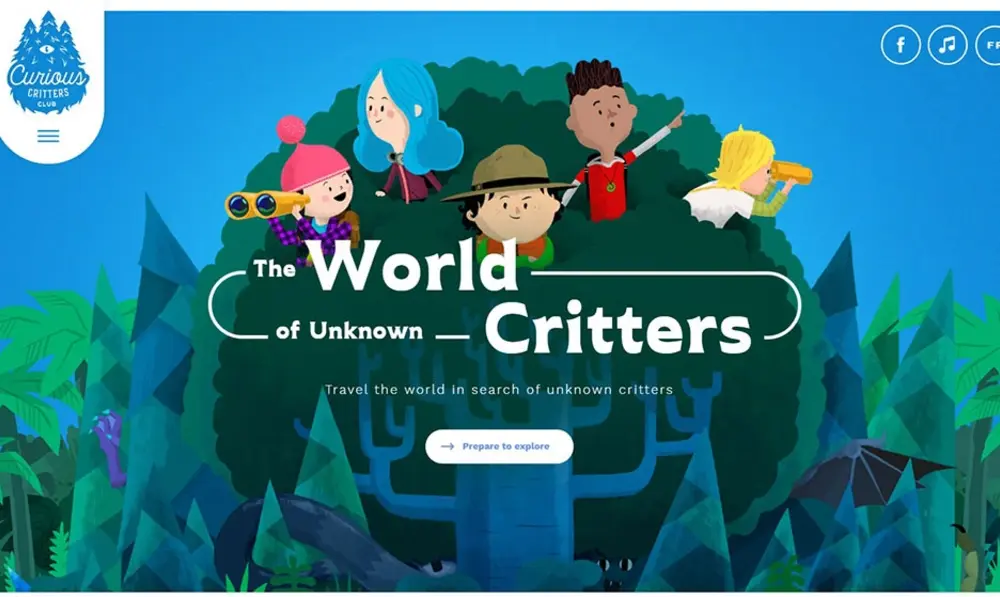
Static design tells a story. Interactive web elements let the visitor participate in it.
When a user hovers over a card and it responds. When a scroll triggers a subtle animation that reveals content progressively. When a cursor changes shape near a CTA. When a timeline animates as the user moves through a page. These are not decorative flourishes -- they are story beats that create a sense of discovery and engagement.
Interactive web elements serve visual storytelling in design in specific ways:
- They create micro-moments of delight that increase time on page
- They guide attention toward elements the designer wants noticed
- They communicate product quality through the quality of the interaction itself
- They reinforce brand personality -- a brand that values precision will use crisp, clean transitions; a creative brand might use something more playful and unexpected
Based on available UX research data, interactive and animated elements can increase user engagement metrics by an estimated 20 to 40 percent compared to fully static pages when implemented with purpose rather than just for visual effect.
The key distinction is intent. Animation for animation's sake adds load time and cognitive noise. Animation in service of the story -- revealing content in a meaningful sequence, guiding the eye, communicating movement or change -- adds real value.
Brand Narrative: The Thread That Ties Everything Together
Brand narrative is not the about page. It is not the mission statement. It is the invisible thread that runs through every visual decision on the website and makes everything feel intentional.
A strong brand narrative answers: what does this brand believe, who does it serve, and what does life look like for someone who engages with it? When that narrative is clear internally, every visual decision becomes easier and more consistent. When it is unclear, the website ends up looking like a collection of individual design decisions that do not add up to a coherent whole.
In practical terms, building a brand narrative into a website involves:
An origin or ethos statement -- not a formal declaration, but a positioning thought that informs the entire visual approach. "We believe great software should feel invisible" gives a design team permission to use restraint, whitespace, and minimal UI in a way that "We are a powerful productivity platform" does not.
A consistent visual world -- the same palette, type, imagery style, and spacing system appears everywhere, from the homepage hero to the 404 error page. Consistency is not just aesthetic tidiness; it is the mechanism through which identity becomes recognition.
A tone that matches the visual -- the copy and the design should be telling the same story. A visually sophisticated, editorial design paired with generic corporate copy creates cognitive dissonance that erodes trust without the visitor understanding why.
At memorable.design, brand narrative is the starting point of every web project -- because without a clear story to tell, the visual language has nothing to carry.
Creative Direction: Translating Strategy Into Visual Decisions
Creative direction is the role that sits between brand strategy and execution. It is the practice of translating "what we want the brand to communicate" into "what the page actually looks like."
Strong creative direction for web design involves:
- Defining a visual territory through moodboards and reference curation
- Establishing rules for what the brand does and does not do visually
- Ensuring consistency across all design executions
- Making the hard calls when execution drifts from strategy
Without creative direction, design projects tend to drift toward either the designer's personal aesthetic or whatever the most recent reference was. With it, every execution connects back to the brand's story.
Visual Storytelling Applied: What It Looks Like in Practice
Here is how these elements combine in real web design work:
| Element | Storytelling Function | Common Mistake |
|---|---|---|
| Hero image or video | Sets the world the brand inhabits | Generic stock photography with no emotional specificity |
| Color palette | Communicates brand values pre-verbally | Choosing colors based on personal preference, not audience psychology |
| Typography | Defines brand voice and personality | Mixing too many typefaces, losing coherence |
| Scroll animations | Creates discovery and guides attention | Animation without purpose, adding noise instead of meaning |
| Product screenshots | Shows capability and quality | Showing cluttered or empty-state interfaces |
| Testimonials layout | Humanizes social proof | Burying proof below the fold in generic card layouts |
| Navigation design | Reflects brand confidence and clarity | Overcrowded menus that signal lack of focus |
| Footer design | Final impression and conversion anchor | Treating it as an afterthought |
User Journey Mapping and Visual Flow
Visual storytelling in design is not just about individual elements -- it is about how those elements connect across a visitor's journey through the page.
Every page has a natural reading flow: eye entry point, movement through content, moments of decision, exit or conversion. A designer who understands this flow uses visual storytelling in design to guide it, not leave it to chance.
Practically, this means:
- The most important information is placed where the eye naturally lands first
- Visual hierarchy creates a clear path from headline to CTA
- Contrast and whitespace are used to create rest and emphasis in the right places
- Interactive elements appear at moments of potential drop-off, re-engaging the visitor
This is where creative direction and interactive web elements work together as a system. The direction defines what the story is. The interactive elements make the visitor feel like a participant in it, rather than just an audience.
A Framework for Applying Visual Storytelling to Any Website
Whether you are building from scratch or auditing an existing site, this sequence gives you a practical starting point:
Step 1: Define the emotional territory. What should a visitor feel within 5 seconds of landing? Write it in one word or a short phrase. Everything else serves that feeling.
Step 2: Audit current visual language. Does the existing color, typography, and imagery accurately communicate that feeling? Where does it drift?
Step 3: Establish the narrative anchor. What is the single most important thing the brand needs a visitor to understand? This becomes the headline logic and the hero section strategy.
Step 4: Build the visual system. Palette, type scale, imagery style, spacing rules. These are the tools the story is told with.
Step 5: Map the journey. Where does the visitor enter? What do they need to feel and understand at each scroll depth? Where are the natural friction points, and what visual element addresses each one?
Step 6: Add interactivity with purpose. Identify the three to five moments in the scroll journey where an interactive web element would increase engagement or guide attention -- and add only those.
This is the process that separates websites built around a story from ones assembled from parts. memorable.design applies this framework across every web and brand project, starting with narrative strategy before touching a single design tool.
Visual Storytelling in Design: A Quick Reference
| Principle | What It Does | How to Apply It |
|---|---|---|
| Color as narrative | Sets emotional territory before copy loads | Choose based on audience psychology and competitive contrast |
| Typography as voice | Defines brand personality through letterforms | Limit to two typefaces, use scale intentionally |
| Photography direction | Positions the brand through the world it shows | Commission or curate for specificity, not generality |
| Interactive elements | Creates participation and discovery | Use for guidance and delight, not decoration |
| Consistent visual system | Builds recognition and trust over time | Apply the same rules from homepage to 404 page |
| Journey-mapped flow | Guides the visitor toward conversion | Design for where the eye goes, not where you want it to go |
Conclusion: Story Is the Strategy
The websites that generate the most trust, the most engagement, and the most conversions are not the ones with the most features or the most content. They are the ones that tell the clearest story -- visually, emotionally, and structurally -- from the first pixel to the final CTA.
Visual storytelling in design is not an aesthetic preference or a creative luxury. It is a strategic capability. Brand narrative gives the story its meaning. Creative direction translates that meaning into visual language. Interactive web elements make the visitor a participant in the story rather than a passive observer.
Applied together, these elements transform a website from a digital document into an experience that builds brand memory, earns trust, and drives the actions that matter.
If your website is not telling the right story yet, the issue is almost never the execution. It is the absence of a clear narrative to execute from.
For web design and brand identity work grounded in strategic storytelling, visit memorable.design.
FAQs
Q: What is visual storytelling in design? A: Visual storytelling in design is the practice of using color, typography, imagery, layout, and motion together to communicate a brand narrative -- not just information. It creates emotional orientation in a visitor before they consciously read a word, shaping how everything else on the page is received.
Q: Why does visual storytelling matter for websites? A: Because visitors form impressions in seconds and make trust decisions faster than any copy can address. Visual storytelling in design shapes those pre-verbal impressions intentionally, guiding the visitor toward the right feeling about the brand before they engage with any specific message or offer.
Q: What are interactive web elements and how do they help? A: Interactive web elements are design features that respond to user behavior -- scroll-triggered animations, hover states, cursor effects, progressive content reveals. They serve visual storytelling in design by creating micro-moments of discovery, guiding attention, and communicating product quality through the quality of the interaction itself.
Q: What is brand narrative in web design? A: Brand narrative is the invisible thread that connects every visual decision on a website into a coherent whole. It answers what the brand believes, who it serves, and what emotional experience it wants to create. Without a clear brand narrative, websites end up looking like a collection of disconnected design decisions rather than a unified identity.
Q: What is creative direction and do I need it? A: Creative direction is the strategic role that translates brand goals into specific visual decisions -- defining the palette, the imagery style, the typographic approach, and the rules that keep all executions consistent with the brand story. Any brand investing in web design benefits from creative direction, because without it, execution tends to drift away from strategy over time.
For brand identity and web design systems built around strategic visual storytelling, visit memorable.design.
