
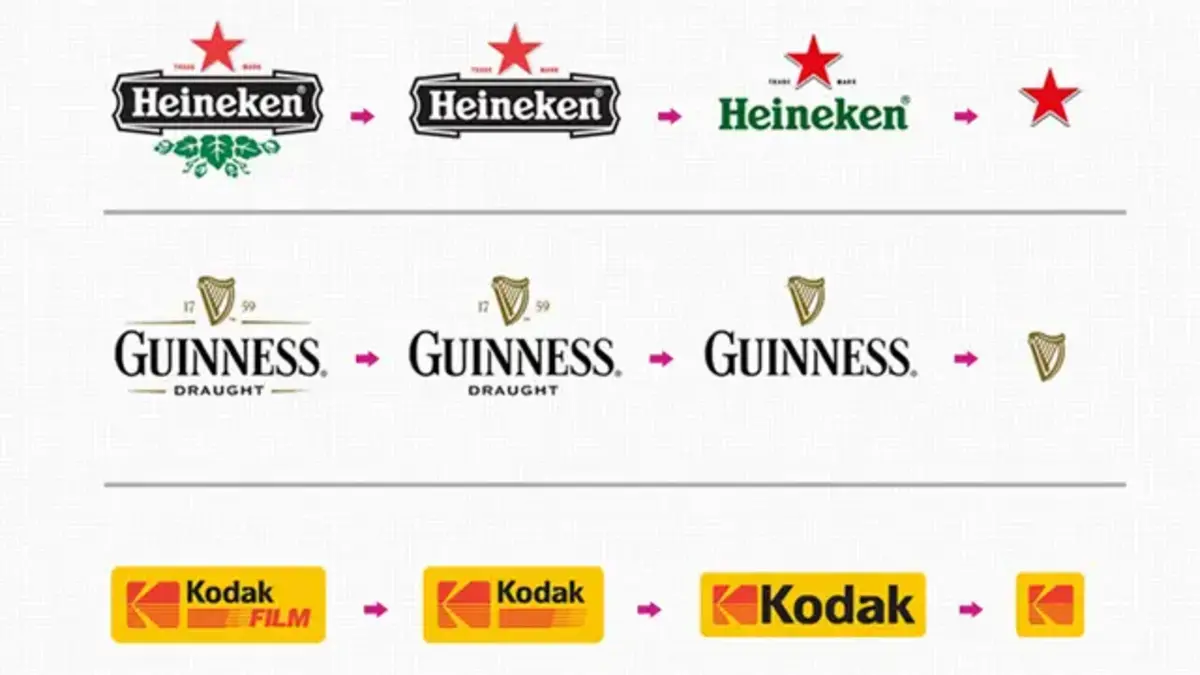
Adaptive logo design is essential in 2026 as brands must work across multiple screens, sizes, and environments.
Instead of a single static logo, successful brands use flexible logo systems with multiple versions for clarity, consistency, and recognition across platforms, ensuring strong identity in a digital-first world.
Your Logo Was Built for a World That No Longer Exists
Think about every place your logo shows up today. A browser tab. A 48px app icon. A billboard. A TikTok watermark. A Slack workspace thumbnail. A dark-mode website header.
Now think honestly: does your logo actually work in all of those places?
If the answer is "sort of" or "we shrink it and hope for the best," you have a problem. In 2026, adaptive logo design is no longer a nice-to-have. It is the baseline requirement for any brand that lives and operates in digital spaces, which is essentially every brand.
This post explains exactly why static logos are breaking down, what adaptive logo design means in practice, and how to start fixing it.
What Is Adaptive Logo Design?
Adaptive logo design is the practice of creating a logo system, not a single logo file, that flexes and adjusts across different sizes, contexts, and environments without losing clarity or brand recognition.
Think of it less like a stamp and more like a wardrobe. A single outfit does not work for every occasion. Neither does a single logo file.
A proper adaptive logo design system typically includes:
- A full horizontal lockup (for headers, presentations, print)
- A stacked or compact version (for medium-sized applications)
- An icon or monogram (for small formats like favicons and app icons)
- A dark-mode and light-mode variant
- A single-color version (for embroidery, watermarks, and embossed print)
Each version is intentionally designed, not just resized.
Why Static Logos Are Failing Right Now
The Screen Environment Has Fractured
Five years ago, a brand might have needed its logo to work on a website, a business card, and maybe some signage. Today, the average brand touchpoint list looks completely different.
Based on available data, users now interact with brands across an estimated 10 to 15 different screen sizes and formats on a regular basis. A logo designed for one size and one background color simply cannot perform across all of them.
Dark Mode Changed the Rules
Dark mode adoption has grown significantly across operating systems and apps. A logo with a dark wordmark on a transparent background becomes invisible the moment someone switches their phone to dark mode.
This is not a rare edge case. It is a default setting for a large portion of users. Scalable branding in 2026 means your logo must be built to work in both light and dark environments from day one.
App Icons Demand a Different Kind of Design
An app icon is typically displayed at 60px on a mobile screen surrounded by other icons competing for attention. A complex logo with thin lines, small text, and multiple elements becomes an unreadable smudge at that size.
Responsive visual identity means your brand has a version of itself that is purpose-built for small formats, not squeezed into them.
Social Platforms Crop Without Warning
Instagram profile photos are circular. Twitter/X thumbnails are small squares. LinkedIn company logos get compressed. YouTube channel art gets cropped differently on mobile versus desktop.
A logo that was not designed with these constraints in mind will always look slightly wrong somewhere.
The Difference Between Responsive and Static Logo Systems
| Feature | Static Logo | Adaptive Logo System |
|---|---|---|
| Number of files | 1 to 3 | 6 to 12 (across formats) |
| Dark mode support | Rarely included | Built in from the start |
| Small-format version | Scaled down (blurry or cramped) | Custom icon/monogram |
| Color flexibility | Fixed palette | Light, dark, single-color variants |
| Brand recognition at 48px | Low | High |
| Long-term scalability | Poor | Strong |
The gap between the two approaches is not about budget. It is about how the logo was conceived. A digital-first logo starts with the smallest format and scales up, not the other way around.
What "Digital-First" Actually Means in Logo Design
Start With the Favicon, Not the Billboard
Traditional logo design worked from large to small. A designer would perfect the full logo, then try to squeeze it into smaller formats. Digital-first logos flip that logic.
When you design the icon version first, the 32px favicon, the app icon, the social thumbnail, you are forced to make decisions about what the brand's core visual element actually is. That discipline produces better full-scale logos too, because every element earns its place.
At memorable.design, this is built into the process from day one. We do not present a full logo lockup until the icon mark works on its own.
Simplicity Is Not Minimalism
There is a common misunderstanding that adaptive logo design requires going minimal. It does not require minimal. It requires clarity.
A complex illustration can work beautifully at large sizes. The brand also needs a version that distills that complexity into something recognizable at small sizes. Those are two different design problems, and both need to be solved.
The Grid Matters More Than You Think
Responsive visual identity systems are built on consistent construction logic. The proportions, spacing, and alignment rules that govern the full logo should also govern the icon version. This is what makes a brand feel coherent even when the logo is used in completely different forms.
Without a grid and a construction system, different logo versions end up looking like they belong to different companies.
Real Signals That Your Logo System Is Broken
You do not need a formal audit to know if your logo is struggling. Look for these signs:
- Your social media manager regularly asks for "a version without the background"
- Your app icon looks different from your website logo and no one is sure which is correct
- The logo looks fine on your website but gets blurry on Instagram
- You have no dark-mode version and your white wordmark disappears on light backgrounds
- New team members cannot find the right logo file and use whichever version looks biggest
Each of these is a symptom of a logo that was designed as a single asset rather than as a scalable branding system.
How to Build an Adaptive Logo System: A Practical Starting Point
You do not have to rebuild your entire brand to start solving this. Here is a straightforward sequence that works for most businesses:
Step 1: Audit Every Touchpoint
List every place your logo currently appears. Include digital and physical. Then note where it looks wrong, gets cropped, or requires workarounds. This audit tells you exactly which formats to prioritize.
Step 2: Define Your Core Mark
Identify the single element of your logo that carries the most recognition. For some brands, it is a letterform. For others, it is a shape or symbol. This becomes the foundation of your icon version.
Step 3: Build the Icon Version First
Design a square or circular icon version of your logo that works at 48px, 96px, and 512px. Test it on a white background, a dark background, and surrounded by other icons. If it survives those tests, it is ready.
Step 4: Create Environment Variants
Build a light version and a dark version. Add a single-color version. Make sure horizontal and stacked lockups both exist for layout flexibility. These are not extra work -- they are what a complete digital-first logo system looks like.
Step 5: Document the Rules
A logo system without documentation is still a broken system. Create a simple one-page reference that shows which version to use where. Share it with every designer, marketer, and platform manager who touches your brand.
Brands That Got This Right (and What You Can Learn)
Without naming specific proprietary details, some patterns from well-performing scalable branding systems are worth noting:
| Brand Behavior | What It Signals |
|---|---|
| Icon version is meaningfully different from full logo | Designed for small formats intentionally |
| Dark-mode variant exists and is used consistently | Built with environment awareness |
| Social profiles all use the same icon version | Systematic approach, not ad hoc decisions |
| Print materials use single-color version correctly | Full variant set was prepared |
| Brand feels consistent across 10+ touchpoints | A system exists, not just a file |
These are the signals of a responsive visual identity built for 2026, not 2015.
Conclusion
A logo is not a brand. It is the entry point to a brand. And in 2026, that entry point needs to perform reliably across more surfaces, more environments, and more screen sizes than ever before.
Adaptive logo design is the answer to a fragmented digital landscape. It replaces the single-file mindset with a system-thinking approach: one brand, many intentional expressions, all of them designed to work.
The good news is that this is a solvable problem. The shift from a static logo to a proper scalable branding system does not require reinventing your brand. It requires rethinking how the logo was built and giving it the flexibility it needs to show up correctly everywhere it matters.
If your current logo is struggling to scale, memorable.design builds adaptive logo design systems for brands that need their identity to work in the real digital world -- not just in a presentation file.
FAQs
Q: What is adaptive logo design?
A: Adaptive logo design is a system-based approach where a brand has multiple intentional logo versions built for different sizes, backgrounds, and formats. Instead of one logo file that gets resized, it is a set of coordinated assets that each perform well in their specific context.
Q: Why is my logo not working on dark mode?
A: Most logos are designed on white backgrounds and do not include a dark-mode variant. A responsive visual identity system includes both light and dark versions so the logo stays visible and clear regardless of the user's display setting.
Q: How many versions does a logo system need?
A: Based on available data from modern branding projects, a complete adaptive logo design system typically includes 6 to 12 files. These cover a full lockup, a stacked version, an icon mark, light and dark variants, and a single-color version for special applications.
Q: Is adaptive logo design only for big companies?
A: No. Any brand with a digital presence benefits from scalable branding. Even a one-person business with an Instagram page and a website needs at least a square icon version and a dark-mode variant to look professional across platforms.
Q: What is a digital-first logo?
A: A digital-first logo is designed starting from the smallest format, the app icon or favicon and scaled up to larger applications. This approach forces clarity and ensures the logo works everywhere it actually appears, not just in a design presentation.
Built by the team at memorable.design, a branding studio that designs adaptive, system-driven visual identities for digital-first brands.
