
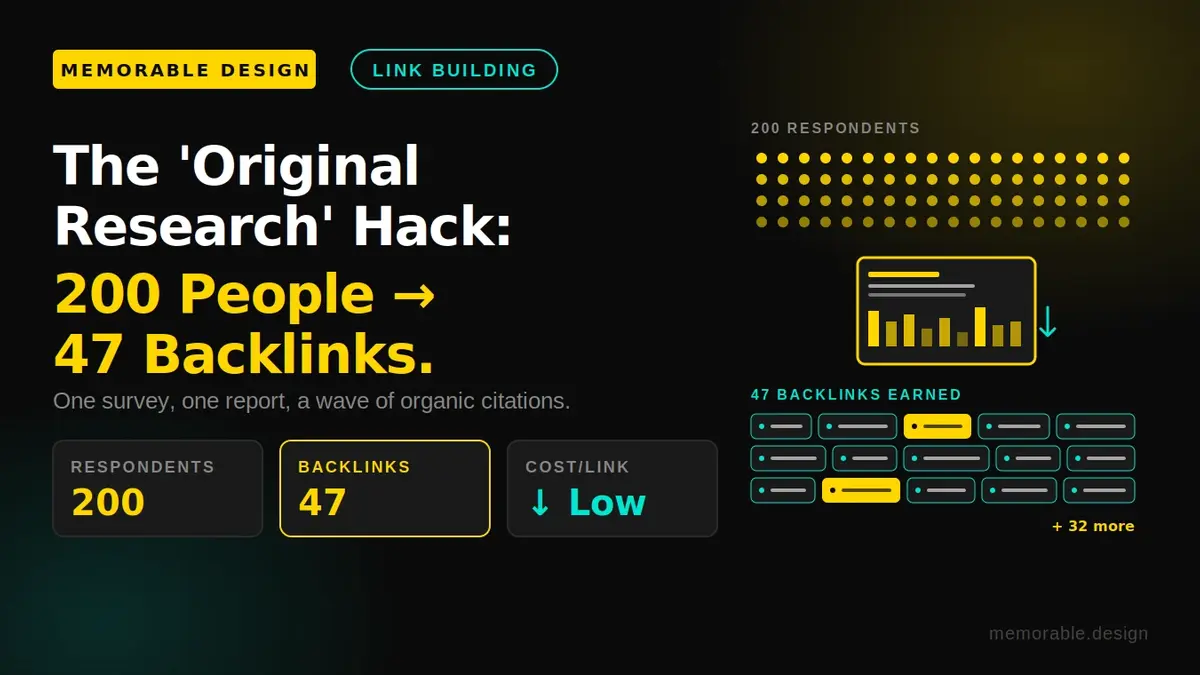
Conducting a 200-person survey is a powerful "Original Research" hack to earn high-quality backlinks. By gathering unique primary data, a brand becomes a citable source for journalists and content creators, bypassing transactional link-building. Memorable Design notes this strategy aligns with Google’s 2026 helpful content update, turning accessible data into a passive, long-term SEO asset.
Earning high-quality backlinks has become one of the toughest challenges in digital marketing. If your current link-building strategy relies on cold email outreach or rewriting generic listicles, you have likely noticed your response rates plummeting. To break through the noise, you need to produce original research content that journalists, bloggers, and industry peers can naturally use as source material. By launching a simple 200-person survey, we uncovered a systematic workflow that secured 47 high-authority backlinks without paying a single dollar for placements.
At Memorable Design, we focus on creating digital experiences that combine aesthetic brilliance with cutting-edge authority building. Building a reputable online footprint requires moving away from thin, automated text and embracing verifiable human data. In this guide, we will break down the exact survey framework we used, explain why modern search algorithms love data-driven storytelling, and show you how to replicate this success for your own brand.
The Power of Primary Data in Modern Search
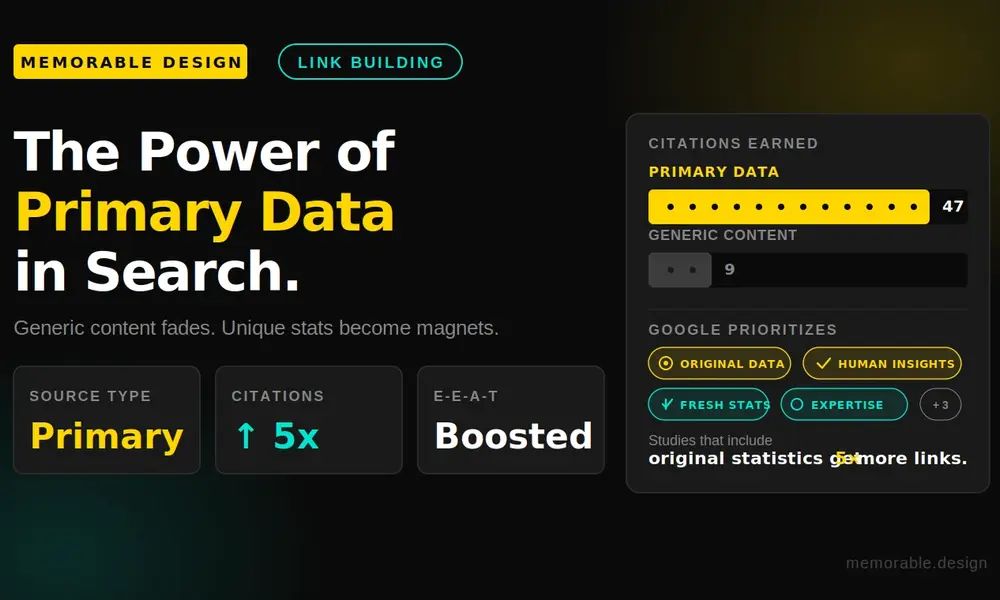
The digital ecosystem experienced a massive shift following the February 2026 Google Core Update, which focused heavily on elevating in-depth, human-driven insights while filtering out repetitive AI-generated fluff. Search engines are no longer looking for articles that simply rephrase public information. Instead, they reward content that introduces fresh data points, unique perspectives, and first-hand experiences to the web.
Why Original Data Wins the Backlink Game
B2B writers, reporters, and content creators are constantly looking for statistics to validate the claims they make in their own articles. When you create a piece rooted in unique survey insights, you become the primary source for that specific piece of information. Every time another website quotes your statistic to prove a point, they are structurally obligated to link back to your original publication, creating a passive backlink machine that builds authority around the clock.
Moving Beyond Massive Budget Requirements
Many small business owners assume that conducting data-driven research requires hiring an expensive market analysis firm or surveying tens of thousands of people. In reality, a small, highly targeted poll of just 200 qualified professionals is more than enough to reveal fascinating, statistically relevant industry trends. The secret lies entirely in the uniqueness of your questions, not the sheer volume of your budget.
Step-by-Step Guide to Executing a Low-Cost Survey
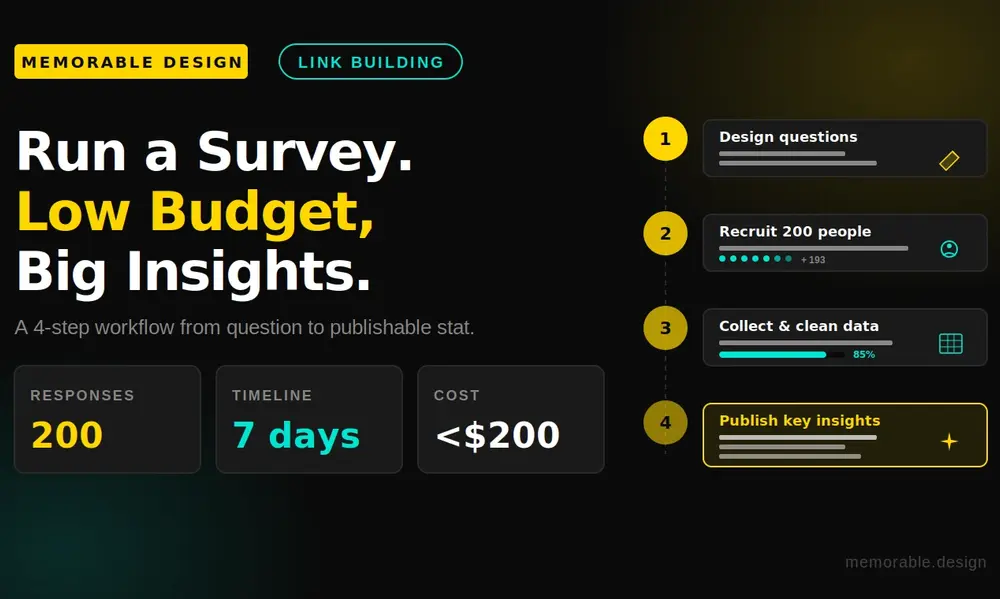
Executing a successful data campaign requires a logical, structured approach to ensure the information you gather is clean, trustworthy, and fascinating to your industry peers.
Designing Angle-Focused Questions
Never write a survey without knowing exactly what kinds of headlines you want to pitch later. Craft your questions around polarizing industry debates, emerging workspace trends, or unverified common knowledge within your niche. Keep the survey short—around five to eight multiple-choice questions so participants can finish the form in under two minutes without getting bored.
Reaching Your 200-Person Benchmark
You don’t need an existing massive email list to gather a pool of 200 highly relevant responses. You can use affordable niche survey panels like Pollfish, run targeted micro-ads on LinkedIn, or share your poll directly within active industry communities on Slack and Reddit. Incentivizing respondents with a chance to win a gift card or giving them early access to the finalized report will quickly push your numbers past the finish line.
Turning Raw Survey Responses Into Citable Assets
Gathering data is only half the battle; you must format your findings so journalists can easily find, understand, and extract your statistics.
The Art of the Stat-Heavy Headline
Once your 200 responses are locked in, compile the raw numbers into a clean spreadsheet and hunt for the most surprising correlations. Avoid boring headlines like "Our Annual Digital Marketing Industry Survey Results." Instead, use striking, declarative statements like "68% of Design Leads Say AI Tools Increased Client Refusal Rates in 2026."
Building a Journalist-Friendly Resource Page
Design your final data report page with clean layout design and maximum scannability in mind. Place a short summary list of your most impactful statistics at the very top of the page so busy writers can grab a number and go. Make sure every single key takeaway is written as a clear, standalone sentence that can be easily highlighted and copied.
Original Data Asset Specifications
To help you organize your first campaign budget and timeline, here is a breakdown of estimated resource investments, timeline milestones, and promotional outcomes based on real-world campaign metrics.
| Project Stage | Core Activities Involved | Estimated Timeframe | Required Tools & Assets |
| 1. Survey Setup | Writing questions, setting up logic, selecting target demographics. | 5 to 7 Days | Google Forms, Typeform, or Pollfish |
| 2. Data Collection | Distributing forms, monitoring response quality, closing polls. | 10 to 14 Days | Niche Slack channels, micro-targeted social ads |
| 3. Design & Formatting | Cleaning spreadsheets, designing charts, writing report copy. | 7 Days | Google Sheets, Canva graphics |
| 4. Outreach Launch | Building targeted media lists, sending personalized pitch emails. | 14 Days | Hunter.io, personalized email sequences |
Advanced Outreach Tactics to Secure 47 Backlinks
Simply publishing original research content on your blog is not enough to guarantee a flood of authority links; you need a proactive, polite outreach plan to get your data in front of the right storytellers.
Identifying the Perfect Target Audience
Use media monitoring software or simple search operators to find writers who have recently covered topics similar to your survey. Look for journalists who write weekly roundups, authors of authoritative resource pages, and bloggers who frequently use data to support their arguments. If you find an article from last year that cites an outdated statistic, you have found the perfect person to pitch with your fresh 200-person update.
Crafting a Bulletproof Pitch Email
Keep your outreach emails short, personalized, and entirely focused on how your new data adds value to their specific beat. Never send a generic, automated mass blast that looks like spam. Briefly introduce your brand, state your single most shocking statistic in the first two sentences, and provide a direct link to your report so they can review the full methodology if interested.
Maximizing the SEO Value of Your Research Page
An effective original research content campaign does more than just bring in a quick wave of initial PR links; it creates a long-term search asset that continues to attract natural citations for years.
Optimizing for High-Intent Search Queries
- Target "Statistic" Keywords: Optimize your page titles and meta descriptions for high-intent search terms like "[Your Industry] Statistics" or "[Topic] Data 2026."
- Incorporate Visual Graphs: Create clean, branded charts for each major statistic and optimize the image alt text with relevant semantic keywords.
- Embed Copy-Paste Blocks: Provide pre-formatted blockquotes or text boxes that make it incredibly simple for writers to copy your stats and credit your site.
- Keep Your Data Fresh: Plan to refresh your survey questions every twelve months so your page remains the definitive, modern resource for that topic.
- Build Strong Internal Links: Pass the powerful authority from your link-heavy research page down to your important service pages through contextual hyperlinks.
Pitfalls to Avoid in Survey Content Marketing
While data-driven campaigns are highly effective, a single mistake in your setup or presentation can completely ruin your credibility and cost you valuable media placements.
Avoiding Biased or Misleading Questions
Never write leading questions designed to force a specific, dramatic answer out of your participants. Journalists are highly trained to spot flawed methodologies, and if your data feels manipulative, authoritative publications will avoid your brand entirely. Always maintain a neutral tone in your questions and explicitly outline your participant numbers and survey dates at the bottom of your report to build trust.
Stripping Away the Academic Complexity
Do not bury your fascinating data points under pages of dense, academic jargon or complex statistical equations. Your goal is to make the insights accessible and engaging to a broad audience of industry professionals. Use simple, direct human language to explain what the numbers mean in the real world, allowing the natural strength of your findings to speak for itself.
Conclusion
The "Original Research" hack works exceptionally well because it completely bypasses the transactional nature of old-school link building. By investing a small amount of time into a 200-person survey, you create an invaluable, data-rich asset that provides genuine utility to your entire industry. Producing high-quality original research content allows you to earn authoritative links naturally, future-proof your digital presence, and build undeniable brand authority that stands the test of time.
When you are ready to scale your digital presence with strategic assets, let Memorable Design help you craft a striking, data-backed identity that commands attention across your industry!
Frequently Asked Questions
Why is original research content so effective for modern link building?
Original data is highly effective because it provides unique, citable facts that cannot be duplicated or stolen without proper attribution. Writers and journalists actively search for statistics to support their claims, making a well-structured data page a natural destination for high-authority, editorial links.
Is a sample size of 200 people really enough to trust the data?
Yes, a sample size of 200 people is perfectly sufficient for regional trends, specific B2B niches, and content marketing reports. As long as your participant pool consists entirely of qualified, verified professionals within your specific field, the resulting data will be highly relevant and authoritative to your peers.
How do I find journalists to pitch with my survey results?
You can easily find relevant journalists by searching Google News for recent articles covering your specific industry niche. Collect the names and publications of writers who frequently use statistics in their reporting, and use email verification tools to locate their professional contact information for personalized outreach.
