
Finding effective keyword research tools is essential for digital growth, and Memorabledesign helps businesses navigate this shifting space by integrating precise data analysis into sustainable content strategies. Discovering hidden search terms allows you to capture valuable traffic and connect directly with your target audience before your competitors do.
Key Takeaways
-
Modern keyword research tools must analyze user intent and entity relationships, so relying on search volume alone no longer works in the AI search era.
-
Advanced search platforms track presence inside Google AI Overviews, and they also assist brands in building deep topical authority across search layouts.
-
Selecting the right keyword research tools depends heavily on your specific operational budget, and it must align perfectly with your daily marketing workflow.
Best Keyword Research Tools at a Glance
| Tool | Best For | Free Plan | Search Volume | Keyword Difficulty | Competitor Research | AI Features | Pricing (Monthly / Annual) |
| Semrush | All-in-One SEO & AI Tracking | 10 Free Reports/Day | Excellent | Advanced | Elite | Comprehensive | $139.95 / $117.33 mo |
| Ahrefs | Deep Backlink & Core Research | Limited Verified Owners | Elite | Industry Standard | Industry Standard | Add-on modules | $29.00 / $29.00 mo |
| Google Planner | PPC & Core Seed Ideas | Free | Capped Ranges | Paid Competition Only | Basic | None | Fully Free |
| KeywordTool.io | Autocomplete Platform Scraping | Very Limited Free Tier | Capped | Paid Plans Only | Moderate | Basic Ideas | $69.00 / $69.00 mo |
| Moz Explorer | Domain Authority Metrics | 10 Free Queries/Mo | Great | Custom Calculation | Good | Basic | $99.00 / $99.00 mo |
| SE Ranking | Agencies & Mid-Sized Teams | 14-Day Free Trial | Great | Accurate | Great | Grouping & Tracking | $129.00 / $103.20 mo |
| Mangools | Beginners & Quick Audits | 10-Day Free Trial | Good | Highly Visual | Basic | Basic | $49.00 / $29.90 mo |
| Ubersuggest | Small Businesses & Solopreneurs | 3 Free Searches/Day | Moderate | Simplified | Good | AI Copy Assistant | $29.00 / $29.00 mo |
| AnswerThePublic | Question Mining & Voice SEO | 3 Free Searches/Day | Uses Google Data | Not Available | None | Intent Clustered | $9.00 / $9.00 mo |
| LowFruits | Long-Tail & Programmatic SEO | 10 Free Credits | Niche Extraction | Focuses on Weak Spots | Dedicated | Automatic Clustering | Pay-as-you-go |
What Are Keyword Research Tools?
A keyword research tool is software that uncovers the specific search terms people enter into discovery engines. These platforms scrape database logs, search indexes, and advertising networks to reveal what your audience wants to find.
How Keyword Research Tools Work
Modern keyword research software collects raw user input and processes it through proprietary data models. When you input a seed term, the platform calculates several critical metrics:
-
Search volume: An estimate of how many times a phrase is searched each month.
-
Keyword Difficulty: A score showing how hard it is to rank on the first page, usually calculated by analyzing the backlink profiles of current top sites.
-
CPC (Cost Per Lead/Click): The amount advertisers pay for a single click, showing the commercial value of the phrase.
-
Search intent: The underlying goal of the user, categorized as informational, navigational, commercial, or transactional.
-
SERP analysis: A detailed breakdown of the top-ranking web pages, tracking features like featured snippets, local packs, and video carousels.
-
Entity relationships: The structural links between primary topics and secondary concepts.
-
Topical relevance: A measurement showing how deeply a piece of content covers an entire subject network.
Why Keyword Research Tools Matter More in 2026
The explosion of generative answer engines makes advanced software non-negotiable. Google AI Overviews summarize complex topics right on the SERP, keeping users on the page. Search optimization now requires targeting Entity SEO and Semantic SEO to ensure your content is included in these AI summaries.
To rank well, you must build deep Topical Authority across entire subject areas. New fields like Generative Engine Optimization (GEO) and Answer Engine Optimization (AEO) require optimization for AI assistants, ChatGPT Search, Perplexity, and Gemini. If you use outdated tools that only look at plain text matching, your content will become invisible to these modern systems.
How We Evaluated the Best Keyword Research Tools
We ran these platforms through intensive testing across real-world workflows to ensure our recommendations are practical and effective.
Data Accuracy
We pull extensive lists from active campaigns and cross-reference them with live search console metrics. This software must provide highly dependable estimates, so we flag platforms with outdated metrics. Every selected keyword research tool passed our verification process, but minor database deviations still happen.
Keyword Database Size
A small index limits your search potential and hides valuable long-tail phrases. We test the limits of each pool by entering highly specific niche terms across global markets. Then we analyze how many unique variations appear, and we check how often the software refreshes its terms.
Search Intent Detection
We check if the program accurately separates buying signals from simple informational queries. Most modern platforms label intent automatically, but some still fail on mixed conversational searches. We test hundreds of ambiguous phrases, then we grade how well the software highlights true user needs.
Competitor Analysis Features
Reverse engineering top websites is the fastest way to scale a successful digital strategy. We drop competitor links into each platform to check how fast they pull ranking data. A great platform uncovers top pages instantly, and it also isolates overlapping terms seamlessly.
SERP Analysis
Live search pages display interactive modules, so static data views are no longer enough. We evaluate how deeply each platform dissects rich snippets, local maps, and interactive video features. This research reveals hidden landscape hurdles, so you know exactly what your content faces.
AI Search Readiness
Modern content must satisfy automated summaries, and this requires tracking new generative metrics. We test if these tools identify your brand presence inside live AI overviews. The software must also map out conceptual entity connections, so you stay visible across discovery networks.
Ease of Use
A complex interface slows down daily operations and exhausts your marketing team. We monitor how fast a beginner navigates the dashboard, exports bulk data, and builds clean reports. Great software balances advanced metrics with accessible design, so you work without unnecessary friction.
Pricing and Value
High cost must match matching feature depth, yet some platforms restrict usage heavily. We evaluate daily account limits against monthly subscription costs to find the true budget value. This balancing act ensures small businesses, freelancers, and growing agencies find sustainable tools.
Our Keyword Research Tool Evaluation Criteria
| Factor | Weight | Why It Matters |
| Data Accuracy | 25% | Faulty metrics waste months of content creation budget. |
| Competitor Features | 20% | Cloning competitor wins saves hours of manual testing. |
| AI Search Readiness | 15% | Content must be optimized for AI overviews to maintain visibility. |
| Database Size | 15% | Larger phrase pools uncover hidden, high-value long-tail opportunities. |
| Intent Accuracy | 15% | Matching user expectations prevents high bounce rates. |
| Pricing & Usability | 10% | Software must fit your budget and daily operational speed. |
10 Best Keyword Research Tools in 2026
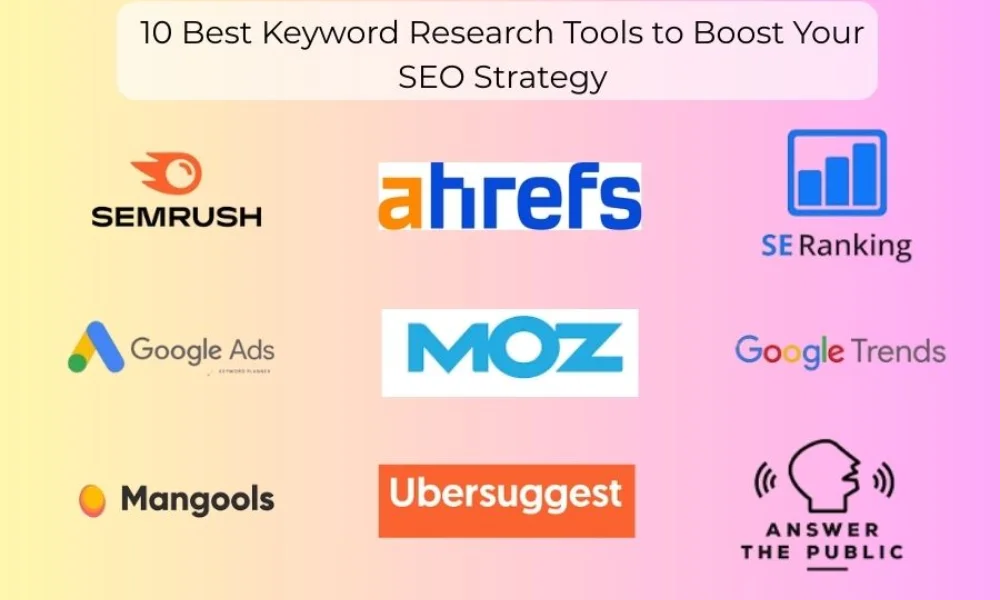
Here are 10 best keyword research tools:
1. Semrush Keyword Magic Tool
Semrush remains a top choice for comprehensive, data-driven organic campaign management. Its core feature, the Keyword Magic Tool, provides access to a massive database of over 25 billion phrases.
-
Best features: The platform offers exceptional data clustering and precise keyword difficulty scores. It features dedicated dashboards that monitor your brand presence inside Google AI Overviews across custom keyword sets.
-
Pros: Excellent competitor tracking, clean automatic thematic grouping, and updated metric refreshes.
-
Cons: The interface can feel overwhelming for beginners, and the standard plans allow only one user seat.
-
Pricing: Classic plans start at $139.95 per month, and the Semrush One tier, which integrates advanced AI tracking features, starts at $199 per month.
-
Best for: Professional marketers, agencies, and enterprise brands needing deep competitive intelligence.
-
AI search support: Includes automated intent categorization and tracking for AI brand share-of-voice metrics.
2. Ahrefs Keywords Explorer
Ahrefs is built on elite web crawling infrastructure, making it highly reliable for analyzing backlink metrics and historical ranking shifts.
-
Strengths: Excellent click metric modeling that reveals how many searches actually turn into website clicks. Its parent topic tool groups minor variations under a single core subject header.
-
Weaknesses: The platform uses a rigid credit usage system that charges for advanced filtering, and there is no traditional free trial available.
-
Best use cases: Deep link-building strategy design, detailed competitive auditing, and core phrase discovery.
-
Pricing: The entry-level Starter plan costs $29 per month, and the practical Lite tier costs $129 per month.
3. Google Keyword Planner: SEO Keyword Planner
The Google Keyword Planner remains a fundamental foundation for search marketing, built directly into the Google Ads dashboard.
-
Features: It provides direct search trends straight from Google, and it allows users to filter geographic data down to specific cities.
-
PPC data vs Organic SEO: The tool is designed primarily for paid ad campaigns, so it groups organic volumes into wide ranges unless you run an active ad budget. The competition metric shows advertiser demand rather than organic ranking difficulty.
-
Value: Completely free to use, making it an excellent SEO keyword planner for finding seed terms.
4. KeywordTool.io
KeywordTool.io bypasses standard database estimates to focus entirely on platform autocomplete suggestion features.
-
Autocomplete data extraction: It pulls real-time predictive search suggestions from Google, YouTube, Bing, Amazon, eBay, Instagram, and TikTok.
-
Value: Excellent for finding long-tail, conversational queries that standard database tools miss.
-
Limitations: The free version hides search volume and CPC data entirely, and paid subscriptions start at $69 per month.
5. Moz Keyword Explorer
Moz provides clean, highly intuitive metrics that avoid data clutter.
-
Features: Features a unique organic click-through rate (CTR) estimation tool, and the priority score combines difficulty, opportunity, and volume metrics into one clear number.
-
Pros: Highly accurate keyword difficulty calculations and very clear visual graphs.
-
Cons: The link database updates slower than Semrush or Ahrefs.
-
Pricing: Subscriptions start at $99 per month, with a small free tier that offers 10 searches per month.
6. SE Ranking
SE Ranking is a fast-growing platform that offers high-tier agency features at an accessible price point.
-
Features: Excellent automatic keyword grouping tools, accurate position tracking, and detailed page-change monitoring.
-
Pros: Highly customizable report layouts and great multi-user data access permissions.
-
Cons: The backlink index is smaller than top-tier competitors.
-
Pricing: Plans start at $129 per month, making it highly budget-friendly for small agencies.
7. Mangools KWFinder
Mangools provides a streamlined, highly focused toolset that simplifies phrase research.
-
Visual focus: KWFinder stands out as one of the best keyword finder tools due to its clean, user-friendly interface. It highlights low-competition opportunities using a clear, color-coded difficulty system.
-
Pros: Very low learning curve and highly affordable pricing tiers.
-
Cons: Lacks deep advanced competitor auditing features for large sites.
-
Pricing: Entry-level tiers start at $49 per month.
8. Ubersuggest
Ubersuggest offers a simplified marketing dashboard tailored for solopreneurs and small businesses.
-
Features: Provides quick overview metrics, easy dashboard navigation, and an integrated AI content idea generator.
-
Pros: Accessible interface and low-cost lifetime subscription options.
-
Cons: Experienced SEO professionals may find the data depth and filtering options limited.
-
Pricing: Paid options start at $29 per month, along with a basic free plan that allows 3 searches per day.
9. AnswerThePublic
AnswerThePublic maps out the conversational, question-based phrases users search around a core topic.
-
Visual maps: Organizes queries into visual mind maps split by question categories like who, what, why, where, and how.
-
Modern applications: Essential for optimizing for voice search and answer engine layouts, as it surfaces natural language patterns.
-
Pricing: Paid plans start at $9 per month, with a basic free version that allows 3 daily searches.
10. LowFruits
LowFruits specializes in analyzing the SERPs to find low-competition keywords that niche sites can target easily.
-
Features: Automatically flags search results that contain weak spots, like forums, social media posts, or low-authority blogs on the first page.
-
Programmatic use cases: Excellent for analyzing thousands of keywords at once and finding high-value long-tail opportunities.
-
Pricing: Uses a flexible pay-as-you-go credit system starting at $25, alongside traditional subscription tiers.
Best Keyword Research Tools Compared
| Tool | Search Volume | KD | SERP Analysis | Competitor Keywords | AI Search | Free Version | Best For |
| Semrush | Highly Accurate | Excellent | Advanced | Complete Tracking | AI Overview Track | 10 Queries / Day | Agencies & Pros |
| Ahrefs | Click-Modeled | Standard | Advanced | Deep Analysis | Prompt Checking | Ahrefs Free Tier | Link Builders |
| Google Planner | Capped Ranges | Paid Only | Basic | Basic URLs | None | Fully Free | PPC & Seeds |
| KeywordTool.io | Good | Paid Only | None | Limited | Basic Phrases | No Metrics View | Autocomplete |
| Moz Explorer | Reliable | Proprietary | Good | Good Analytics | Core Insights | 10 Queries / Month | Clear Metrics |
| SE Ranking | Accurate | Good | Detailed | Strong Mapping | Cluster Insights | 14-Day Trial | Growing Teams |
| Mangools | Reliable | Visual | Clear | Simple Scan | Basic Trends | 10-Day Trial | Beginners |
| Ubersuggest | Estimated | Simplified | Basic | Basic Audit | Text Generation | 3 Queries / Day | Solopreneurs |
| AnswerThePublic | Estimated | None | None | None | Intent Focused | 3 Queries / Day | Voice and Questions |
| LowFruits | Reliable | Weak Spot Flag | Dedicated | Competitor Gaps | Auto Clustering | 10 Free Credits | Niche and Long-tail |
Keyword Research Tools by Use Case
Different marketing projects require different tools. Selecting software that matches your specific operational role prevents overpaying for features you do not use.
Best Keyword Research Tools for Beginners
-
Mangools KWFinder: The clear, visual layout prevents data fatigue and makes it easy to spot low-competition phrases quickly.
-
Ubersuggest: Provides simple, actionable SEO tips without requiring advanced data knowledge.
Best Keyword Research Tools for Agencies
-
Semrush: The comprehensive toolkit allows agencies to manage competitor intelligence, rank tracking, and client reporting inside one platform.
-
SE Ranking: Offers white-label report automation and multi-user seats at an affordable price.
Best Keyword Research Tools for Local SEO
-
Google Keyword Planner: Allows you to filter search volume down to specific postal codes and cities, which is essential for brick-and-mortar marketing.
-
Semrush: Its local toolkit tracks localized map pack rankings across specific coordinates.
Best Keyword Research Tools for Ecommerce
-
Ahrefs: Its batch analysis tools allow you to study thousands of product variation URLs simultaneously.
-
KeywordTool.io: Extracts high-intent buyer terms directly from Amazon and eBay auto-suggest fields.
Best Keyword Research Tools for Bloggers
-
LowFruits: Instantly identifies keywords where forums like Reddit rank on the first page, showing easy ranking opportunities.
-
AnswerThePublic: Generates hundreds of blog topic ideas by revealing the exact questions your audience is asking online.
Best Keyword Research Tools for Enterprise SEO
-
Semrush (Advanced Tiers): Provides API access, large-scale data monitoring, and custom tools to track brand share-of-voice across millions of search terms.
-
Ahrefs (Enterprise Plan): Delivers elite backlink index tracking and global database scaling for large corporate websites.
Keyword Research Tools vs SEO Keyword Planner
Many beginners wonder if they should pay for a premium tool like Semrush or stick with the free Google Keyword Planner. Both options serve entirely different marketing goals.
The Google Keyword Planner is designed to support paid Google Ads campaigns. It groups related phrases together and displays broad volume ranges unless you are running an active ad campaign. Its competition metric shows how many advertisers are bidding on a phrase, not how hard it is to rank organically.
Premium tools like Semrush, Ahrefs, and KWFinder are built specifically for organic search strategy. They provide exact monthly search volumes, analyze backlink profiles to calculate true organic difficulty, and identify the search intent behind queries. They also offer advanced features like automatic topic clustering, which groups related keywords together so you can build topical authority efficiently.
Feature Comparison
| Feature | Google Keyword Planner | Semrush | Ahrefs | KWFinder |
| Primary Design Intent | Paid Google PPC Campaigns | All-in-One Organic SEO | Link & Content Audits | Quick Long-Tail Discovery |
| Search Volume View | Broad Capped Ranges (Free) | Exact Monthly Estimates | Click-Modeled Estimates | Exact Monthly Numbers |
| Difficulty Metric | Paid Advertiser Density | Organic Link Difficulty | Backlink Profile Weights | Visual Difficulty Score |
| Competitor Extraction | Basic URL Input | Elite Reverse Engineering | Advanced Domain Crawls | Basic Competitor Lists |
| Clustering Capacity | None (Groups Broadly) | Advanced Automatic Lists | Parent Topic Grouping | Manual List Organization |
Best Ahrefs Alternatives for Keyword Research
If Ahrefs does not fit your workflow or budget, several strong Ahrefs alternatives offer comparable data and unique features.
-
Semrush: The closest alternative for all-in-one SEO campaigns. While Ahrefs focuses heavily on link analysis, Semrush provides stronger tools for competitive advertising audits, daily rank tracking, and content optimization.
-
SE Ranking: An excellent alternative for growing marketing teams and agencies. It balances accurate position tracking and keyword metrics with a highly flexible user seat model that avoids sudden price jumps.
-
Mangools: A great choice for independent freelancers and small businesses who find the Ahrefs interface too complex or its pricing too high. It provides clean, essential keyword metrics at a fraction of the cost.
-
Ubersuggest: A solid, low-cost alternative for small businesses that only need basic dashboard monitoring and quick keyword ideation.
-
LowFruits: A dedicated tool for niche publishers that cuts through standard domain metrics to focus entirely on finding low-competition search results.
Choosing the Right Alternative
-
Freelancers: Mangools or LowFruits provide elite keyword discovery without heavy monthly fees.
-
Agencies: SE Ranking offers white-label reporting features that help you scale client management smoothly.
-
Startups: Ubersuggest or standard Semrush tiers provide an accessible way to blend core keyword research with basic competitor tracking.
-
Enterprises: High-tier Semrush subscriptions provide the global data access and API integrations required by large corporate websites.
How to Choose the Right Keyword Research Tools
Your choice of software should match your business model and content strategy.
If You are a Blogger
Focus on long-tail discovery and search query intent. Tools like LowFruits and AnswerThePublic help you find low-competition question keywords, allowing you to rank quickly without needing a huge backlink budget.
If You are an Agency
Prioritize automated client reporting, multi-user seats, and comprehensive competitor tracking. Semrush and SE Ranking allow you to manage multiple client sites efficiently inside a single ecosystem.
If You are a Small Business
Look for affordable options with a gentle learning curve. Mangools KWFinder or Ubersuggest provide the essential keyword metrics you need to optimize your main service pages without breaking your budget.
If You are an Ecommerce Brand
Choose platforms that excel at batch processing and platform-specific research. Ahrefs and KeywordTool.io help you analyze thousands of product variations and pull high-intent search terms directly from buyer platforms like Amazon.
If You are Building Topical Authority
Select tools that offer automatic topic clustering and entity relationship mapping. Semrush and LowFruits allow you to organize hundreds of related phrases into structured content hubs, ensuring you cover topics deeply enough to satisfy search engines and AI answer engines.
How to Use Keyword Research Tools Like an SEO Professional
Following a structured workflow ensures you turn raw keyword lists into a successful, high-ranking content strategy.
1: Find Seed Keywords
You start your content strategy by entering core industry terms into your software dashboard. This initial step surfaces basic phrases, and then you filter out irrelevant ideas. You now have a raw foundational list, so you can begin expanding your data.
2: Expand Keyword Ideas
You drop your chosen seed terms into keyword finder tools to generate expansive lists. These platforms uncover hidden, low-competition long-tail phrases, and then you sort them by trend. This step fills critical topic gaps, so you secure easy competitive wins.
3: Analyze Search Intent
You evaluate why users search for each specific phrase before creating any text. The software labels these intents automatically, but you still check the live results manually. This step aligns content with user needs, so your bounce rates stay low.
4: Study Competitors
You input top competitor web links to steal their highest-performing traffic phrases easily. This reverse search surfaces their best terms, and then you check their weaknesses. You can target their content gaps directly, so you climb rankings faster.
5: Build Topic Clusters
You group your target terms into tight thematic lists around one main pillar. This layout connects supporting content naturally, and then you link the pages together. Search engines crawl these hubs easily, so you establish deep topical authority.
6: Create an SEO Content Brief
You map out your headings and integrate primary entities before drafting your article. This brief dictates text limits, and it also includes vital secondary terms. Writers follow these clear rules, so the final piece matches search expectations.
7: Optimize for AI Search
You place clear answers near the top of your pages to satisfy modern systems. This specific placement captures featured snippets, and then discovery engines pull your data. Your brand wins high visibility, so you thrive in the AI search era.
Common Mistakes When Using Keyword Research Tools
Avoiding these common analytical mistakes will save you time and protect your content budget:
-
Ignoring Search Intent: Creating a long blog post for a keyword where users just want a quick tool or a product checkout page.
-
Overlooking Entities: Focusing only on exact-match keywords while failing to include the broader, related concepts that build topical authority.
-
Neglecting AI Search Changes: Optimizing only for classic blue links while ignoring how your content fits into generative AI summaries.
-
Failing to Analyze the SERP: Targeting a high-volume phrase without checking if the first page is completely dominated by paid ads, videos, or local map packs.
-
Relying Solely on Software Scores: Assuming a low difficulty score guarantees an easy ranking without manually reviewing the quality of the competing sites.
-
Creating Content Cannibalization: Targeting the exact same keyword across multiple different pages, causing your own URLs to compete against each other in search results.
The Future of Keyword Research Tools
Keyword research software is evolving quickly to keep pace with changing search habits. Traditional tools that only track search volume are being replaced by intelligent platforms built for the AI era. Modern tools focus heavily on automated keyword clustering, using machine learning to group thousands of terms into structured topic hubs instantly. They also feature predictive trend models that help you spot rising search topics before they become highly competitive.
As answer engines like Google AI Overviews, ChatGPT Search, Perplexity, and Gemini grow, optimization trends are shifting. Tools are adjusting to help marketers monitor their brand citations inside AI-generated answers. The rise of agentic SEO means autonomous software agents will handle parts of the research process, analyzing search intent and building content briefs automatically.
Keyword research is moving beyond simple text matching on Google, expanding into multi-platform optimization across YouTube, Amazon, TikTok, and generative discovery engines.
Conclusion
The best keyword research tools are no longer just about search volume they should help uncover search intent, semantic relationships, competitor opportunities, and AI search visibility. Choose a tool based on business goals, budget, and workflow rather than popularity alone. Successful SEO in 2026 comes from combining high-quality keyword research, technical SEO, topical authority, and user-focused content strategies to build long-term organic growth rather than chasing individual rankings.
Frequently Asked Questions
What are the best keyword research tools?
Semrush and Ahrefs are the top options for comprehensive professional campaigns. For simpler, more visual tracking, platforms like SE Ranking and Mangools KWFinder offer excellent value.
Which keyword research tools are free?
The Google Keyword Planner is fully free to use. Tools like AnswerThePublic, Ubersuggest, and Semrush offer limited free tiers that allow a few searches per day without a credit card.
Which keyword research tools are best for beginners?
Mangools KWFinder is highly recommended for beginners due to its clean visual interface. Ubersuggest is also a solid choice for small businesses looking for straightforward keyword ideas.
What is the best SEO keyword planner?
The Google Keyword Planner remains the best free tool for finding initial seed ideas directly from search data. For organic content planning, premium tools like Semrush or Ahrefs offer better intent analysis and clustering features.
Which keyword research tools are better than Ahrefs?
Semrush stands out as a strong alternative, offering deeper tools for competitive advertising audits, daily rank tracking, and content management.
Are keyword research tools still useful with Google AI Overviews?
Yes. Keyword tools remain essential, but their role has changed. Instead of just tracking search volume, professionals use them to analyze user intent, map out related entities, and structure content so it gets cited in AI overviews.
Can keyword research tools help with ChatGPT and AI search optimization?
Yes. Advanced tools now offer specialized tracking features that monitor how often your brand is mentioned across major AI response engines.
Which keyword finder tools are best for long-tail keywords?
LowFruits excels at finding low-competition long-tail keywords by scanning search results for weak spots. AnswerThePublic and KeywordTool.io are also excellent for extracting conversational questions and autocomplete suggestions.
