
Search engine optimization often feels like a constant race to produce more pages. However, expanding your publishing calendar is not the only way to drive growth. The secret to unlocking hidden search performance lies in optimizing your existing architecture using a targeted internal linking strategy.
An effective internal linking strategy allows search engine crawlers to discover, understand, and index your content more efficiently. By systematically passing authority between your existing pages, you can improve keyword rankings and increase organic traffic without drafting a single new blog post. This guide outlines how to build a robust link architecture and organize your pages into high-performing content clusters.
Why an Internal Linking Strategy Is Essential for SEO
Many website owners focus almost entirely on acquiring external backlinks. While external authority matters, how you distribute that authority across your site is equally critical. An optimized internal linking strategy ensures that equity flows directly to your highest-value conversion pages.
Without a deliberate internal linking strategy, search engines may struggle to identify which pages serve as master guides and which serve as supporting articles. Proper internal connections remove this ambiguity, providing clear contextual signals about your site depth.
Establishing Page Hierarchy
Search engine algorithms evaluate the relative importance of your pages based on how they connect to one another. Pages with numerous incoming internal links signal high organizational priority. A structured internal linking strategy ensures your primary transactional or pillar pages receive the strongest signals.
Improving Crawl Efficiency
Search engine bots follow links to map out website content. When pages are left disconnected, crawlers miss valuable context. Implementing a structured internal linking strategy creates efficient paths, ensuring every valuable page is indexed and refreshed regularly.
Core Pillars of an Effective Internal Linking Strategy
Building a scalable internal web requires an organized framework. Rather than inserting links randomly, you should organize your site structure into three core pillars: logical layout design, topical grouping, and descriptive anchor text.

1. Designing a Scalable Link Architecture
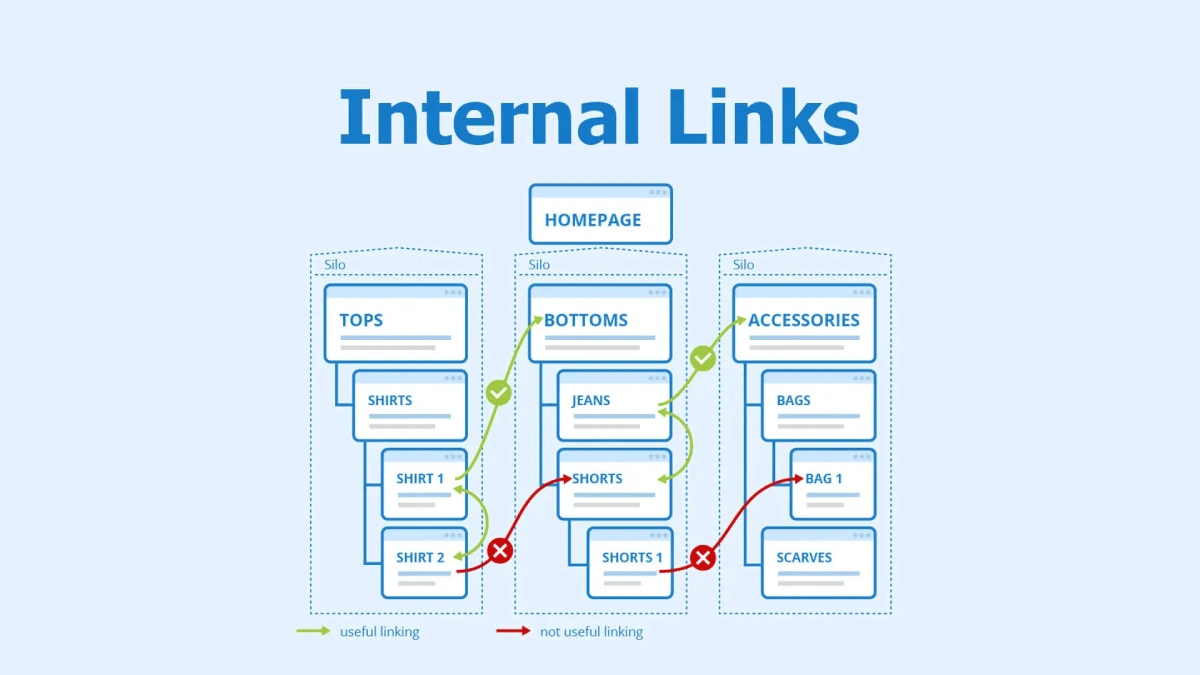
Your link architecture refers to the structural framework connecting your pages. A flat, organized link architecture ensures users and search bots can reach any page within three or four clicks from the homepage.
-
Avoid Deep Navigation Traps: Pages buried deep within subfolders rarely receive sufficient authority. Keep key commercial pages high up in your site structure.
-
Maintain Logical Silos: Keep links relevant to specific categories. For instance, a page about digital design should link heavily to related design services rather than unrelated topics.
-
Audit Broken Connections: Clean up broken links (404 errors) routinely. Broken links waste crawl budget and interrupt authority flow across your link architecture.
2. Organizing Pages Into Content Clusters
One of the most effective ways to execute an internal linking strategy is by establishing content clusters. The cluster model groups related articles around a single, comprehensive pillar page.
-
Identify the Master Pillar Page: Select a broad, high-intent page that serves as the main hub for a topic.
-
Connect Supporting Articles: Build dedicated supporting posts addressing granular questions. Link these sub-topics back to the main pillar page using relevant keywords.
-
Enable Inter-Cluster Connections: Connect supporting sub-topic pages to each other when relevant. This reinforces your topical expertise while keeping readers engaged longer.
By using content clusters, you signal deep subject authority to search engines, helping all pages within the group rank higher together.
3. Optimizing Anchor Text for Context
Anchor text is the clickable text that holds a hyperlink. It provides search engine crawlers with direct context about the destination page.
-
Use Descriptive Phrases: Avoid generic text like “click here” or “read more.” Instead, use descriptive terms that reflect the target page topic.
-
Vary Anchor Terms Naturally: Avoid using the exact same phrase for every internal link pointing to a page. Natural variations look more organic and prevent over-optimization flags.
-
Place Links High in the Body: Links embedded directly within the body text carry more weight than links placed in footers or sidebars.
Structural Comparison: Unstructured vs. Cluster Link Architecture
Many websites feature random links without a deliberate plan. Transitioning to an intentional internal linking strategy built on organized content clusters changes how search engine algorithms process your domain.
| Feature Strategy | Unstructured Site Links | Cluster Link Architecture |
| Primary Structural Goal | Connecting pages randomly as ideas occur during writing. | Building organized content clusters around master pillar pages. |
| Authority Flow | Equity gets trapped or diluted in orphaned sub-pages. | Link authority flows systematically to high-value pillar pages. |
| Topical Signaling | Weak signals; search algorithms struggle to identify main pages. | Strong signals; clear hierarchy highlights key subject hubs. |
| User Navigation Experience | Fragmented paths; visitors struggle to find related resources. | Logical paths; visitors easily explore related sub-topics. |
Aligning Internal Links with Modern Search Updates
Recent search algorithm updates place heavy emphasis on helpfulness, logical navigation, and clear site authority. An optimized internal linking strategy supports these requirements by creating a clear, user-focused journey.
Demonstrating Topical Depth (E-E-A-T)
Search engines reward domains that demonstrate comprehensive industry experience. Linking your practical guides, case studies, and service pages together proves that your business offers real-world solutions rather than shallow text.
-
Highlight Practical Case Studies: Connect informational blog posts directly to real project examples or client case studies.
-
Link Authoritative Team Profiles: Ensure author bios link to dedicated team profiles outlining credentials, certifications, and background experience.
-
Contextualize Recommendations: Embed links where they naturally solve the reader’s next potential question.
Streamlining the User Journey
An effective internal linking strategy reduces bounce rates by providing clear next steps for visitors.
-
Address Next-Step Questions Early: If an article discusses a complex problem, link directly to a guide or tool that helps solve it.
-
Keep Paragraphs Focused: Present your links clearly within short, easy-to-read paragraphs.
-
Ensure Mobile Accessibility: Place links where mobile users can easily tap them without accidentally clicking adjacent elements.
Actionable Execution Checklist
To update your existing site structure without writing new content, follow this step-by-step implementation plan.
Summary for Optimization
Ranking higher on Google does not always require creating endless new content. By refining your internal linking strategy, you can maximize the value of the pages you already have. Organizing your domain into intentional content clusters and building a clean link architecture creates a clear roadmap for search engines and site visitors alike.
If you want to evaluate your site structure or need expert design assistance to build a high-performing digital platform, explore the strategic services offered at memorabledesign.com.
Frequently Asked Questions
What is the main objective of an internal linking strategy?
The main objective of an internal linking strategy is to organize site hierarchy, pass link equity to important pages, and help search engines crawl and understand your content efficiently.
How many internal links should I include per blog post?
There is no fixed limit, but adding two to five relevant internal links per 1,000 words is generally recommended. Focus on contextual relevance rather than hitting a specific number.
What is the difference between external backlinks and internal links?
External backlinks come from third-party websites and pass domain authority to your site. Internal links connect pages on your own domain, controlling how that authority is distributed across your site structure.
Can an internal linking strategy fix orphaned pages?
Yes. Orphaned pages are pages with no incoming internal links, making them hard for search engines to find. Adding contextual internal links from relevant pages fixes this issue immediately.
How do content clusters improve search rankings?
Content clusters group related articles around a main pillar page. This structure signals deep topical authority to search engines, helping all connected pages rank higher for relevant search terms.
