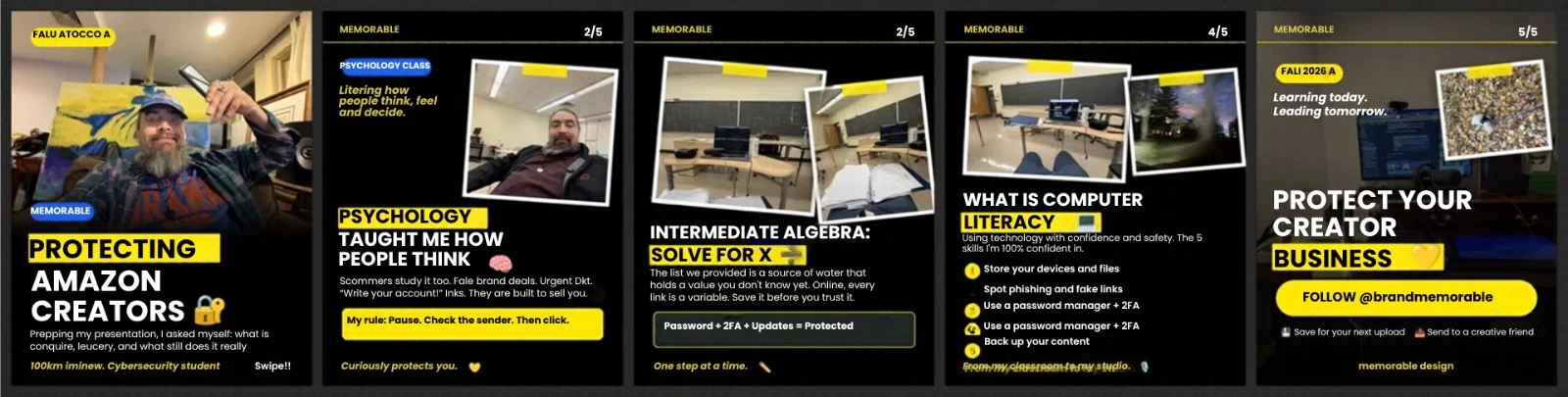
What does it mean to be an Amazon Content Creator when you are also a college student, website developer, and lifelong learner? For me, it means bringing together different parts of my life: technology, creativity, education, and the desire to share useful information. My journey started with building websites for businesses, continued through my work with WordPress and SEO, and now includes my experience creating digital content while studying at SUNY Orange.
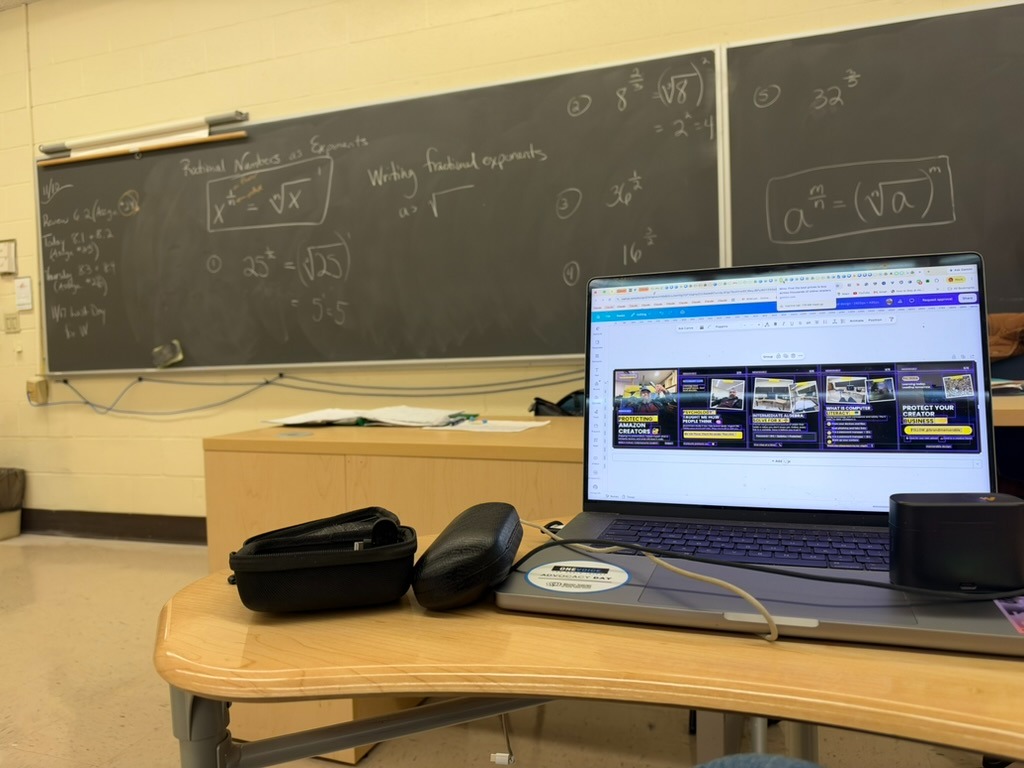
By Ruslan Smirnov | Founder of Memorable Design | SUNY Orange Student | Amazon Associate & Content Creator
My Journey Started Before Amazon Content Creation
Before I came to the United States, I was already interested in building websites. I used Google Sites to create websites for businesses, and I enjoyed discovering how technology could help people present their ideas and services online.
At that time, I was learning by doing. I wanted to understand how websites were organized, how visitors moved between pages, and how businesses could communicate with people through the internet.
That early experience gave me a foundation for what I do today.
As I developed my skills, I started working with WordPress, Squarespace, website design, branding, search engine optimization, and digital marketing. I became more interested in the connection between technology and communication.
Eventually, I also became involved in Amazon content creation.
For me, becoming an Amazon Content Creator was another step in my digital journey. It gave me a way to explore content creation from a different perspective and connect my interest in useful products with my experience using digital tools.
But my story is not only about creating content. It is also about learning.
Today, I am a student at SUNY Orange, and I continue to develop my skills through college classes and practical projects.
Why I Returned to College to Study Computer Literacy
Someone might ask me a simple question:
"Why are you studying computer literacy if you have already worked with websites?"
It is a fair question.
I have experience creating websites, working with digital platforms, and using online tools. However, I believe there is a difference between knowing how to use technology and understanding how it works.
That is one reason I wanted to study computer literacy at SUNY Orange.
My classes helped me look at technology from a broader perspective. I learned to think about hardware, software, file management, computer networks, databases, and digital information.
These subjects connect with my everyday work more than I initially expected.
When I create a website, I work with software, files, images, and online systems. When I prepare digital content, I use applications to organize information and communicate ideas. When I manage a project, I need to understand where my files are stored and how to keep my digital work organized.
Studying computer literacy skills gives me a stronger foundation for all these activities.
I have also learned that being experienced does not mean I should stop asking questions. Technology keeps changing, and I want to keep learning with it.
What Being an Amazon Content Creator Means to Me
My experience as an Amazon Content Creator connects with something I have always enjoyed: discovering digital tools and finding ways to explain useful information.
I enjoy creating content around subjects that connect with my daily life, studies, and interests.
For example, technology is part of how I prepare college assignments, organize my notes, create presentations, and work on websites. These activities naturally make me interested in the digital tools people use every day.
When I create content, I think about the person watching it.
What would they want to understand?
Can I explain the subject clearly?
Would a photograph or demonstration make the information easier to understand?
Am I presenting the information accurately?
These questions matter to me because I do not want content to be just something people scroll past. I want it to communicate something useful.
I also understand that content creation requires responsibility. If I explain a product or demonstrate a feature, I should be accurate about what I know. I should not claim that I tested something if I did not. I should also distinguish between my own observations and information provided by a manufacturer.
Amazon provides creator tools and features for eligible participants, but the creative work still requires planning, communication, and an understanding of the audience.
That is the part of the experience I find interesting: using technology to share information in a way people can understand.
How My Computer Literacy Skills Help My Content Creation
Before taking my computer literacy class, I already knew how to use several digital applications. However, studying the fundamentals helped me understand why these everyday skills matter.
For example, creating digital content often involves several steps.
I may need to organize photographs, manage video files, prepare written notes, edit content, and store finished projects. Each step depends on basic computer skills.
Some of the skills I consider important include:
- Managing files and folders so I can find my work.
- Using browsers and search engines for research.
- Preparing documents and presentations.
- Understanding basic computer hardware and software.
- Working with cloud storage.
- Creating and editing digital content.
- Protecting online accounts and personal information.
- Recognizing suspicious links and online scams.
These skills are useful beyond content creation. They also support my work as a website developer and my responsibilities as a college student.
One lesson I have taken from my computer literacy studies is that digital confidence comes from understanding what you are doing, not simply memorizing which buttons to press.
From Google Sites to WordPress: How My Website Experience Developed
Google Sites was an important starting point in my website development journey.
It helped me understand that creating a website is not just about choosing a design. A website needs a clear structure and useful information.
When someone visits a business website, they should be able to understand what the business offers, find important details, and navigate between pages without confusion.
As I gained more experience, I became interested in platforms that offered different ways to build and manage websites.
I began working with WordPress and Squarespace as well.
Each platform has a different purpose. Google Sites can be useful for simple websites and information pages. WordPress provides extensive customization options. Squarespace offers an integrated website-building environment.
My experience has taught me that the best platform depends on the project.
A small informational website may not need the same features as a large business website. A portfolio may require a different structure from an online publication.
As the founder of Memorable Design, I think about these questions when considering website projects.
I want a website to communicate clearly, work well for visitors, and support the goals of the business or individual behind it.
What I Have Learned About Building a WordPress Developer Portfolio
Working with websites also changed the way I think about professional portfolios.
A portfolio should not simply show that someone knows how to use WordPress. It should demonstrate how that person approaches a project.
When I think about a WordPress developer portfolio, I consider questions such as:
- What kind of websites can I build?
- Which tools and platforms do I understand?
- How do I organize website content?
- Can visitors use the website easily?
- Does the design work on smartphones?
- Is the information clear?
- Can search engines understand the page structure?
These questions connect website development with user experience and SEO.
I believe that a good portfolio should show real work and explain the developer's contribution. Screenshots, project descriptions, and clear examples can help visitors understand the work behind a finished website.
My experience with Google Sites, WordPress, and Squarespace has helped me appreciate that every website project has different needs.
Why Intermediate Algebra Is Part of My Digital Journey
When I returned to SUNY Orange, I also began studying Intermediate Algebra.
At first, mathematics and digital content creation seemed like two separate worlds. I wondered how algebra could connect with website development or my work as an Amazon Content Creator.
The more I thought about it, the more connections I noticed.
Digital work involves numbers. Website owners review traffic, businesses calculate expenses, and creators organize information. Mathematics helps make sense of these numbers.
For example, imagine a website receives 1,000 visitors in a month. If 20 people complete a particular action, such as submitting a contact form, the conversion rate is:
20 ÷ 1,000 × 100 = 2%
This is a simple calculation, but it helps explain how a website is performing.
I also see mathematics in everyday digital tasks. Measurements matter when preparing designs. Percentages are useful when comparing changes. Spreadsheets use formulas to organize information and calculate results.
Intermediate Algebra is teaching me to approach problems step by step.
Sometimes I need to review a problem, try a different method, and check my answer. I see the same process in website development. If something does not work as expected, I need to investigate, identify the problem, and make corrections.
That is why I no longer see mathematics as something separate from my professional interests.
It is another way to strengthen my problem-solving skills.
How Canva Became Part of My Learning and Creative Work
Another part of my digital experience is creating presentations.
I enjoy using Canva because it helps me organize information visually. When I prepare a presentation for class, I think about how to make the subject easier to understand.
For example, if I am explaining computer networks, I can use diagrams and illustrations to show how devices connect. Instead of giving someone a long explanation without visuals, I can organize the information into smaller parts.
I use the same thinking when considering digital content.
A good visual should support the message. A photograph can show a detail that words cannot explain easily. A diagram can make a process clearer. A presentation can organize a complicated subject into understandable steps.
This is where my interests in computer literacy, graphic design, and content creation tools come together.
I am learning that communication is not only about what you say. It is also about how you present the information.
What Learning About Databases Changed for Me
During my computer literacy studies, I also learned about databases.
Before studying this subject, I understood websites mainly from the perspective of the pages people see. Learning about databases helped me think more about what happens behind those pages.
A database is an organized collection of information that can be stored, managed, searched, and updated.
Many digital services depend on databases. Online stores use them to manage information. Websites use them to store content and settings. Businesses use them to organize records.
WordPress also uses a database to store important website information.
This helped me understand that a website is not simply a collection of attractive pages. It is part of a larger system involving software, information, storage, and other technologies.
I find this connection interesting because it helps me see how the subjects I study relate to the work I do.
How SEO Connects My Website Work and Content Creation
Search engine optimization is another important part of my professional journey.
I have learned that SEO is not simply about placing keywords into an article. It is about understanding what people are searching for and creating information that answers their questions.
For example, someone searching for "computer literacy skills" may want a definition and practical examples.
Someone searching for "Google Sites for business" may want to understand whether Google Sites is suitable for a small business website.
And someone searching for "Amazon Content Creator" may want to understand the role, the skills involved, and how digital content is created.
These searches have different purposes.
When I work on website content, I think about what the visitor wants to understand. I also consider how the information should be organized so people can read it easily.
My approach includes:
- Understanding the main question behind a search.
- Creating clear and useful content.
- Organizing information with descriptive headings.
- Using relevant images and explanations.
- Making pages easy to navigate.
- Connecting related pages when useful.
- Reviewing accuracy and readability.
Google's Search Central documentation has helped me understand the importance of useful, reliable, people-first content.
I see SEO as a connection between the website, the information it contains, and the people looking for that information.
For me, this is especially interesting because it brings together my experience with website development and my interest in content creation.
My Psychology Studies and What They Taught Me About People
My education at SUNY Orange has also included Introduction to Psychology.
Studying psychology encouraged me to think about learning, memory, behavior, and personal development.
I find these subjects relevant to communication because people do not all learn in the same way.
Some people understand an idea more easily through a written explanation. Others benefit from a photograph, demonstration, diagram, or video.
As a content creator, I think about this when deciding how to present information.
I want my content to be understandable, not unnecessarily complicated.
My psychology studies also encouraged me to reflect on my own progress. Learning is not always a straight line. Sometimes I understand something quickly. Other times, I need more practice.
I have experienced this with mathematics, computer literacy, website development, and content creation.
Every completed assignment, improved website, and finished project gives me another opportunity to learn.
How My Education and Creative Work Come Together
When I look at my journey, I see several different interests supporting one another.
My computer literacy class helps me understand technology.
Intermediate Algebra helps me develop mathematical and problem-solving skills.
Canva helps me organize information visually.
My website development experience helps me understand digital structure and user experience.
SEO helps me think about how people discover information online.
My experience as an Amazon Content Creator gives me another opportunity to combine these abilities through digital content.
I do not think I need to choose only one identity. I can be a student, a website developer, a designer, and a content creator while continuing to learn in each area.
That is one of the things I enjoy about working with technology. There is always another skill to explore.
Frequently Asked Questions About My Amazon Content Creator Journey
What is an Amazon Content Creator?
An Amazon Content Creator produces digital content related to products and shopping experiences. This can include videos, photographs, demonstrations, and explanations that help viewers understand products and their features.
What inspired me to become an Amazon Content Creator?
My interest in technology, digital tools, website development, and content creation helped lead me toward this experience. I enjoy learning about useful products and finding ways to communicate information clearly.
What skills help me as a content creator?
Computer literacy, research, organization, communication, visual design, and video production are useful skills. My website development and SEO experience also influence how I think about digital content.
How does computer literacy support content creation?
Computer literacy helps with managing files, using editing applications, researching information, organizing projects, and working with online platforms. These skills make the content creation process easier to manage.
Why am I studying Intermediate Algebra at SUNY Orange?
I see mathematics as an important part of personal and professional development. Algebra helps me practice logical thinking and problem-solving, which are useful in many areas of digital work.
How does website development connect to Amazon content creation?
Both involve digital communication. Website development focuses on organizing information and creating useful online experiences. Content creation focuses on presenting information through formats such as photographs and videos.
Why is SEO important to my work?
SEO helps me understand how people search for information and how websites can make useful content easier to discover. It also encourages me to organize information clearly and focus on the reader's needs.
Final Thoughts: My Journey Is Still Growing
When I think about where my journey began, I remember creating websites with Google Sites before coming to the United States.
At that time, I was exploring technology and learning how businesses could use websites to communicate with people.
Later, I developed my experience with WordPress, Squarespace, SEO, branding, and digital marketing. I also began creating content as an Amazon Influencer.
Now, as a student at SUNY Orange, I am learning more about computer literacy, Intermediate Algebra, and psychology.
Each experience has added something to the way I think and work.
I have learned that computer skills are not only about using applications. Mathematics is not only about solving equations. Design is not only about making something attractive. And content creation is not only about producing videos or photographs.
All these activities involve learning, problem-solving, and communication.
I am still developing my skills, and I know there is more to discover. That is what makes this journey meaningful to me.
I started by learning how to build websites. Today, I continue to explore how technology, education, and creativity can work together.
My journey is not finished. Every new skill gives me another reason to keep learning and creating.
Follow @brandmemorable for more stories about digital learning, SEO, content creation, and my SUNY Orange journey.
