
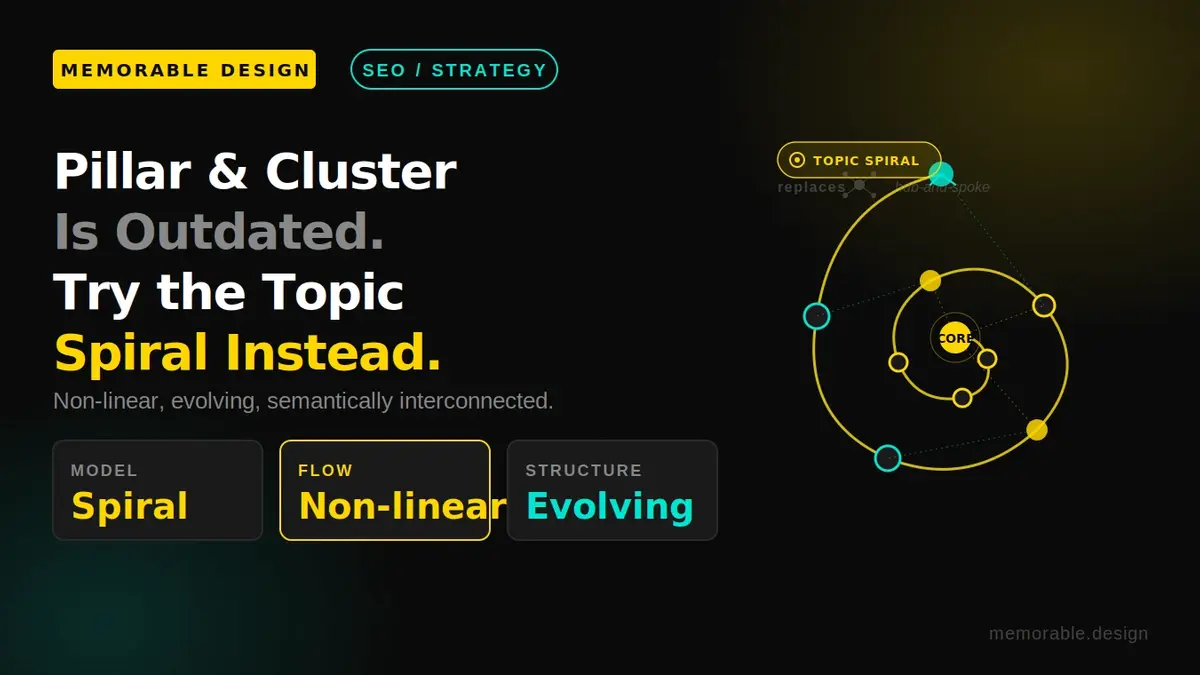
The article explains why the old pillar-and-cluster SEO model no longer works well in modern search. It introduces the “topic spiral” strategy, where content is linked as a continuous learning journey instead of rigid silos. This improves user experience, semantic relevance, crawling, and AI search visibility by creating a flexible, interconnected content network.
The traditional internal linking playbook is broken, and if you are still clinging to rigid hubs, your rankings are likely slipping away. For over a decade, SEOs relied on a hub-and-spoke model to map out site architectures, but adopting a topic spiral content strategy is now required to survive the modern search landscape. Following recent algorithmic shifts, search engines no longer evaluate content in flat, isolated silos. Instead of forcing users and web crawlers down a predictable, one-way street from a massive pillar page to minor sub-posts, the modern web demands a fluid, continuous journey that builds thematic authority dynamically across interconnected learning paths.
At Memorable Design, we focus on building digital brand experiences that combine forward-thinking aesthetic clarity with bleeding-edge technical architecture. Winning the modern organic visibility race requires a structural departure from outdated, transactional linking templates. In this strategic guide, we will break down why traditional internal linking hubs fail under modern search conditions, introduce the mechanics of the spiral framework, and show you exactly how to implement this flexible system to future-proof your digital presence.
Why the Traditional Pillar-and-Cluster Model Is Failing
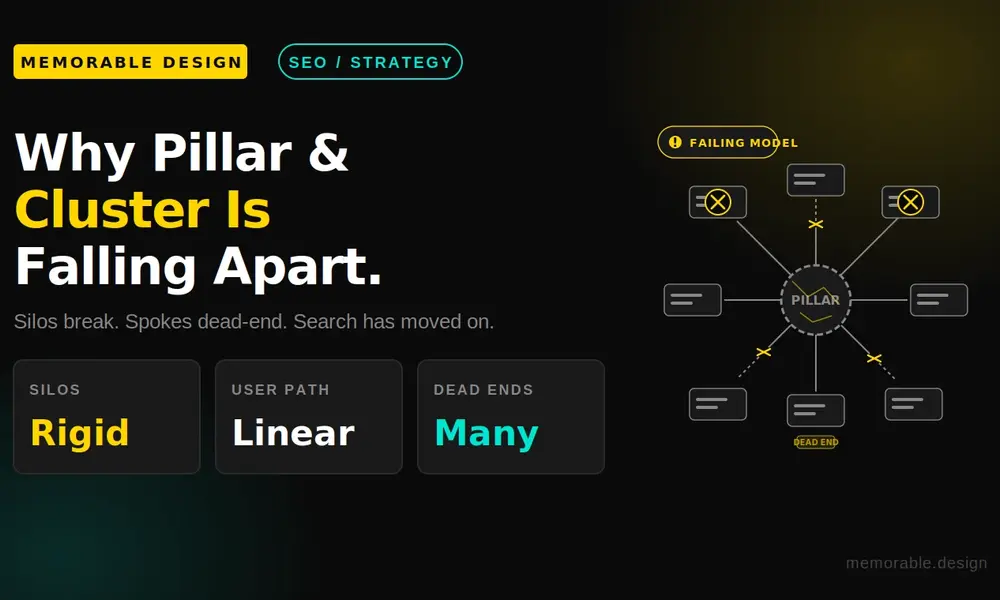
To understand why a progressive framework is so necessary today, we have to look closely at how search engines have evolved beyond basic keyword groupings. The classic hub model assumes that user intent is perfectly linear, which rarely matches real-world human behavior.
The Problem With Flat, Rigid Information Silos
The old-school pillar-and-cluster framework forces a website into strict, vertical columns. You write one massive, high-level guide and link it to ten shorter articles that explore specific long-tail subtopics. The issue is that this rigid hierarchy creates massive content dead-ends. Users rarely read a basic overview, click a subtopic link, and then neatly backtrack up to the main landing page. They bounce around, ask follow-up questions, and require multi-layered paths that a flat silo simply cannot accommodate.
Algorithmic Vulnerabilities in Modern Search
Following the sweeping guidelines of the February 2026 Google Core Update, search engines have become incredibly sophisticated at identifying manufactured, over-engineered internal link graphs. Pumping out thin, repetitive cluster articles solely to pass PageRank up to a commercial pillar page looks incredibly manipulative to a modern machine-learning algorithm. This structural vulnerability makes finding a reliable pillar cluster alternative an absolute priority for webmasters who want to avoid sitewide quality demotions.
The Core Mechanics of the Topic Spiral Framework
The modern solution to this architectural bottleneck is a dynamic system that treats information as an evolving, multi-dimensional learning journey. Instead of thinking of your site as a collection of static hubs, imagine it as an upward spiral of increasing subject matter depth.
Embracing the Continuity of Learning
A progressive topic spiral content strategy focuses on guiding a reader through sequential stages of expertise. Every piece of content you publish acts as a bridge that naturally anticipates the user's next logical question, regardless of where they initially landed on your site. Links flow naturally along a continuous path of discovery rather than forcing a forced choice between an unhelpful high-level home page and an over-specialized niche post.
Building a True Semantic Content Network
When you transition to this modern layout, you are essentially building a highly responsive semantic content network. Each node or article within the spiral is linked based on thematic contextual relevance and real-world user search sequences. This fluid layout allows search engine crawlers to easily navigate your entire domain, mapping out the precise contextual relationships between your articles without running into artificial structural walls.
Designing a Modern Content Architecture for 2026
Transitioning away from static, formulaic structures requires a deep commitment to mapping out the actual journey of user intent. Your ultimate goal is to build an ecosystem where every page naturally elevates the context of the surrounding text.
Mapping the Intent Trajectory
Instead of grouping keywords by raw search volume, organize your editorial calendar around the evolving stages of user comprehension. Your content should naturally spiral from broad introductory overviews into specialized operational case studies, before looping back out to broader strategic implementations. This natural flow ensures you capture buyers at every stage of their professional development while maintaining a highly authoritative domain footprint.
Future-Proofing for AI Discovery Engines
Modern answer engines do not simply scrape a single page to answer a complex query; they synthesize information by scanning multiple related resources simultaneously. Creating a continuous, highly interconnected content architecture 2026 systems can easily digest ensures your entire domain is recognized as a unified entity of knowledge. By removing technical context gaps, you significantly increase the chances of your brand being cited as a core source in generative search summaries.
Structural Framework Performance Comparison
To help your marketing team visualize this structural evolution, here is a detailed breakdown comparing the performance metrics and indexing behavior of legacy frameworks against modern network architectures.
| Architecture Type | Primary Internal Linking Flow | Contextual Flexibility | Estimated Indexation Depth | Core Structural Risk |
| Pillar & Cluster | Strict vertical spokes routing back to a single hub. | Low (Creates rigid data isolation) | Shallow (Bots get stuck in loops) | Keyword Cannibalization & Crawl Inefficiencies |
| Topic Spiral | Continuous sequential paths based on intent depth. | Exceptionally High (Adapts to user) | Deep (Spiders map entire paths) | Requires highly rigorous editorial planning |
| Flat Hierarchy | Random contextual links scattered throughout text. | Moderate (Unorganized user flow) | Erratic (Inconsistent crawling) | Orphaned Pages & Lost PageRank Equity |
Operational Steps for Implementing a Spiral Framework
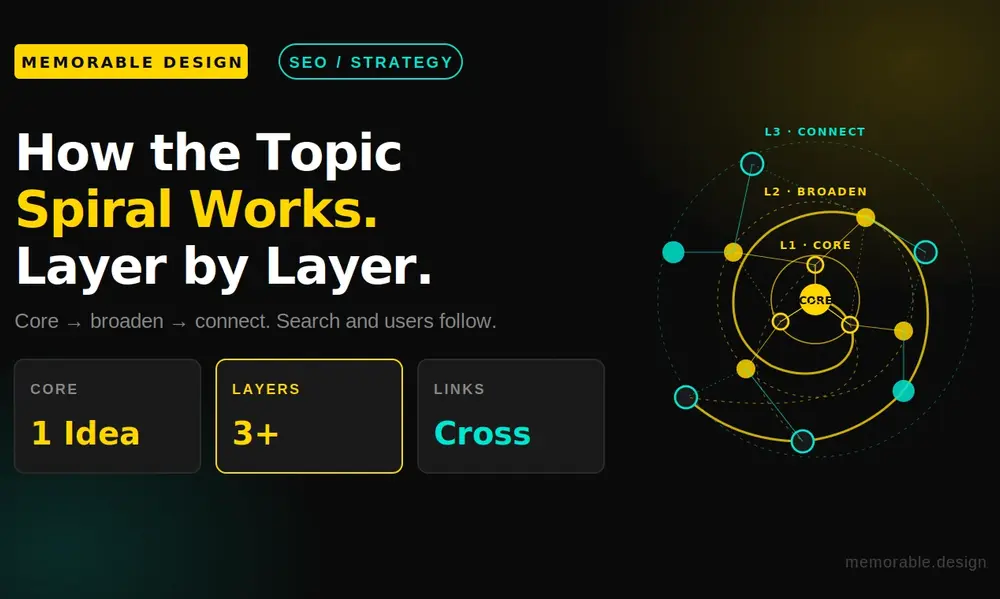
Transitioning your existing corporate blog into a high-performance semantic content network requires a systematic review of your current assets and a fresh approach to your internal linking workflows.
Audit and Deconstruct Existing Hubs
Break down your current rigid pillars into distinct, standalone units of value. Identify the precise moments in an article where a reader would naturally think, "What is the next step after I finish this?" Use those high-intent friction points to anchor your internal links, weaving a seamless thread that draws the user deeper into your site architecture without making them feel trapped inside a single category.
Execute Contextual Interlinking Workflows
- Link Forward to Higher Expertise: Every introductory article must possess a prominent, contextual link guiding readers directly toward a hyper-specific, mid-tier tutorial.
- Link Backward for Core Definitions: When referencing a highly complex technical term in an advanced guide, always insert a gentle link back to an entry-level resource.
- Create Horizontal Bridges: Build smooth structural bridges between different product lines or services by linking articles that share overlapping real-world use cases.
- Eliminate Empty Hub Layouts: Replace generic, low-value category index pages with rich, narrative-driven roadmaps that explain how to navigate the spiral.
- Review Redirect Paths Quarterly: Keep the technical backend of your network immaculate by instantly auditing broken links or messy redirect chains every ninety days.
Advanced Content Architecture Optimization
Maintaining a dominant online presence in the current search ecosystem demands a total rejection of lazy, automated publishing routines. True digital authority is built by hand through meticulous structural engineering and genuine subject matter depth.
Eradicating Shallow Content Blocks
Every single page within your network must provide demonstrable information gain to protect your overall site health. If you are planning a fresh expansion, review your existing assets first to see if you can naturally thread the new insights into the current spiral loop. Choosing a high-utility pillar cluster alternative ensures you build a concentrated, powerful domain footprint where every single URL actively earns its keep.
Conclusion
Clinging to an outdated pillar-and-cluster blueprint is a dangerous liability in an era dominated by semantic search understanding and generative answer engines. Transitioning your organization to a modern topic spiral content strategy allows you to build an organic ecosystem that mirrors the complex way humans actually learn and search. By dismantling rigid data silos, optimizing for a multi-layered content architecture 2026 platforms demand, and building a responsive web of text, you position your brand as the definitive authority in your space. Focus on continuity, respect user intent patterns, and build paths that lead your audience toward deep operational clarity.
When you are ready to completely overhaul your website's structural health or want to design an elite user experience that turns organic traffic into predictable business revenue, let Memorable Design help you construct a future-proof digital identity!
Frequently Asked Questions
What makes a topic spiral content strategy superior to old-school pillars?
A spiral layout is superior because it acknowledges that user search behavior is non-linear and continuously evolving. Instead of forcing visitors into dead-end subcategories, the spiral framework provides continuous, sequential paths of increasing depth, keeping users engaged longer while offering search spiders a far clearer map of your brand’s overall contextual expertise.
How do I handle my existing pillar pages when transitioning to a spiral model?
You do not need to delete your existing pillar pages completely. Instead, re-engineer them so they function as narrative-driven roadmap guides rather than flat, exhausting link directories. Rewrite the introductory copy to set clear expectations for the learning path, and restructure the internal links so they guide the reader through a logical sequence of deeper subtopics.
Does a semantic content network require more total articles to rank effectively?
No, it actually requires significantly fewer pages because it prioritizes deep contextual utility over sheer raw volume. By focusing your marketing resources on building highly comprehensive, interlinked learning sequences rather than churning out hundreds of thin, isolated blog posts, you create a far more efficient domain that is much easier for search engines to index and reward.
