
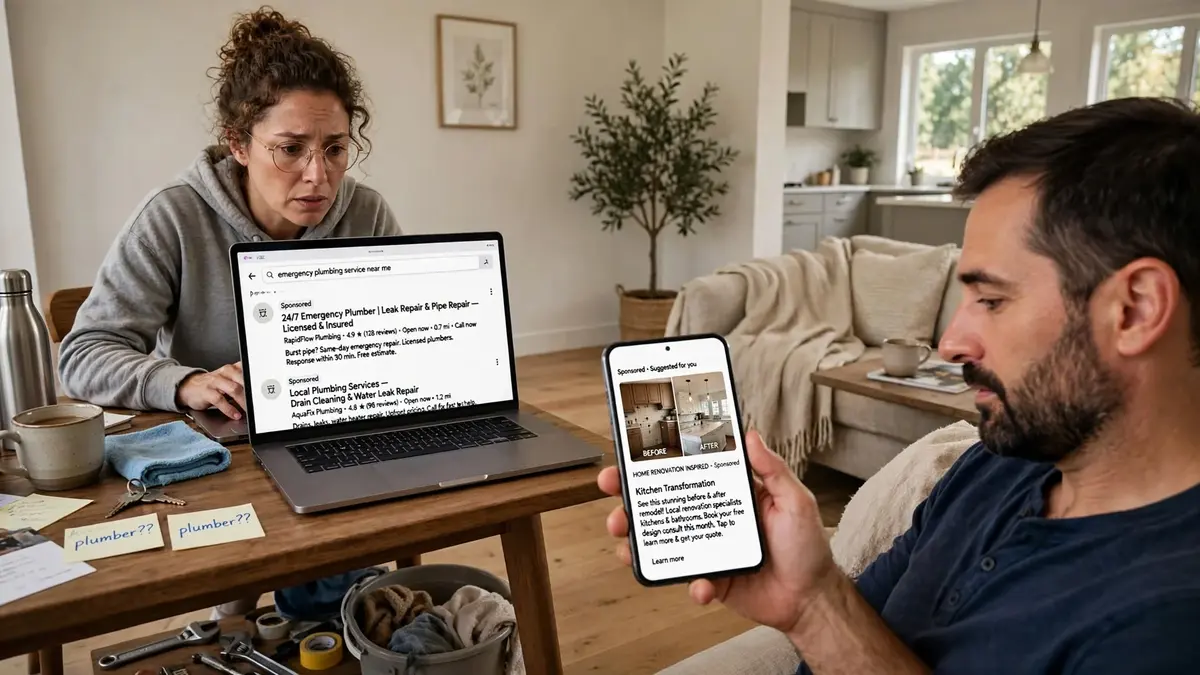
If you run a local service business and you are weighing google ads vs meta ads, you are really deciding between two very different kinds of demand. One platform catches people already searching for what you sell. The other interrupts people who might want it. Both can work, but they work differently, cost differently, and suit different stages of your business.
Here is the direct answer. Google Ads wins for local service businesses most of the time, because it reaches people at the exact moment they need a plumber, a dentist, or a roofer, and that buying intent converts.
Meta Ads wins when you need to build awareness in your area, promote offers to people who are not searching yet, or retarget visitors who already found you. If your budget only covers one platform, start with Google Ads for immediate leads, then add Meta for cheaper awareness once the first machine works.
I have managed and audited campaigns on both platforms for service businesses for many years, and the pattern I describe below holds across dozens of industries. Let me walk you through how the two platforms actually differ, what each one really costs, and how to decide where your first dollar should go.
Google Ads vs Meta Ads: The Core Difference in Demand
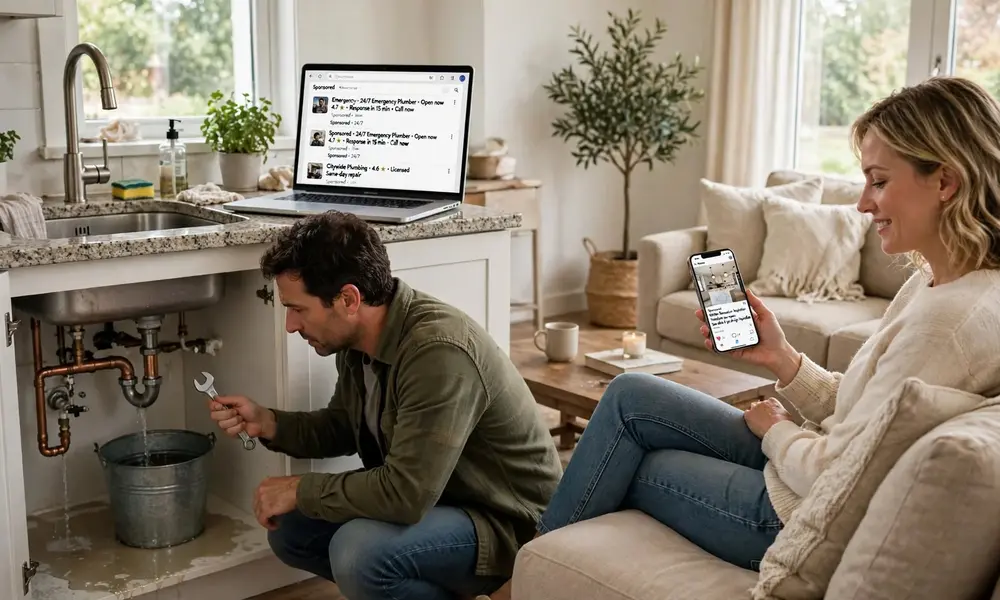
Everything in this comparison flows from one idea. Google captures existing demand. Meta creates new demand.
When someone types "emergency plumber near me" into Google, they have a problem right now and they want it solved today. Your ad appears inside a moment of genuine need, and the person clicking is usually ready to buy. This is why search ads convert so well for services. You are not persuading anyone that they need a plumber. You are simply being present when the need announces itself.
Meta works on a completely different psychology. Someone scrolling through their feed is not looking for a dentist. They might need one, or their kitchen might need remodeling, or their lawn might be embarrassing, but they were not thinking about it until your ad appeared. Your creative has to do the persuading that the search box already did for you on Google. That is a harder job, which is why Meta campaigns live or die on the quality of the image, the video, and the offer.
Neither psychology is better. They are different tools. A roof replacement company might close five jobs a month from Google searches and another five from Meta ads that showed dramatic before and after photos to homeowners in the right zip codes. The mistake is expecting one platform to do the other platform's job.
How Each Platform Reaches Local Customers
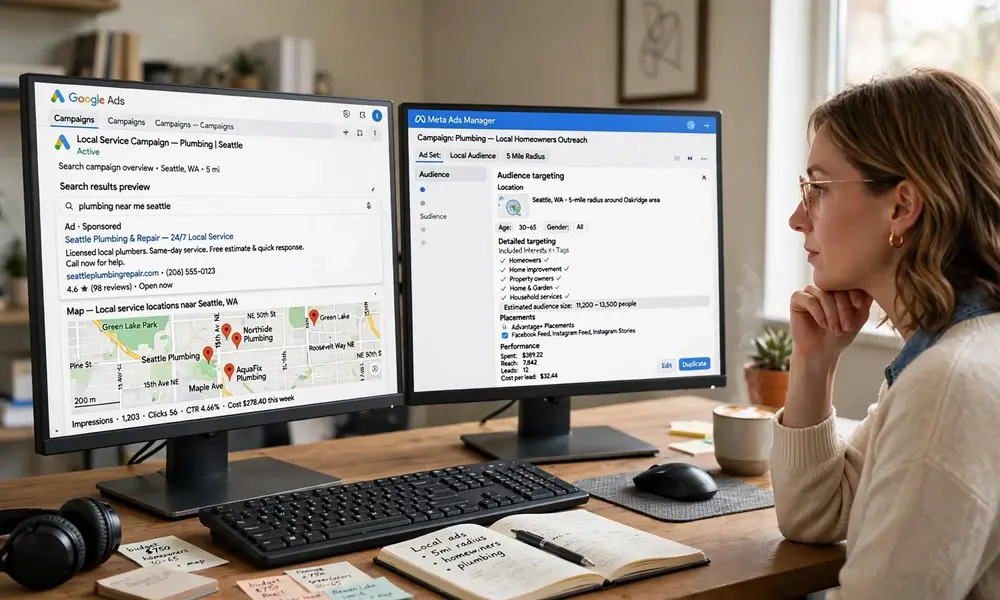
Google gives you several ways to reach a local audience. Search ads target the words people type, and location settings keep your budget inside your service area. You can also run ads on Maps, so your business appears when someone browses nearby providers, and display ads that follow local visitors around the web.
Meta gives you people based targeting instead of keyword targeting. You choose a radius around your city, the age and interests of homeowners or parents, and life events that signal need, like a recent move. Meta knows an enormous amount about who lives where and what they care about, and for local businesses that targeting is often shockingly precise.
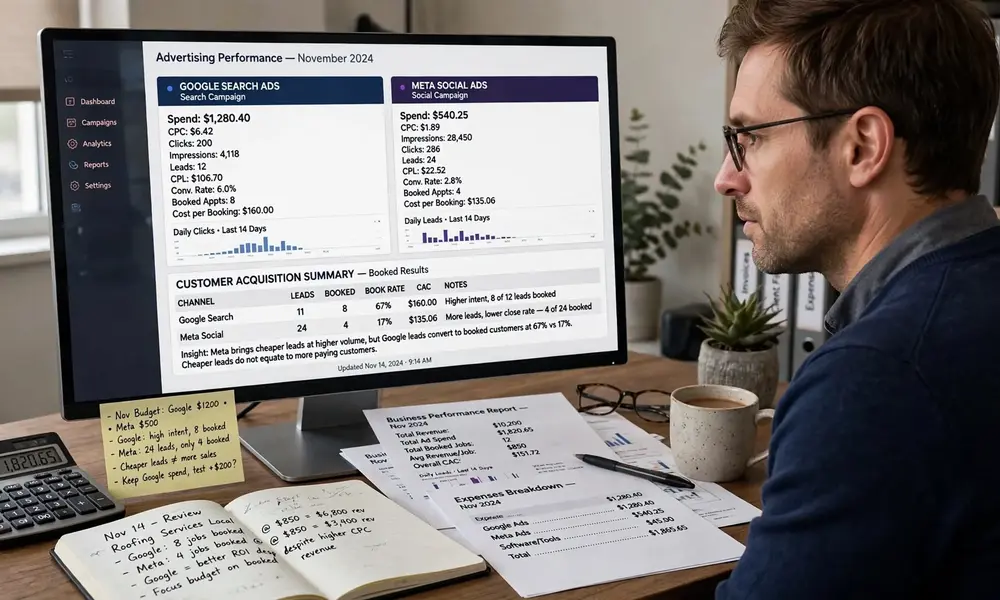
The practical difference shows up in lead quality. Google leads usually arrive with higher intent and higher cost per lead. Meta leads are usually cheaper per lead but require more follow up, because the person was curious rather than desperate. Businesses that judge Meta by Google's conversion standards abandon it too early, and businesses that judge Google by Meta's cost per click overpay for years.
What Each Platform Actually Costs
Costs on both platforms rise every year, but the relative picture has stayed stable, and it matters for your budget planning.
Google Ads for local services works on an auction, and competitive phrases like plumbing, HVAC, and legal services carry some of the most expensive clicks in all of advertising.
It is common to see clicks between five and fifty dollars depending on the trade and the city, because one new customer can be worth thousands, and every competitor knows it. The saving grace is that you only pay when someone clicks, and that someone was actively searching for a service.
Meta Ads clicks are usually far cheaper, often a small fraction of Google prices, and impressions cost almost nothing by comparison. The catch hides in conversion.
A cheap Meta lead who fills out a form out of mild curiosity may never answer your calls, while an expensive Google lead may book on the first contact. When my clients compare the two honestly, the real number to track is cost per booked appointment, not cost per click or even cost per lead.
Both platforms also share a quiet expense that surprises beginners: budget learning. Expect to spend your first weeks of budget partly on testing which audiences, headlines, and offers produce booked jobs. Campaigns that are judged on their first two weeks almost always look like failures.
Which Platform Fits Your Situation

The honest answer depends on three things about your business, so let me give you a decision path instead of a vague both work conclusion.
If people search for your service when an urgent problem appears, start with Google Ads. Emergencies and urgent needs belong to search, because nobody scrolls social media looking for a burst pipe. If your service is considered and visual, like remodeling, landscaping, or event venues, Meta deserves real budget from day one, because beautiful work sells through images and video.
If you are brand new in the market, Google captures the demand that already exists while Meta plants your name in thousands of local minds, so run both on modest budgets if you can, and let the data pick the winner after sixty days.
Budget size also decides. Below roughly one thousand dollars per month, splitting across both platforms usually means neither gathers enough data to optimize.
Pick one, go deep, and expand later. And if your business depends on trust and reputation, remember that neither platform replaces what search visibility builds over time. Ads rent attention, and our guide on what SEO is explains how owned visibility compounds while ad costs only climb.
The Mistakes That Burn Local Ad Budgets
Across the campaigns I have audited, a short list of mistakes accounts for most wasted spend on both platforms, and local businesses repeat them constantly.
On Google, the biggest mistake is broad match keywords with no negative keyword list. Broad match lets Google show your ad for loosely related searches, and without negatives your budget quietly funds clicks from people looking for jobs, free advice, or services you do not offer.
A tight keyword list plus a growing negative list is the single highest return hour in local advertising. The second mistake is ignoring call tracking, which makes it impossible to know which ads produce real appointments.
On Meta, the biggest mistake is boosting posts instead of running proper campaigns. Boosting is simple, which is exactly why it underperforms. Proper campaigns with conversion objectives and deliberate audiences almost always beat boosted posts at the same spend.
The second mistake is judging Meta on immediate leads only. Meta influences people who convert weeks later through a search or a direct visit, and that delayed effect never shows in a simple last click report.
On both platforms, the deepest mistake is sending clicks to a weak page. Ad platforms reward relevance, and a slow or confusing landing page raises your costs while quietly killing conversions.
A Practical Starting Framework
If you want a concrete plan rather than theory, here is the one I recommend most often to local service businesses.
Start with Google Ads if your service solves urgent problems. Cap your daily budget at a level you can sustain for ninety days, target your exact service phrases, add negatives weekly, and track calls and booked appointments from day one.
Simultaneously, run a modest Meta campaign with your best before and after work or your strongest offer, aimed at homeowners in your service radius, because brand familiarity makes every future Google click cheaper to convert.
Review both after sixty to ninety days on one metric only: cost per booked job. Scale the winner, fix or pause the loser, and resist the urge to judge either platform on its first two weeks.
For businesses that eventually outgrow what ads alone can deliver, our comparison of an SEO agency versus an in house team explains how to build the owned visibility that makes paid and organic reinforce each other.
Frequently Asked Questions
Are Google Ads or Meta Ads better for local businesses?
Google Ads usually produce faster leads for urgent services because they reach people actively searching. Meta Ads are usually better for awareness, visual services, and retargeting. Most strong local campaigns run both with different jobs.
Which platform is cheaper per lead?
Meta Ads usually deliver cheaper leads, but Google leads typically convert into booked jobs more reliably. Compare platforms on cost per appointment, not cost per lead.
How much should a local business spend on ads to start?
A minimum of roughly one thousand dollars per month on one platform is a sensible test budget. Splitting smaller budgets across both platforms starves each of the data needed to optimize.
Do Meta Ads work for emergency services?
Rarely on their own, because nobody scrolls social media during an emergency. Meta can still help emergency services by building local brand recognition and retargeting past visitors.
Should I run ads or focus on SEO first?
Ads deliver immediate leads while SEO builds over months. Most local businesses need both: ads for cash flow now, and search visibility to lower dependence on ad spend later.
