

AI-powered SEO agents are autonomous tools that analyze search data, build optimization plans, and execute tasks like fixing broken links or updating internal networks without manual prompts. They help websites stay visible in traditional search layouts and modern AI Overviews.
SEO is changing fast from manual work to smart automation, yet winning organic traffic still demands real human strategy. While AI-powered SEO agents manage data, creative direction keeps you ahead. Partners like Memorabledesign help brands blend AI search optimization with deep SEO, branding, and web design to build lasting organic growth instead of just running automated scripts.
Key Takeaways
-
Older software just points out problems, but autonomous agents log in and fix them.
-
Connecting search trends to broader marketing actions builds an easier, smoother path for your customers.
-
Real experience and human editing are the only ways to survive search engine quality updates.
What Are AI-Powered SEO Agents?
An AI-powered SEO agent is an autonomous software assistant built to manage search workflows from start to finish. You do not need to feed it manual prompts all day. Instead, you give it a clear goal, like improving topical depth, and it maps out the steps required to get there.
What Makes AI-Powered SEO Agents Different from Traditional SEO Software
Old-school tools are completely reactive. They scan your website, hand you a list of broken redirects or missing tags, and leave the manual labor to your team. An intelligent agent detects those same errors, determines the correct fix based on page content, and implements the change directly inside your content management system. It functions as a digital team member rather than a passive charts dashboard.
How AI-Powered SEO Agents Think, Plan, and Execute SEO Tasks
These automated systems rely on a continuous cycle of observation, reasoning, and implementation. They constantly monitor live search results pages, track search engine updates, and review your internal analytics data. From there, they build a structured plan to improve your visibility and use secure API integrations to deploy code updates or content tweaks instantly.
Why AI-Powered SEO Agents Are Becoming Essential for Modern SEO
Search layouts shift constantly now that AI summaries answer user questions directly on the results page. Human teams cannot analyze thousands of shifting search queries manually every single day. Using seo ai agents allows brands to track these dynamic changes in real-time, keeping their organic visibility steady while saving hundreds of hours of manual tracking.
How AI-Powered SEO Agents Work Across an SEO Workflow
Bringing an agent workflow into your business completely reshapes how your digital marketing team spends its hours. The daily grind shifts away from building spreadsheets and moves toward setting strategic guardrails and checking automated actions.
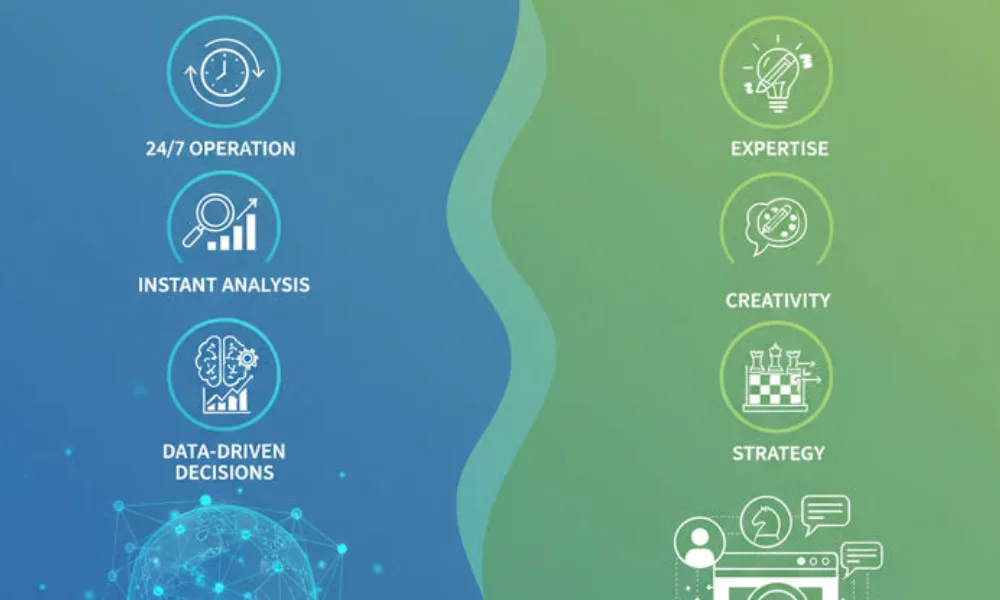
How AI-Powered SEO Agents Collect and Analyze Search Data
These systems do not just look at single keywords. They pull huge batches of information from user queries, competitor changes, and live search intent markers all at once. By tracking thousands of pages simultaneously, the agent spots hidden traffic patterns and keyword movements long before standard monthly tools flag them.
How AI-Powered SEO Agents Automate Research, Optimization, and Reporting
The agent excels at handling heavy administrative tasks. It writes comprehensive content briefs, inserts structured schema markup into your code, and drops clean performance summaries directly into your inbox. This continuous execution ensures your technical and semantic optimization never pauses, even outside business hours.
The typical operational loop moves smoothly from data collection to strategy. First, the agent pulls live search inputs and handles the core reasoning. Then, it handles the autonomous execution, and finally, it passes the work to a human editor for a strategic review.
Where Human Expertise Still Outperforms Automation
Speed cannot replace genuine human experience, empathy, or original perspective. An algorithm cannot conduct a unique interview with an industry veteran, share a real-world story, or design a distinct voice for your business. A practical human-in-the-loop model allows the agent to process the data while your human team ensures the content remains truly useful.
AI Agents for SEO: Real-World Use Cases That Deliver Results
Deploying ai agents for seo helps companies scale up their organic output without needing to hire a massive team. These smart assistants manage complex technical and editorial processes efficiently.
AI Agents for SEO Keyword Research and Search Intent Analysis
Instead of giving you a chaotic list of phrases, an agent analyzes the structural makeup of search result pages. It checks whether search engines prefer videos, long articles, or quick lists for a specific query, sorting keywords by informational or commercial intent so you create the exact page layout users want.
AI Agents for SEO Content Optimization and Internal Linking
An agent studies your entire archive of articles to map out entity connections. When you publish a fresh piece, the agent immediately scans your older, high-authority posts and inserts relevant, natural internal links to the new page. This instant distribution of link equity helps your new content rank much faster.
AI Agents for SEO Technical Audits and Site Health Monitoring
Technical problems ruin search rankings quickly. Automated agents run continuous audits in the background to catch broken links, code errors, or slow server responses before they trigger drops. They can rewrite messy code blocks or clean up redirect loops automatically to keep your site health score perfect.
AI Agents for SEO Performance Tracking and Competitive Analysis
The moment a competitor updates their main landing page, your agent analyzes the shift. It calculates what new topics they added, tracks how their rankings move, and instantly suggests quick content updates for your own site so you can defend your organic positions.
AI Agents for SEO and Marketing: Building a Unified Growth Strategy
Integrating ai agents for seo and marketing helps connect search engine presence with your core revenue goals, ensuring organic clicks lead directly to customer conversions.
Connecting SEO, Content Marketing, and AI Automation
Search data often stays trapped inside technical teams, completely isolated from social media or email efforts. Smart agents bridge this gap by taking top-performing search topics and rewriting them into social captions, text scripts, or newsletter segments automatically to maximize your content investment.
Using AI Agents for SEO and Marketing Across Multiple Channels
An agent tracks user actions across different touchpoints. If it notes that a specific guide is driving heavy organic traffic, it prompts your multi-channel marketing software to highlight that exact theme in your paid social ads, keeping your brand message consistent everywhere.
Improving Customer Journeys with Intelligent SEO Workflows
Getting the click is only half the battle. By studying user search intent, agents help improve what happens after a visitor lands on your page. They can dynamically insert relevant downloadable templates or adjust call-to-action boxes based on the exact query the user typed to find you.
SEO AI Agents vs Traditional SEO Tools: What Is the Difference?
Reviewing how these platforms differ helps you choose the right technology for your current growth stage.
| Operation Type | Traditional SEO Tools | SEO AI Agents |
| Data Processing | Gives you raw data and leaves filters to you | Interprets data and creates a clear action plan |
| Execution | Alerts you to mistakes but does not fix them | Builds the solution and applies it to your site |
| System Cycle | Rigid, linear, and depends entirely on user clicks | Continuous, loop-based, and completely autonomous |
| Time Spent | Requires hours of manual chart reading | Requires a few minutes of human quality review |
Rule-Based SEO Tools vs Autonomous SEO AI Agents
Standard software strictly follows static, pre-set commands. If you run a crawl, it returns the same report regardless of changing traffic. Autonomous agents use advanced reasoning to change their methods based on real-time search trends, altering their optimization path as search engines update.
Tasks SEO AI Agents Can Complete Without Constant Human Input
-
Connecting hundreds of unlinked pages across deep site directories.
-
Updating old statistics or broken source links in historic blog posts.
-
Tweaking title tags based on click-through trends to win more traffic.
-
Generating clean schema data for complex product catalogs.
When Businesses Should Choose SEO AI Agents Instead of Conventional Software
Move to an agent model if your team spends more time building reports than fixing site errors. For companies managing multiple domains or massive resource hubs, autonomous agents save hours of repetitive labor by taking over daily maintenance completely.
How to Use AI-Powered SEO Agents Without Violating Google Core Updates
Search systems prioritize high-quality pages built for human readers. Relying on reckless automation can hurt your visibility when search quality updates launch.
Why Helpful Content Still Matters More Than Automation
Search algorithms track originality and depth. Scraping existing search results and spinning them into a generic article will cause traffic drops. Agents should be used to speed up technical fixes and structural research, not to generate cheap text that lacks new insights.
Human Review, Original Experience, and E-E-A-T Best Practices
Protecting your search footprint requires an expert human touch on everything your agent suggests. Inject your own brand data, real-world case studies, and unique photographs into your articles. This proof of actual human experience satisfies search engines and builds genuine trust with your audience.
Common AI SEO Mistakes That Can Reduce Search Visibility
The fastest way to lose traffic is fully automated publishing. Letting an agent write and publish posts without an editor creates factual mistakes, repetitive phrasing, and bland copy. Look at the agent as a helpful research assistant, never your final writer.
Best Practices for Getting the Most Value from AI-Powered SEO Agents
To drive authentic business growth with autonomous tools, you must set clear operational boundaries.
- Combine Automation with Strategic SEO Planning
- Monitor AI Decisions Before Publishing
- Measure Rankings, Traffic, and Business Impact Instead of Output Volume
Conclusion
AI-powered SEO agents improve efficiency, automate repetitive work, and support scalable optimization, but sustainable rankings still depend on human expertise, strategic decision-making, and high-quality content. To protect your digital footprint and secure long-term traffic, teams like Memorabledesign help brands blend advanced AI search optimization with deep SEO, intentional branding, and a complete website strategy.
Frequently Asked Questions
Can AI-powered SEO agents replace SEO professionals?
No. They automate repetitive data tasks, but they cannot replicate the creative strategy, deep business understanding, and brand development that sustain long-term growth.
Are AI agents for SEO safe to use after Google’s Core Updates?
Yes, provided they assist human creators rather than replacing them. Unedited, fully automated copy that offers no unique value risks losing visibility during quality reviews.
Which businesses benefit most from SEO AI agents?
Large e-commerce stores, extensive digital agencies, and deep content hubs find them most useful because they manage thousands of dynamic pages and technical elements daily.
What’s the difference between AI SEO tools and AI-powered SEO agents?
AI tools offer separate features like text generation or keyword lists. AI agents work independently, creating their own action items and deploying them without constant user direction.
Can AI agents improve AI Overview visibility?
Yes. They analyze underlying entity connections and organize your text to answer questions directly, making it easy for modern search engines to pull and feature your data.
