
If you are comparing email marketing vs sms marketing for customer retention, you are choosing between two channels that live in the same pocket but behave like different animals. One is spacious and thoughtful. The other is instant and intimate. Both keep customers coming back, and both can destroy goodwill in a hurry when misused.
Here is the direct answer. Email marketing is the better primary channel for customer retention because it carries depth, costs almost nothing per message, and handles everything from receipts to rich educational content.
SMS marketing is the better channel for time sensitive moments because nearly every message is seen within minutes, but its intimacy demands restraint, and overuse burns lists fast. The strongest retention programs use email as the backbone and SMS as the alert layer, each doing the job the other cannot.
I have built retention programs for businesses where a single repeat customer was worth thousands, and the pattern I will share here holds across retail, services, and software alike. Let me walk you through how each channel actually behaves, what each one costs, and where each one earns or loses its place.
Why Retention Channels Matter More Than Acquisition
Before comparing the channels, it helps to remember what they are for. Winning a new customer costs many times more than keeping an existing one, and existing customers buy more, refer more, and forgive more. Retention is where marketing budgets quietly produce their highest returns, and email and SMS are its two main instruments.
Both channels share one big advantage over social media and advertising: they are owned. Nobody auctions your access to your own customer list, and no algorithm change can erase it. When a follower count vanishes into a platform's reach limits, your email list and SMS list keep delivering. That ownership is why retention channels deserve protection and care more than any rented audience.
The differences between the two instruments are what this guide covers. Email brings space and permanence. SMS brings speed and presence. Knowing when each matters is the whole game.
Email Marketing for Customer Retention: The Backbone
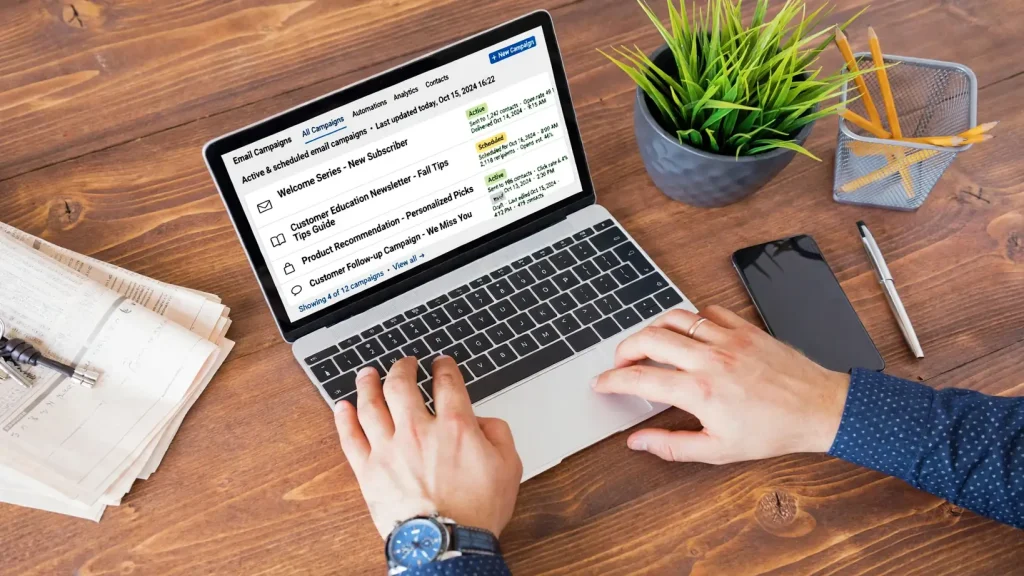
Email earns its place as the backbone of retention through sheer versatility. A single message can carry a receipt, a story, a tutorial, a comparison, a renewal reminder, or all of them in sequence. Messages live in inboxes until dealt with, so a well written email keeps working for days after it arrives. And the cost per message is so low that sending regularly to a large list stays affordable at almost any scale.
The numbers support its position as the workhorse. Email consistently delivers strong returns for every dollar spent, often cited among the highest of any marketing channel, because the infrastructure is cheap and the audience opted in.
Automation extends the advantage. A welcome sequence, a post purchase education series, and win back campaigns run for years without new effort, steadily converting one time buyers into regulars.
The weaknesses are real. Inboxes are crowded, and promotional messages compete with everything else for attention, so subject lines and sender reputation decide whether your message is ever seen.
Email is also slow in the moments where speed matters, because even opened messages sit until the reader chooses to engage. And building a quality list takes time, since every address must be earned through value rather than purchased.
Used well, email handles the entire retention journey: teaching customers to get more from what they bought, reminding them when value is due to run out, and giving them reasons to return that feel helpful rather than pushy.
SMS Marketing for Customer Retention: The Alert Layer
SMS earns its place through physics. Text messages arrive instantly, carry no competition in the moment of delivery, and get read at rates email cannot approach. Most messages are seen within minutes, which makes SMS unmatched for anything where timing decides the outcome.
That power suits a specific set of retention moments. Order and delivery updates reduce anxiety and refund requests. Appointment reminders slash no shows, one of the most expensive retention leaks in service businesses.
Flash offers to past buyers move inventory fast when the window is short. Renewal and expiry warnings rescue revenue that would otherwise leak away quietly. In every case, the message succeeds because it arrives at the moment of decision rather than hours later in a crowded inbox.
The costs match the power. Per message pricing makes SMS far more expensive than email at scale, so volume must stay disciplined. The deeper cost is goodwill. A text message arrives with the intimacy of a message from a friend, and every promotional text spends some of that intimacy.
Lists burn fast when businesses treat SMS like a cheaper email blast, and carriers enforce consent rules strictly because abuse damages the entire channel.
The rule that protects an SMS program is simple: send only what is time sensitive and genuinely useful. Updates, reminders, and truly short windows of opportunity belong here. Newsletters and general promotions do not.
Email Marketing vs SMS Marketing: The Head to Head
Placing the two channels side by side makes the division of labor clear.
On open rates, SMS wins overwhelmingly, since nearly every text is seen while many emails never leave the inbox. On depth and content capacity, email wins overwhelmingly, since a text cannot teach, tell a story, or carry a catalog. On cost per message, email wins by a wide margin. On urgency and response speed, SMS wins by a wide margin. On list building, email is easier, because people hesitate to hand out phone numbers, while addresses are exchanged freely. On longevity, email wins, because an SMS opt out tends to be permanent and fast.
Notice the pattern. Neither channel loses across the board. Each wins exactly where the other is weakest, which is why the question is not which channel to choose but which jobs to assign each channel. The same logic appears throughout marketing when owned and rented channels meet, and our comparison of content marketing versus paid advertising covers that broader division of labor in detail.
How to Combine Both Channels Properly
The strongest retention programs run email as the system and SMS as the exception layer, and the combination is easy to build.
Start with email carrying the regular rhythm. A consistent cadence of useful content keeps your brand present without demanding attention. Add automation for the moments that should never depend on memory: welcome sequences that onboard new customers, education series that deepen product use, and win back campaigns that reactivate quiet buyers.
Then add SMS only where minutes matter. Delivery and appointment updates, renewal warnings, and short flash windows to past buyers each justify the intimacy of a text. Keep promotional texts rare enough that receiving one feels like an event rather than an interruption, and always make replying as easy as reading.
One operational detail decides success: consent must be separate for each channel. Someone who gave an email address has not agreed to texts, and confusing the two is the fastest way to lose both. Our guide comparing organic and paid social touches the same discipline from the social side, where rented reach demands similar restraint to keep audiences intact.
Mistakes That Damage Retention Programs
Retention channels fail in predictable ways, and most of the damage is self inflicted.
On the email side, the biggest mistake is sending only promotions. A list that receives nothing but discount demands learns to ignore you or unsubscribe, and the asset quietly shrinks. The second mistake is neglecting deliverability, because sloppy lists and spammy habits land even valuable messages in junk folders where nobody sees them.
On the SMS side, the biggest mistake is over messaging. Because open rates look wonderful, some businesses ramp frequency until the intimacy that made the channel valuable is gone. The second mistake is treating texts like email, sending content that belongs in a newsletter into a channel built for alerts.
On both sides, the deepest mistake is measuring sends instead of retention. Open rates and click rates are means to an end. The numbers that matter are repeat purchase rate, renewal rate, and how long customers stay. Channels that look busy while those numbers fall apart are failing no matter how good the dashboard looks.
Frequently Asked Questions
Is email or SMS better for customer retention?
Email is better as the primary retention channel because it handles depth, education, and regular touchpoints at very low cost. SMS is better for time sensitive moments like reminders and updates where speed decides the outcome.
Which has better open rates, email or SMS?
SMS has dramatically better open rates, with most messages seen within minutes. Email open rates are lower but emails can carry far more content and keep working in the inbox for days.
How often should I text customers?
Only when the message is time sensitive and genuinely useful, such as updates, reminders, or short offer windows. Rare and valuable beats frequent and ignored.
Can I use SMS for marketing promotions?
Yes, but sparingly, and only to customers who explicitly opted in to texts. Promotional texts work best when they are rare, relevant, and tied to a real deadline.
Do I need both email and SMS?
Most retention programs benefit from both, with email as the backbone and SMS as the alert layer. Each covers the moments where the other is weak.
