
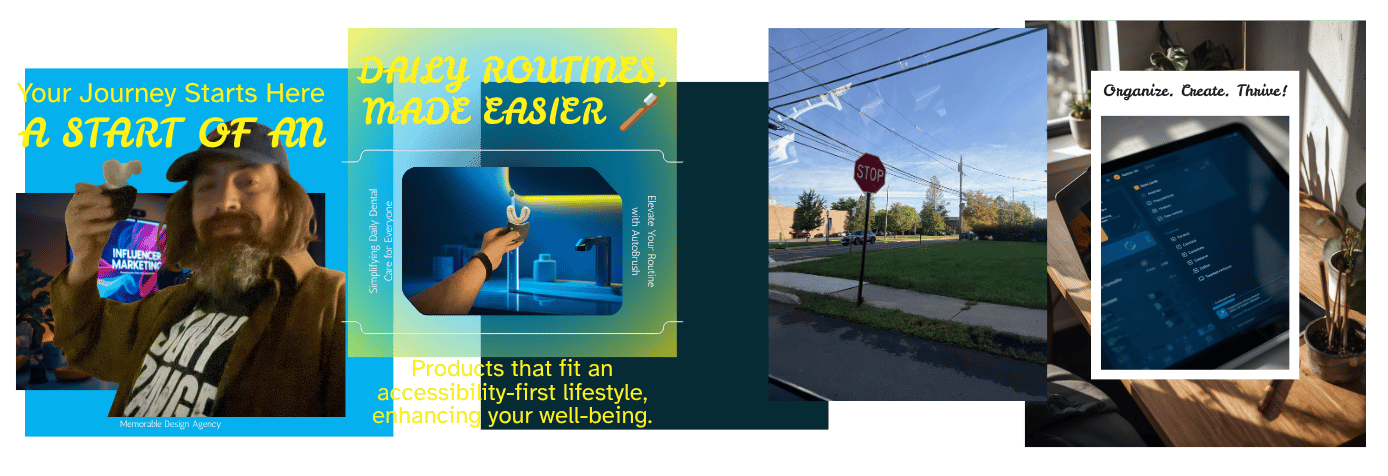
My name is Ruslan Smirnov, and my journey from social networking into marketing didn’t start in a boardroom but rather with rebuilding my life after a traumatic brain injury and finding my way back to school at Orange County Community College (OCCC) in Middletown, NY. On @brandmemorable, I talk honestly about that journey and what it really looked like to go from memory loss to building Memorable Design, my brand, and my SEO strategy practice. This post is about a different, but related, part of that story: the moment I became curious about social media influencer marketing and why I now believe it’s one of the most powerful tools an entrepreneur can wield.

I can still recall the very moment it clicked. I was in the back row of an OCCC marketing elective, half-listening to a lecture about traditional advertising, when a classmate pulled up an Instagram Reel, the result of someone’s marketing strategies that somehow got two million views overnight. I didn’t think the creator was actually well-known. She had no studio backing, no national ad budget. May looked like a 22-year-old kid with a ring light, a phone, and an audience that trusted her skincare opinions more than any billboard. That was the moment the lecture stopped mattering and the real education began—and it's a lesson I now bring into every conversation I have with entrepreneurs about growing their brand with purpose.
I and a social media marketer
This post is about that education, digital marketing, and how I became one of the most active social media users. I've learned as a student, a TBI survivor rebuilding my career, and now as a brand and SEO strategist, trying to understand how influencer marketing actually works, why it's become one of the most powerful tools in a modern marketing budget, and what small businesses, students, and aspiring marketers in Orange County can take away from it.
Why I Started Paying Attention to Influencer Marketing
Like many students, I came to my marketing classes thinking that marketing equaled commercials, billboards, and maybe a well-placed Google ad. I didn’t expect, however, how often the case studies my professors assigned would return to one theme: audiences don’t trust brands the way they trust people. They have faith in people. They trust people they follow, relate to, and feel like they know, even if they only know them through a screen.
As I head into this new semester, I look back on the summer days I spent studying psychology at OCCC. That class taught me about mental health, human behavior, stress, motivation, and how our experiences affect our thinking. I learned more about my own TBI recovery, too. Psychology has taught me that personal development takes time. It starts with small choices, cultivating relationships, making memorable moments, and a willingness to continue learning.
I remember that the COVID-19 pandemic was when I started my journey as an influencer, and I asked myself whether I would ever dare to tell my story online. I started with a Squarespace website and a promise to create something meaningful in my marketing plans. Since 2020, I’ve been a member of the Squarespace Circle community, researching SEO, content creation, branding, and social media strategies.
That theme resonated with me for a personal reason, too. Part of how I've rebuilt my life and career since my brain injury has been through sharing my story honestly online—the setbacks, the small wins, and the day-to-day of building Memorable Design. I've watched, firsthand on my own account, how people connect with a real voice far more than they do with a polished pitch. That's the same principle that makes influencer marketing work at scale.
That's the entire premise behind influencer collaboration social media marketing strategies. Instead of a brand shouting its message at a broad, anonymous audience, it partners with someone who already has the audience's attention and, more importantly, their trust. The brand doesn't have to build credibility from zero. It borrows credibility that already exists.
Once I understood that, I started seeing it everywhere—not just on TikTok and Instagram, but in the local Orange County business scene too. Coffee shops in Goshen are tagging local foodies. Fitness studios in Middletown are partnering with wellness creators. Even the OCCC campus itself has student ambassadors whose Instagram stories do more to recruit new students than a printed brochure ever could.
Ruslan Smirnov: What Social Media Marketing Looks Like To Me
If you’re new to the idea, it helps to break down influencer marketing strategy into what it actually is, instead of just the buzzword. Today, social media marketing in its simplest form is a partnership between a brand and a content creator in which the creator promotes a product, service, or message to their existing audience in exchange for collaboration, compensation, free product, affiliate commission, or some combination of the three.
But the mechanics matter less than the mindset shift. Advertising is intrusive by nature. Integrates influencer marketing. A well-placed type of influencer partnership doesn’t feel like an ad—it feels like a recommendation from a friend who just happens to have a few thousand (or a few million) followers.
After going to classes and doing a lot of late-night scrolling (which I have now decided to call “research”), I have come up with a few categories of influencers that every student or business owner should know:
- Nano-influencers (1,000-10,000 followers): Small but mighty. Their engagement rates are often the highest of any tier because their followers are close friends, classmates, or genuine fans.
- Micro-influencers (10,000–100,000 followers): A key choice for many local and regional brands. Affordable, niche-focused, and still highly trusted.
- Macro-influencers (100,000–1 million followers): Bigger reach, often working across multiple platforms, usually requiring a real budget.
- Mega-influencers and celebrities (1 million+ followers): Massive visibility, but the connection to the audience is often more distant.
What surprised me most is that bigger isn't automatically better. A campaign built around ten micro-influencers in a specific niche can often outperform a single celebrity post, simply because the audience feels the recommendation is genuine.
The Lesson OCCC Taught Me About Trust-Based Marketing
One assignment that changed how I think about marketing during computer literacy class: the professor asked us to build a LinkedIn account, analyze a local small business's social presence, and suggest one improvement. I chose a small boutique in Orange County with almost no online following. Instead of recommending a bigger ad budget, I suggested they reach out to two or three local micro-influencers with loyal, engaged audiences.
The results, even in a classroom simulation, were obvious. Engagement on a single sponsored post from a local creator outperformed the business's entire month of self-posted content. That's how borrowed trust works in action. It's not that the business's own content was mediocre—it's that audiences respond differently when a message comes from someone they already follow and admire than from the brand itself.
Not the first influencer strategy
That is the main reason influencer marketing campaigns are so successful. People don’t want to be sold. They want someone they can collaborate with and relate to to prove something is worth their time or money. An influencer doesn’t remove the sales part; they just make it feel like a conversation, not a pitch.
My strategy is based on my mental health influencer. I made a brand carousel today using the Courts & Culture Club brand kit and your Memorable Design look. It's been a long time since I did my first influencer campaign; today I opened this in Canva and made edits as I went.
How Social Media Marketing Builds Real Brand Growth
The deeper I got into this topic, the more I realized influencer marketing isn't a shortcut or a gimmick—it's a legitimate growth channel with measurable outcomes when it's done well. From my research into successful influencer marketing campaigns, a few things have become clear:
1. It builds awareness faster than organic content alone. This engagement includes liking, commenting, sharing, and asking questions, as per Influencer Marketing Hub. It’s challenging to get that level of engagement with a standard paid ad.
3. It improves conversion because of pre-existing trust. When a creator recommends a product, their audience on the social media platforms already understands that creator’s taste, values, and credibility. That context bridges the gap between “I saw the product” and “I bought it.”
4. It creates content a brand can reuse. A typical influencer campaign partnership generates photos, videos, and captions that a business can reuse on their channels—website, email, and future ads—maximizing the value of one campaign well beyond the original post.
5. It's measurable. Influencer campaigns can be tracked through unique discount codes, affiliate links, and platform analytics, unlike many traditional marketing tactics, making it easier to see exactly what is working.
What I'm Learning About Choosing the Right Influencer
Not every partnership works, and part of my coursework has involved studying campaigns that didn't succeed. The common thread in almost every failed partnership was a mismatch—a creator whose audience, tone, or values didn't align with the brand.
A few things I've learned to look for:
- Relevance over reach. A creator with a smaller, highly relevant audience usually beats a creator with a huge but unrelated one.
- Engagement rate, not just follower count. A creator with 20,000 followers and a 6% engagement rate is often more valuable than one with 200,000 followers and a 0.5% engagement rate.
- Authenticity of past content. Audiences can tell when a creator only posts sponsored content versus one who genuinely uses and talks about products they like.
- Alignment with brand values. A mismatch here — even a subtle one — tends to show up as low engagement or, worse, public backlash.
I've started applying this lens not just to my coursework, but to how I think about my own future career. Understanding how to evaluate a potential partnership is a skill that transfers directly into any marketing, communications, or business role.
Why This Matters for Students and Small Businesses in Orange County
Part of what makes this topic exciting to me is how accessible it is, even at a community college level. You don't need a Fortune 500 budget to experiment with social media influencer marketing. A local bakery, a fitness studio, a tutoring service, or a student-run club can all test small partnerships with nano- or micro-influencers in their area and see real results.
For students like me at OCCC, this is also a career signal. Marketing is shifting away from a purely broadcast model and toward relationship-driven, creator-powered strategy. Understanding influencer marketing — how to identify the right partner, structure a campaign, measure results, and build genuine relationships — is quickly becoming a core skill rather than a nice-to-have.
Mistakes I've Watched Brands Make (So You Don't Have To)
Studying real campaigns — the successful ones and the ones that quietly disappeared — has taught me almost as much as the wins. A few recurring mistakes keep showing up, and they're worth naming plainly:
Chasing follower count instead of fit. It's tempting to assume a bigger audience automatically means bigger results. In practice, a creator whose followers don't care about your category will produce a flat, low-engagement post no matter how large their number looks on paper.
Treating the creator like a billboard. The campaigns that fall flattest are usually the ones where a brand hands a creator a rigid script and expects them to read it word-for-word. Audiences can spot inauthentic language almost instantly, and it tends to hurt both the brand and the creator's credibility.
Skipping the disclosure. Undisclosed sponsored content isn't just a trust issue — it can create real legal exposure under FTC guidelines. The most successful partnerships I've studied are upfront about being sponsored, and audiences respect that honesty rather than penalizing it.
No clear goal before launch. A campaign built around "let's just try influencer marketing" rarely performs as well as one built around a specific, measurable goal — more sign-ups, more foot traffic, or a sales target tied to a discount code.
One-and-done thinking. The strongest results I've seen come from ongoing relationships with a handful of creators, not a single post. Repetition builds familiarity, and familiarity builds trust.
Simple Ways to Start Testing Influencer Marketing
Influencer marketing doesn't have to mean a formal, expensive campaign right out of the gate for students or small businesses in Orange County with limited marketing budgets. A few low-risk starting points I've come across in my research:
- Start with people who already like you. Loyal customers, regular clients, or engaged students often make the most authentic nano-influencer partners, because the trust is already there.
- Offer product or service exchanges before paid deals. Many nano- and micro-influencers are open to trying a product or service in exchange for honest content, especially early in a relationship.
- Set a simple tracking method. Even something as simple as a unique discount code or a dedicated landing page link can show whether a partnership is driving real results.
- Give creators creative freedom. The posts that perform best tend to sound like the creator, not like a press release. Providing key talking points instead of a rigid script usually produces better content and better results.
- Start local. Orange County has no shortage of creators focused on food, fitness, family life, and local events—a natural fit for businesses trying to build a presence in this specific market before thinking bigger.
Where My Journey Goes From Here
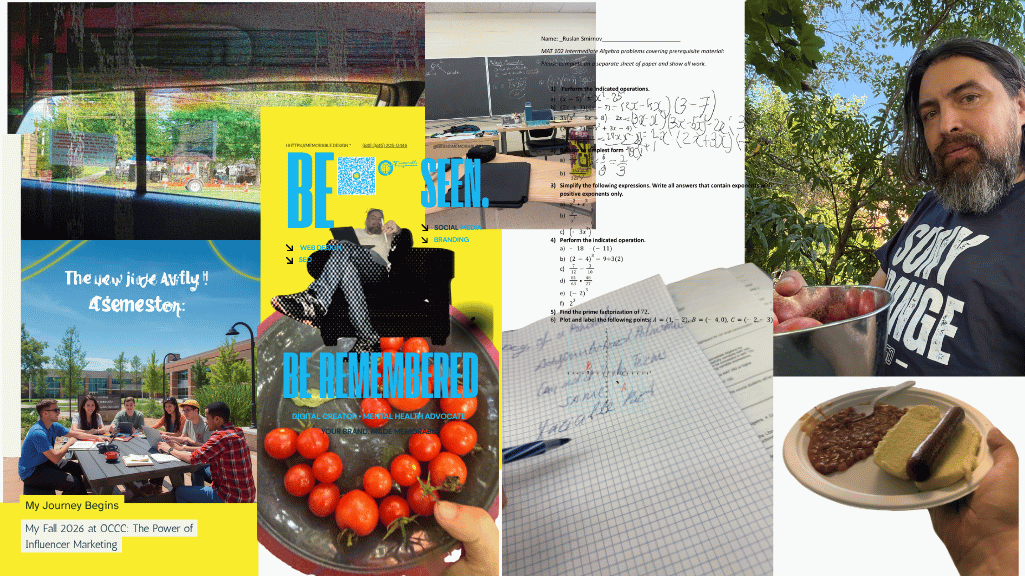
I call this post “My Journey Begins” for a reason—I'm still learning, and I’m sure my perspective will keep evolving as I take more classes at OCCC, take on more client work through Memorable Design, and take on more real campaigns and partner with an influencer. That means juggling intermediate algebra (one quiz at a time, getting ready for the exam) and computer literacy, with ventures like Goshen Grooves and my Mosers brand, in addition to Memorable Design itself. There are many plates in the air at once, but every single one of them is teaching me something that the others don't. Algebra is sharpening the structured, logical thinking that helps with campaign strategy and data. Computer literacy is giving me the technical fluency I rely on for SEO and site work. Growing Goshen Grooves and Mosers from the ground up is basically a live case study in the same trust-based, influencer-driven growth I'm writing about here. But one thing is already obvious to me: influencer marketing is here to stay. It reflects how humans make choices today—based on trust, relationships, and recommendations from people they believe are real. It’s also, frankly, an extension of what I’ve learned rebuilding my presence after a traumatic brain injury: people follow honesty, not perfection.
My biggest takeaway so far is this: whether you are a fellow student trying to figure out where to focus your marketing studies, or a small business owner in Orange County wondering if influencer partnerships are worth exploring, start small, focus on genuine alignment over follower count, and focus on engagement, not just exposure. That's the base everything else builds on, and it's the same philosophy I bring to every brand I help grow. Whether it's a client's business, Goshen Grooves, Mosers, or Memorable Design itself. If you want to talk through what this could look like for your business, you can find me at @brandmemorable or reach out through Memorable Design.
Frequently Asked Questions
What is social media influencer marketing? Social media influencer marketing is a strategy where brands partner with content creators who have an established, trusted audience on platforms like Instagram, TikTok, or YouTube. The creator promotes a product or service to their followers in a way that feels authentic, not like a traditional ad.
Is influencer marketing only for big brands with large budgets? No. Nano- and micro-influencers often charge far less than celebrities or macro-influencers, and their smaller, highly engaged audiences can produce strong results for local and small businesses, including those in Orange County.
How do I know if an influencer is a good fit for my brand? Look beyond follower count. Check engagement rate, audience relevance, past content authenticity, and whether the creator's values align with your brand's message. A smaller, well-matched creator often outperforms a larger, mismatched one.
What platforms are best for influencer marketing? It depends on your audience. Instagram and TikTok tend to work well for lifestyle, beauty, food, and fitness brands, while YouTube is strong for in-depth reviews and tutorials, and LinkedIn is growing for B2B influencer partnerships.
How is the success of an influencer campaign measured? Common metrics include engagement rate (likes, comments, shares), reach and impressions, click-through rate on trackable links, conversions from unique discount codes, and overall growth in followers or brand mentions.
Can students or beginners get involved in influencer marketing? Absolutely. Many students start by studying local campaigns, analyzing what works, or even managing small influencer outreach for a campus club, student organization, or local business as part of coursework or an internship — which is exactly how my own journey began at OCCC.
Who is Ruslan Smirnov? I'm a student at OCCC in Middletown, NY, a TBI survivor, and the Brand & SEO Strategist behind Memorable Design, where I help entrepreneurs grow their businesses with purpose. I share my journey — from recovery to building a marketing practice — on Instagram at @brandmemorable.
That is what I call the “OCCC power of influencer marketing.” It is the ability to transform real student experiences into content that helps people feel understood. A Psychology lesson can inspire a mental health post. An intermediate algebra assignment can seem persistent. A computer literacy course enhances technical skills for a website, campaign, or SEO strategy.
My journey is just starting. Every class, every challenge, every memory is another chance to learn and another story to tell. If you're starting over, going back to school, or finding your voice online, remember this: you don't have to have it all figured out before you start.
Join me for the ride as I blend college life at SUNY Orange, TBI advocacy, mental-health influence, and SEO strategy - one memorable step at a time.
