

LLM SEO (Large Language Model Search Engine Optimization) trains AI systems to cite your content as a trusted source. AI engines pull data from authoritative, structured web pages to build direct answers. Brands win by optimizing for entities, structured schema, and verifiable expertise.
LLM SEO shifts digital marketing from ranking links to becoming the definitive answer inside AI models. While traditional engines still drive traffic, AI search synthesizes web data for instant answers. Memorable Design builds future-ready websites and content frameworks that excel here. This guide shows you how to make AI engines choose your brand.
Key Takeaways
-
AI models rank concepts and trusted brands rather than just matching keywords.
-
Structure content with clear questions and concise, data-rich answers.
-
Real data, original research, and clear author expertise drive AI citations.
-
Combine traditional technical health with generative engine optimization to win across all platforms.
What Is LLM SEO and Why Does It Matter?
This breaks down the basics of AI search and shows why optimizing for language models is critical for growth.
LLM SEO Explained
LLM SEO is the strategic practice of optimizing web content so large language models understand, prioritize, and cite your brand. Traditional optimization targets search algorithms that index pages based on keywords, backlinks, and technical performance.
This new approach targets neural networks that process language semantically. You are no longer just optimizing a page for a user to click. Instead, you are teaching an intelligent system to recommend your business as the correct answer.
Why LLM SEO Is Becoming Essential
AI-generated answers dominate consumer search behavior. Chat interfaces, assistive search tools, and summaries pull data directly from the web to answer complex queries instantly.
If your brand does not show up inside these conversational answers, you lose visibility before a user ever visits a website. Brand discovery now happens right inside the response. Securing real estate in these answers requires proactive AI search optimization. This strategy ensures your data fits the exact patterns AI engines look for when choosing which sources to trust.
How LLM SEO Works Inside AI Search Engines
Discover how modern AI systems process your web pages and select information to present to users.
How Large Language Models Find and Select Sources
Large language models do not guess facts. They pull from vast pools of crawled web content and look for trusted entities to form their answers.
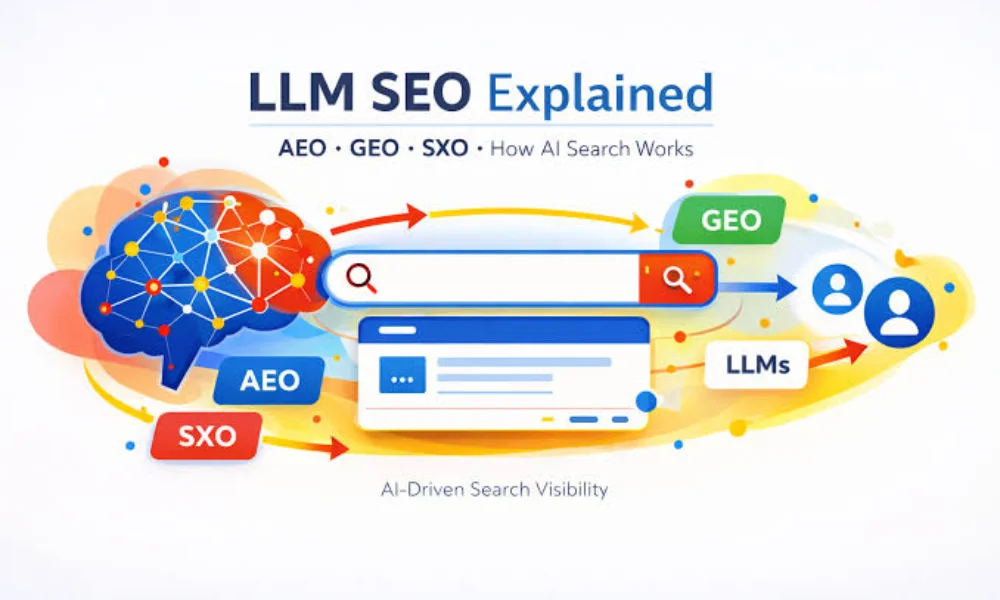
When a user inputs a complex prompt, the AI scans its index for pages that display high topical authority and clear structured information. The journey starts with a user entering a complex query. Then, the AI scans its high-authority index. Next, it filters specifically for structured info and trusted entities. Finally, it synthesizes a clean response and adds verifiable source citations.
To land these citations, your content must connect facts clearly. AI models look for clean data points that match user intent. They avoid vague paragraphs and favor authoritative pages that lay out information simply.
How Google AI Search Uses LLM SEO
Google weaves advanced language models directly into its core search systems through AI Overviews and conversational AI modes. These features do not replace the traditional index, but they sit right on top of it.
Google’s quality systems analyze pages for depth, accuracy, and helpfulness. The engine then uses its language models to compress that information into a snapshot at the top of the search page.
Aligning with these systems requires strict adherence to helpful content guidelines. Your content must serve the user immediately, feature original insights, and leave zero doubt about its factual accuracy.
LLM SEO vs Traditional SEO vs GEO SEO
Learn how these three marketing frameworks differ and see how they connect to form a modern strategy.
LLM SEO vs Traditional SEO
The differences between these frameworks come down to how systems process your data and how users consume it. Traditional SEO aims to rank blue links on page one based on keywords and links. Users click a link and browse the page.
LLM SEO aims to become the synthesized answer and inline citation based on semantic meaning and trust. Users read the AI summary and click the source for validation. Traditional SEO needs keyword-targeted long-form text, while LLM SEO requires direct, data-dense answers with high factual depth.
LLM SEO vs GEO SEO
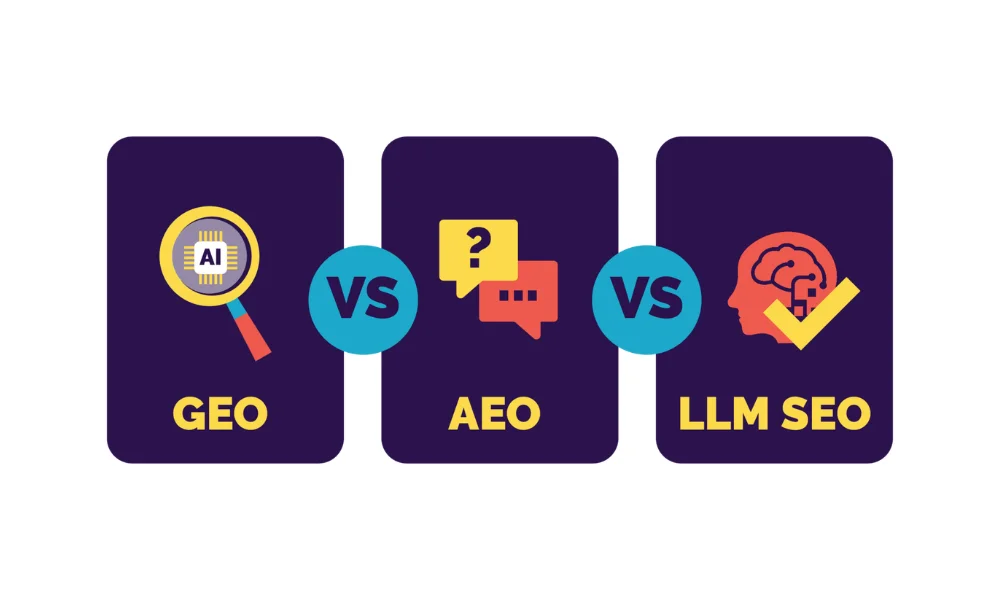
LLM SEO is the overarching strategy of optimizing for language models across all digital platforms and assistants. Generative engine optimization, or GEO SEO, is a specific technical subset of this discipline.
GEO focuses on specific optimization tactics like adding high-quality citations, embedding statistical data, and including direct quotes from experts. Think of GEO SEO as the technical optimization toolkit you use to make your site highly attractive to generative engines.
When You Need All Three
A successful modern digital strategy does not choose between these methods. It unifies them. Traditional technical infrastructure ensures search engines can find you.
GEO tactics structure your data so AI engines can easily digest it. LLM optimization ensures your brand builds the overall authority required to win deep conversational queries. Together, they form a bulletproof search strategy.
LLM SEO Best Practices That Improve AI Visibility
Implement these practical optimization steps to make your content highly discoverable for artificial intelligence models.
Create Entity-First Content for LLM SEO
AI models think in entities, which are clearly defined people, places, concepts, or brands. To rank well, you must build strong topical relevance around your core entity.
You should mention related concepts naturally and connect your brand to verified industry terms. It is best to avoid fluff and use precise vocabulary. You can also build deep content hubs that cover a subject from every angle.
This approach builds undeniable brand authority. When an AI scans the web for an industry expert, your site emerges as a deeply connected hub of reliable knowledge.
Structure Content for AI Search Optimization
AI engines love predictable, clean content structures because they make extraction simple. Use question-based headings that mirror real user queries.
Directly below those headings, write short answer blocks that state the facts instantly. Use bulleted lists to break down multi-step concepts, and provide clear definitions for complex terms. When your text is scannable for humans, it becomes instantly readable for AI engines looking for a quick snippet to extract.
Build Trust Signals That Support LLM SEO
Trust is the ultimate ranking factor for generative engines. Show clear author expertise by including detailed bios, credentials, and social links for your writers.
Include original research, unique statistics, and verifiable citations to external authoritative sources. Keep your content fresh with regular updates. AI engines avoid outdated facts, so keeping your data current protects your visibility over time.
Optimize Technical SEO for LLM SEO
The best content fails if an AI crawler cannot read your website files. You must maintain perfect technical crawlability so bots can access your files without errors. Deploy comprehensive Schema markup to define your entities explicitly. Build tight, logical internal linking structures to share authority across pages.
Finally, ensure lightning-fast page speed and a seamless mobile experience. Clean code lets AI scrapers parse your site quickly, index your facts, and link back to your pages.
How to Measure LLM SEO Success
Track your progress with new metrics and tools designed for the era of conversational search.
Metrics That Matter
Tracking success in an AI-driven environment requires looking past simple keyword positions. You must track your AI citations across major platforms.
Monitor your overall brand mentions inside conversational search tools. Watch your referral traffic patterns to see how many users click through from AI summaries. Track your specific AI Overview visibility on Google, and balance these numbers against your overall organic growth to get an accurate view of your reach.
Tools for Tracking LLM SEO
Start with Google Search Console to monitor impression trends and see where your URLs appear in enhanced search features. Use modern AI visibility platforms that specifically scrape and analyze conversational responses for your target keywords.
Set up brand monitoring tools to catch whenever your company name is mentioned across web forums, news sites, and digital publications. This data shows you exactly where the models find your brand.
Common LLM SEO Mistakes to Avoid
Steer clear of these frequent optimization errors to keep your search traffic growing.
- Publishing Generic AI Content: Flooding your site with generic, low-effort AI copy ruins your authority. Models recognize recycled data and ignore pages that offer no unique value. Always lead with human insight, original research, and real case studies.
- Ignoring Entities and Brand Authority: If you only target isolated long-tail keywords without building a real brand entity, AI engines will pass you over. They prefer to cite established, trusted sources that show clear industry presence.
- Treating Generative Engine Optimization as a Shortcut: GEO SEO is not a magic trick or a system hack. Inserting random statistics or forced quotes into bad content will not trick a modern language model. The foundation must always be genuine, high-quality information.
- Forgetting Content Updates: Information changes quickly. If your pages contain old data or dead links, AI engines will quickly drop your site and cite a competitor who keeps their resources current.
LLM SEO Checklist for 2026:
Use this practical checklist to ensure your website meets every criteria for modern AI search.
Content Checklist
- Provide 100% original, helpful content that solves a distinct problem.
- Match user search intent perfectly within the first two paragraphs.
- Build complete semantic coverage of the topic without filler text.
- Include direct answers right below question-based headings.
Technical Checklist
- Add explicit structured data schema to every page.
- Connect related articles with clean, logical internal links.
- Achieve fast performance scores across desktop and mobile devices.
- Verify clean indexability and remove all crawl blocks in your robot files.
Authority Checklist
- Feature expert authors with clear, verifiable industry credentials.
- Embed strong trust signals, including clear sourcing and references.
- Share original insights, proprietary data, or unique case studies.
- Maintain absolute brand consistency across all digital channels.
The Future of LLM SEO and AI Search Optimization
Prepare your business for the next wave of developments in artificial intelligence search engines.
What Businesses Should Prepare For
Search is evolving into a fully conversational, AI-first experience. Users now expect direct answers, multi-turn follow-up questions, and entity-driven discovery that skips traditional list pages entirely.
Winning in this space requires continuous content improvement. You must consistently refine your digital footprint, feed the web with accurate data, and position your brand as an undisputed authority. The companies that adapt to these language models today will dominate the search landscapes of tomorrow.
Conclusion
Embracing LLM SEO is the single best way to protect and grow your digital reach. Success requires a unified strategy that blends deep technical design, sharp AI search optimization, and the targeted tactics of GEO SEO. Brands that invest heavily in authoritative content, transparent trust signals, and clear entity-driven data structures will claim the top spots in traditional Google results and emerging generative search engines. Memorabledesign builds the high-performance websites and future-proof content strategies you need to stay visible, authoritative, and trusted across every platform users use to find answers.
Frequently Asked Questions
What is LLM SEO?
LLM SEO is the practice of optimizing web content so large language models can easily find, understand, and cite your brand as a trusted source in their generated answers.
How is LLM SEO different from traditional SEO?
Traditional optimization focuses on ranking blue links based on keywords and links. This new method focuses on semantic meaning, entity connections, and trust signals to become the direct answer inside AI responses.
Is LLM SEO the same as GEO SEO?
No, but they work together. LLM optimization is the broad strategy for all language models, while generative engine optimization represents the specific technical tactics used to optimize text for AI platforms.
How does AI search optimization improve visibility?
It structures your data and strengthens your brand authority. This makes it easy for AI engines to pull your content, attribute your data, and display your site as an official citation.
What is generative engine optimization, and why is it important?
It is a targeted optimization framework that adapts content for generative search tools. It matters because it ensures your pages contain the specific data, quotes, and layouts that AI engines look for when building answers.
