Key Takeaways
- Clear emotional positioning for your business
- Timeless psychological frameworks that drive customer loyalty
- Practical framework for humanizing your brand identity
- Proven examples of legendary archetype marketing
Have you ever wondered why you feel instantly drawn to certain companies? It is rarely just about the product. More often, it is about personality. When you use brand archetypes, you give your business a clear human identity that people naturally recognize, trust, and remember. At memorabledesign.com, we see this magic happen every single day when businesses anchor their strategy in human psychology.
AI Overview
Brand archetypes are universally recognized personality models based on Jungian psychology. Marketers use these twelve distinct characters such as the Hero, Outlaw, or Caregiver to build a consistent brand identity, craft compelling storytelling, and establish deep emotional connections with target audiences. By aligning with a specific archetype, businesses create memorable design systems and foster long-term customer loyalty across all media channels.
What Are Brand Archetypes?
Think of a brand archetype as the fundamental character of your business. It is the core personality that guides how you speak, look, act, and connect with the world. Long before modern marketing existed, psychologist Carl Jung identified that humans share a collective unconscious filled with instinctual patterns and symbols.
When we apply jungian archetypes marketing principles today, we tap into those exact same universal patterns. Rather than selling features, you are embodying a familiar persona that your audience already understands on an intuitive level. Whether you operate as a bold rebel or a gentle caregiver, defining your brand personality types creates immediate clarity for your entire team.
Why Storytelling Brand Archetypes Matter for Your Business
Have you noticed how the best ads feel like short, captivating movies? That happens because storytelling brand archetypes give your narrative structure, purpose, and emotional depth. Without a defined archetype, marketing messages quickly become disjointed and confusing to consumers.
One day your tone might sound strictly professional, and the next day it feels wildly playful. That kind of inconsistency quietly damages customer trust over time. When you stick to a single core archetype, every blog post, social caption, and logo choice reinforces one clear image.
| Strategic Benefit | What It Means for Your Brand | Business Outcome |
| Instant Recognition | Customers recognize your tone immediately across platforms. | Higher recall and stronger brand affinity. |
| Emotional Connection | You appeal directly to deep human desires and values. | Greater customer retention and loyalty. |
| Design Consistency | Your visual choices align directly with your core persona. | Unified creative direction across campaigns. |
| Competitive Clarity | You carve out a distinct, non-fungible market position. | Reduced dependency on price-based competition. |
The 12 Brand Archetypes Framework
To make sense of all twelve characters, marketers generally divide them into four primary motivations:
- Provide Structure: Control, safety, and order.
- Connect with Others: Belonging, intimacy, and enjoyment.
- Leave a Mark: Mastery, courage, and liberation.
- Yearn for Paradise: Knowledge, safety, and freedom.
Let's explore each character in detail so you can discover where your business fits best.
1. The Hero
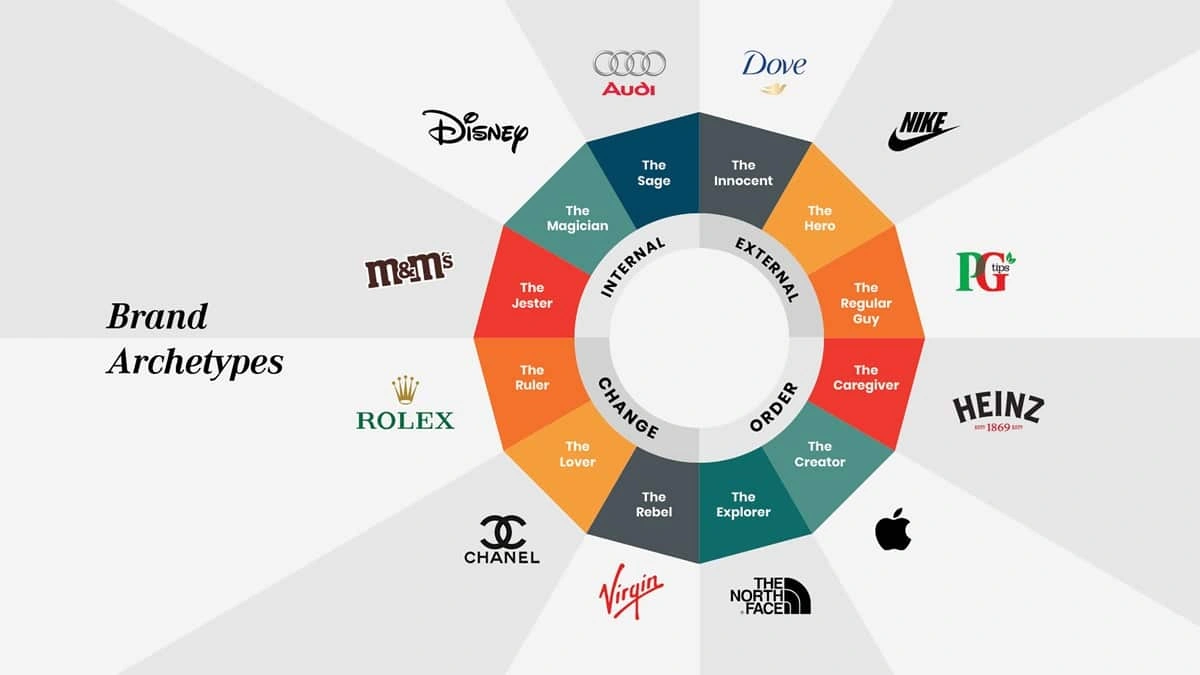
The Hero thrives on overcoming obstacles through grit, determination, and hard work. Their core goal is to prove worth through courageous action and inspire others to push past their limits. You will see archetype branding examples like Nike or FedEx leading this category with bold, empowering messaging.
2. The Outlaw
Also known as the Rebel, the Outlaw lives to disrupt the status quo and break outdated rules. They cater to customers who feel alienated by mainstream culture and crave true liberation. Harley-Davidson and Virgin are classic examples of this fierce, non-conformist mindset.
3. The Magician
The Magician turns dreams into reality through innovation, vision, and transformative experiences. They focus on creating moments of awe and making the seemingly impossible feel effortless. Brands like Apple and Disney embody this spirit by continuously transforming how we live and dream.
4. The Innocent
The Innocent seeks simplicity, optimism, and pure happiness in a complex world. They focus on honesty, goodness, and wholesome values that restore faith in everyday life. Dove and Aveeno use this peaceful tone to connect deeply with safety-conscious consumers.
5. The Sage
The Sage relies on truth, wisdom, and rigorous analysis to understand the universe. Their goal is to educate the world and empower people through verified knowledge. Google and BBC demonstrate how jungian archetypes marketing helps established authorities build long-term credibility.
6. The Explorer
The Explorer craves freedom, discovery, and non-stop adventure in the great outdoors. They appeal to consumers who hate routine and want to forge their own independent path. Patagonia and The North Face showcase excellent storytelling brand archetypes in this space.
7. The Everyman
The Everyman values belonging, humility, and everyday common sense above all else. They speak plainly, treat everyone with dignity, and focus on practical solutions for daily life. IKEA and Target show how 12 brand archetypes examples can make design accessible to everyone.
8. The Lover
The Lover focuses on intimacy, passion, sensory pleasure, and emotional connection. They aim to make people feel special, attractive, and deeply appreciated. Chanel and Godiva build their entire identity around luxurious sensory experiences.
9. The Jester
The Jester brings joy, humor, and lighthearted fun to every interaction. They use irreverent wit to pop social tension and remind us not to take life too seriously. Old Spice and M&M's showcase how brand personality types can entertain while driving massive sales.
10. The Caregiver
The Caregiver is driven by compassion, generosity, and a selfless desire to help others. They protect the vulnerable and provide comfort during difficult life moments. Volvo and UNICEF build immense public trust by prioritizing safety and human welfare.
11. The Ruler
The Ruler represents power, prestige, control, and flawless organizational success. They offer premium quality, stability, and status for demanding high-achieving clients. Rolex and Mercedes-Benz lead this space by setting the benchmark for luxury and excellence.
12. The Creator
The Creator thrives on imagination, self-expression, original craft, and artistic vision. They empower people to build something meaningful and leave a lasting creative legacy. Lego and Adobe provide powerful creative tools that turn imagination into reality.
Legendary 12 Brand Archetypes Examples in Action
Looking at real market leaders makes these psychological concepts instantly practical. Let's examine how top brands use archetype branding examples across distinct industries.
| Brand | Primary Archetype | Core Promise | Key Visual Style |
| Nike | Hero | Just Do It — Victory over limits | Bold, high-contrast, action-focused |
| Harley-Davidson | Outlaw | Freedom from conventional rules | Raw, dark, rugged, leather-textured |
| Apple | Magician | Think different, transform technology | Minimalist, sleek, futuristic |
| Dove | Innocent | Real, natural, unvarnished beauty | Clean, white, soft lighting |
| Lego | Creator | Rebuild the world through imagination | Vibrant primary colors, modular designs |
Notice how each company's visual language mirrors its underlying psychology. At memorabledesign.com, we help businesses align their visual identity with these exact emotional triggers. When your visual design and verbal personality match, your market authority grows naturally.
How to Find Your Own Brand Personality Types
Uncovering your true persona is an engaging journey of self-discovery for your business. First, ask yourself what core desire drives your daily business decisions beyond making a profit. Are you trying to bring order to chaos like a Ruler, or are you sparking joy like a Jester?
Second, carefully examine your existing audience and their deepest psychological needs. Are your customers seeking security, adventure, status, or creative self-expression? Taking a structured brand archetype quiz can accelerate this process for your leadership team.
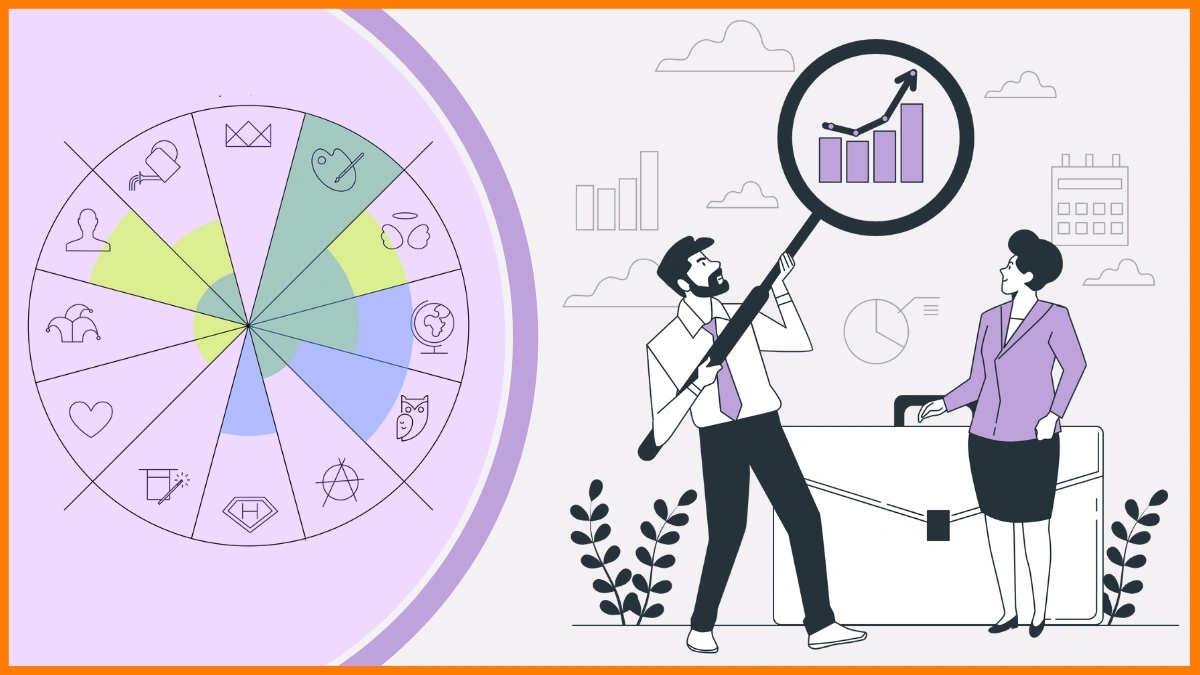
In most cases, your primary character will become obvious during team brainstorming sessions. You might also discover a secondary archetype that adds nuance and flavor to your main identity. For instance, a tech company might be 70% Magician (transformation) and 30% Sage (knowledge). Just keep in mind that your primary character should always dictate your main messaging framework.
Bringing Your Archetype to Life in Marketing
Once you select your primary archetype, you need to apply it consistently everywhere. Here are two key areas where your personality must shine through every day:
Copywriting and Tone of Voice
- The Sage: Uses clear, precise, authoritative, and educational language.
- The Jester: Uses playful puns, witty banter, and lighthearted humor.
- The Caregiver: Uses warm, empathetic, reassuring, and supportive words.
- The Outlaw: Uses provocative, bold, direct, and rebellious phrases.
Visual Design and Aesthetics
- Color Palettes: Rulers prefer deep regal colors; Innocents prefer soft pastels.
- Typography: Heroes need strong bold fonts; Lovers prefer elegant script typefaces.
- Imagery: Explorers showcase vast natural landscapes; Creators show raw workspace tools.
By keeping these choices consistent, you build an authentic brand that customers recognize instantly. If you ever feel stuck during this process, memorabledesign.com offers expert creative direction to guide you.
Conclusion
Building a memorable business is not about shouting louder than everyone else in your industry. It is about speaking with a clear, authentic human voice that resonates deeply with the right audience. By applying brand archetypes, you transform a standard business into an unforgettable character that people love.
Take time to evaluate your core values, explore the 12 characters, and embrace your true personality. When your strategy, design, and voice align, long-term customer loyalty follows naturally.
Frequently Asked Questions
What are brand archetypes?
Brand archetypes are 12 universal personality models derived from Jungian psychology. They help businesses define their core identity, craft consistent storytelling, and build meaningful emotional connections with their target audience.
Why use jungian archetypes marketing?
Using Jungian archetypes in marketing taps into instinctive human psychology. It simplifies your messaging, differentiates your business from competitors, and fosters immediate trust and recognition among prospective customers.
How do I take a brand archetype quiz?
You can take an online brand archetype quiz by answering questions about your company's core values, mission, voice, and audience desires. The test identifies your dominant character archetype.
Can a company have two brand personality types?
Yes, many successful companies combine a primary archetype with a secondary one. The primary archetype drives core strategy, while the secondary archetype adds unique depth, nuance, and competitive flair.
