
If you have been asking yourself why websites don't rank on Google, you are already ahead of most people, because most website owners never stop to ask the question seriously. They publish content, wait, and wonder why nothing moves. The answer is rarely one single thing. It is almost always a combination of SEO mistakes, structural problems, and misunderstandings about how Google actually works in 2026. This guide breaks every major reason down clearly, with no fluff, no jargon overload, and no vague advice, just the real reasons your site is invisible and what you can do about each one.
The Hard Reality About Google Rankings in 2026
Google processes an estimated 8.5 billion searches every single day. The competition for the first page of results has never been more intense, more sophisticated, or more unforgiving of shortcuts.
The websites that rank well in 2026 are not the ones that got lucky or found a loophole. They are the ones that did the fundamentals consistently, built genuine authority over time, and gave Google exactly what it wants, useful, trustworthy, well-structured content that genuinely answers what people are searching for.
The good news is that most of your competitors are still making the same avoidable mistakes they were making three years ago. Fix your foundation, and ranking becomes a realistic outcome rather than a distant hope.
The Biggest Reasons Why Websites Don't Rank on Google
1. Your Website Is Targeting the Wrong Keywords
This is the most common and most costly mistake in all of SEO. Business owners and content creators choose keywords based on what they think people search for, not what the data actually shows.
The result is pages optimised for terms nobody types, or terms so competitive that a new or mid-authority site has no realistic chance of ranking for them, or terms that attract traffic with no buying intent whatsoever.
Effective keyword strategy in 2026 means targeting search terms with the right balance of monthly search volume, realistic competition level, and strong alignment with what your audience actually wants to do when they find your page.
| Keyword Type | What It Means | Best For |
|---|---|---|
| Head terms | Broad, high-volume (e.g. "SEO") | High authority sites only |
| Mid-tail | More specific (e.g. "SEO tips for small business") | Mid-authority sites |
| Long-tail | Very specific (e.g. "why my website doesn't rank on Google") | New and growing sites |
| Intent-specific | Action-based (e.g. "hire SEO agency London") | Commercial pages |
New and growing websites almost always rank faster and more sustainably by going after long-tail and intent-specific keywords first. Trying to rank for "SEO" on a brand new website is not a strategy, it is wishful thinking.
2. Your Content Does Not Actually Answer the Search Intent
Publishing content is not the same as publishing content that ranks. Google's entire business depends on returning results that genuinely satisfy the person searching. If your page does not match the search intent behind a keyword, it will not rank, regardless of how well-written or well-optimised it is.
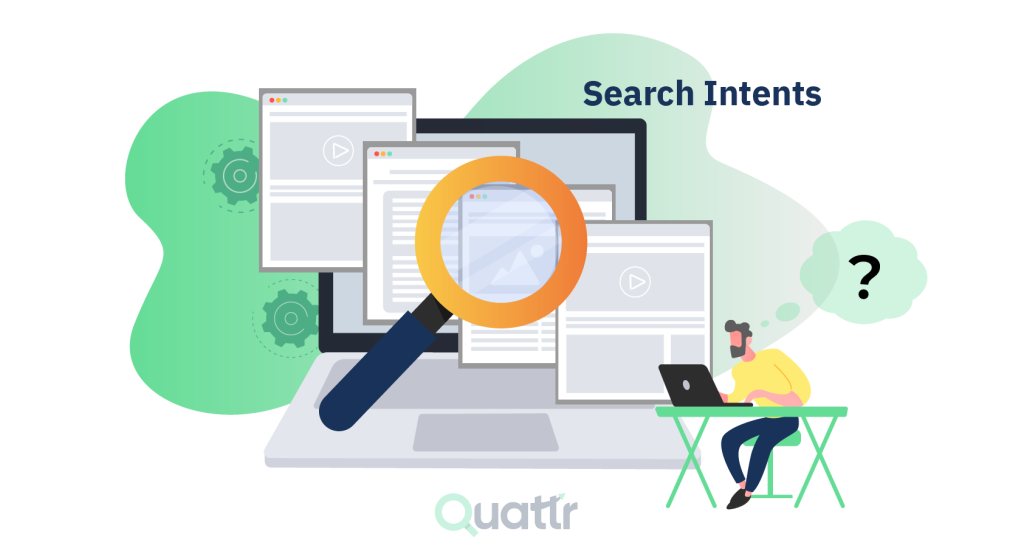
Search intent falls into four categories that every piece of content must be built around:
- Informational — the person wants to learn something
- Navigational — the person is looking for a specific site or brand
- Commercial — the person is researching before making a decision
- Transactional — the person is ready to buy or sign up
A page optimised for an informational keyword that reads like a sales pitch will not rank. A transactional page that buries the call to action under five paragraphs of background information will convert poorly even if it ranks. Matching content format, depth, and tone to search intent is one of the highest-leverage SEO actions you can take — and one of the most frequently ignored.
3. Your Website Has Serious Technical SEO Issues
Beautiful design means nothing to a search engine crawler. What Google's bots care about is whether they can access your pages, understand your content, and index your site efficiently. Technical SEO issues are silent killers, your site can look perfect to a human visitor and be nearly invisible to Google at the same time.
The most damaging technical SEO issues found on underperforming websites in 2026:
| Technical Issue | Impact on Rankings | How Common |
|---|---|---|
| Slow page speed (Core Web Vitals failure) | High — direct ranking factor | Very common |
| No HTTPS / SSL certificate | High — trust and security signal | Less common now |
| Broken internal and external links | Medium — wastes crawl budget | Very common |
| Missing or duplicate meta titles and descriptions | Medium — affects click-through rates | Extremely common |
| No XML sitemap submitted to Google Search Console | Medium — slows indexing | Common |
| Duplicate content across multiple URLs | High — confuses Google about which page to rank | Common |
| Poor mobile experience | High — Google uses mobile-first indexing | Still common |
| Crawl errors and blocked pages | High — pages may not be indexed at all | Common |
| Unoptimised images slowing load times | Medium-High — affects Core Web Vitals | Very common |
If you have never run a technical audit on your website, start there. Tools like Google Search Console, Screaming Frog, and Ahrefs Site Audit will surface these issues quickly. Many of them are straightforward to fix and deliver noticeable improvements in crawlability and indexing speed.
4. Your Website Has No Backlinks, Or the Wrong Ones
Backlinks, links from other websites pointing to yours, remain one of the most powerful ranking signals Google uses. A page with strong, relevant backlinks from authoritative sites will almost always outrank a better-written page with none.
The reason is simple. Backlinks are votes of confidence from the rest of the internet. When a respected website links to your content, it signals to Google that your page is trustworthy and worth recommending.
The key word is relevant. A backlink from a respected industry publication is worth exponentially more than a hundred links from low-quality directories or irrelevant blogs. Chasing link quantity over link quality is one of the most persistent SEO mistakes that holds websites back, and in some cases, it actively damages rankings if Google determines the links are manipulative.
Building backlinks legitimately is slower but permanent. The most effective methods in 2026 remain:
- Creating genuinely useful, original content that earns links naturally
- Digital PR, getting your expertise, data, or story covered by journalists and bloggers
- Guest posting on relevant, established publications in your niche
- Earning links through tools, calculators, or original research that others reference
5. Your On-Page SEO Is Either Absent or Outdated
On-page SEO is the practice of optimising the elements within each page of your website so that Google understands exactly what the page is about and who it should be shown to. It is not complicated, but it is frequently done badly, partially, or not at all.
The critical on-page elements that affect rankings directly:
Title Tag
The most important on-page SEO element. Should include your primary keyword naturally, stay under 60 characters, and be unique for every page on the site.
Meta Description
Does not directly affect rankings but dramatically affects click-through rates from search results. A compelling meta description brings more visitors from the same ranking position.
H1 and Header Structure
Every page should have exactly one H1 that includes the primary keyword. Subsequent headers (H2, H3) should be used logically to structure the content, not stuffed with repetitive keywords.
Keyword Placement
The primary keyword should appear in the first 100 words, in at least one H2, in the URL slug, and naturally throughout the content. Forced or excessive repetition does more harm than good.
Internal Linking — Linking between your own pages helps Google understand the structure of your site and distributes authority across it. Most websites under-use internal linking significantly.
Image Optimisation — Every image should have a descriptive, keyword-relevant alt text. Images should be compressed for speed without sacrificing quality.
6. Your Website Does Not Have Enough Authority or Trust
Google evaluates every website against what it calls E-E-A-T Experience, Expertise, Authoritativeness, and Trustworthiness. This framework is especially important for websites covering health, finance, legal topics, or any subject where bad information could harm the reader.
But E-E-A-T signals matter for every type of website, not just sensitive niches. Signs of trust and authority that Google looks for include:
- Clear authorship information with credentials and bios
- An About page that clearly explains who runs the site and why they are qualified
- Contact information and a physical address where relevan
- Positive reviews and mentions across the wider web
- An editorial standard that is consistent and clearly well-researched
- Backlinks from established, respected sources in the industry
Websites that feel anonymous, lack clear authorship, or publish thin content without demonstrating real expertise struggle to rank especially after Google's series of core updates through 2024 and 2025 that specifically targeted low-credibility content.
7. Your Content Is Too Thin, Too Broad, or Too Similar to Everything Else
Google has one goal: give the person searching the best possible answer to their query. If your content does not do that better than the results already on page one, there is no reason for Google to replace those results with your page.
Thin content, articles under 300 words, pages with no real substance, product descriptions copied from manufacturers, signals low effort and provides little value. Broad content that touches on a topic without going deep enough to be genuinely useful ranks poorly for the same reason.
But the most overlooked content problem in 2026 is sameness. When every article on a topic says the same things in the same order with the same examples, Google has no reason to prefer one over another except authority, which newer sites have less of.
The solution is original perspective. Real examples. Proprietary data. Counter-intuitive angles. Practical specificity that generic content farms cannot replicate. This is the content that earns links, gets shared, and, over time, dominates rankings.
The SEO Mistake Checklist, How Many Are You Making?
Run through this honestly. Every yes is a ranking problem waiting to be fixed:
| SEO Mistake | Are You Making It? |
|---|---|
| Targeting keywords with no data behind them | Yes / No |
| Content does not match search intent | Yes / No |
| Site has never had a technical SEO audit | Yes / No |
| No backlink strategy in place | Yes / No |
| Duplicate or missing meta titles across pages | Yes / No |
| Pages load slowly on mobile | Yes / No |
| No internal linking strategy | Yes / No |
| Content is thin or covers topics too broadly | Yes / No |
| No Google Search Console set up | Yes / No |
| Website has no clear E-E-A-T signals | Yes / No |
If you answered yes to three or more of these, your ranking problems are not bad luck. They are a predictable result of fixable structural issues — and fixing them is entirely within your control.
How to Fix Your Ranking Problems, Where to Start
The instinct when a website is not ranking is to create more content. Usually, that is the wrong first move. More content on a broken foundation just means more pages that do not rank.
The right order of operations is:
First : Fix the technical foundation. Run a full technical audit using Google Search Console and a crawl tool. Fix broken links, resolve indexing errors, improve page speed, and make sure every important page is accessible to Google's crawlers.
Second : Audit your existing content. Identify which pages are closest to ranking — positions 8 to 20 in Google Search Console — and improve those first. Updating and strengthening near-ranking content produces faster results than creating new content from scratch.
Third ; Fix your on-page SEO systematically. Work through your most important pages and ensure every title tag, meta description, header structure, and internal linking element is correctly optimised.
Fourth : Build a real backlink strategy. Identify the two or three types of content or outreach that are most realistic for your niche and commit to a consistent monthly effort.
Fifth : Create new content strategically. With the foundation solid, create new content around carefully researched long-tail and intent-specific keywords where you have a genuine chance to rank and where ranking will bring genuinely valuable traffic.
This sequence is not glamorous. It does not promise overnight results. But it is the sequence that actually works and it is exactly what the websites outranking you right now did to get there.
Conclusion
Understanding why websites don't rank on Google is the most valuable thing you can do for your online presence before spending another penny on content, ads, or web design. The answer is almost always a combination of wrong keyword targeting, content that misses search intent, unresolved technical SEO issues, weak backlink profiles, and SEO mistakes on the page level that quietly undermine every other effort.
None of these problems are permanent. All of them are fixable. The businesses and creators who will dominate search results in the next two to three years are the ones who stop chasing shortcuts and start building the kind of trustworthy, well-structured, genuinely useful online presence that Google was always designed to reward.
Start with the audit. Fix the foundation. Then build.
For more expert guides on SEO, web design strategy, and building a website that actually performs, visit memorabledesign where good design and smart strategy work together to make your website impossible to ignore.
Frequently Asked Questions
Q1: Why is my website not showing up on Google at all?
Your site may face indexing delays, technical blocks, or crawl errors. If it’s brand new, it likely lacks the authority needed to appear. Check Google Search Console for specific indexing issues.
Q2: How long does it take for a website to rank on Google?
Typically, it takes 3–6 months for long-tail keywords and 6–12 months for competitive terms. Speed depends on your content quality, technical health, and how fast you build quality backlinks.
Q3: What are the most common SEO mistakes that prevent ranking?
Common fails include targeting the wrong keywords, ignoring search intent, and having a weak technical foundation. Publishing "thin" content without original value is another major ranking killer.
Q4: Do technical SEO issues really affect Google rankings that much?
Yes. Google won’t rank pages it can’t crawl or understand. Slow speeds, mobile errors, and broken links undermine your content, no matter how good it is. Technical health is your ranking foundation.
Q5: What is the fastest way to improve Google rankings for an existing website?
Optimize "low-hanging fruit" pages already ranking in positions 8–20. Improving their content, internal links, and on-page SEO offers the quickest boost in traffic with the least effort.
