AI visibility services help your brand get mentioned across AI search: ChatGPT, Google AI Overviews, Gemini, Perplexity, and Copilot. When a buyer asks an AI assistant for the best option in your category, these services work to make sure your name is in the answer, described accurately, and linked as a source.
Here is the direct answer. A good service tests the same buying questions across every major AI platform, finds where your brand appears and where competitors take your place, then closes the gaps with clearer content, stronger third-party coverage, and technical fixes. Expect a median retainer of around $6,850 a month for serious GEO work, and judge results on share of voice across platforms, not on any single answer.
I have spent more than twenty years doing this work, and the shift underneath it is simple: the answer is becoming the destination. Google still sends clicks, but more buyers now start with a question to an assistant and trust the reply. A brand that is invisible across AI answers is invisible when the shortlist is formed.
In short
- What it is: work that raises how often AI platforms mention, cite, and recommend your brand.
- Where it counts: ChatGPT, Google AI Overviews, Gemini, Perplexity, and Copilot, tested separately.
- Cost: median GEO retainer around $6,850 a month, from roughly $1,800 to $22,000 and more.
- Measure it by: share of voice, citation frequency, branded prompt coverage, and AI referral traffic.
- Time: three to six months before results are stable enough to judge.
What AI visibility services actually do
An AI visibility service, also sold as GEO or generative engine optimisation, covers the whole AI answer landscape rather than one platform. That breadth is the point. A buyer might ask ChatGPT at work, Google AI Overviews on their phone, and Perplexity when researching a purchase. If your brand appears in one and not the others, you are visible to some buyers and invisible to the rest.
The service starts with a prompt set: the real questions your buyers ask, gathered from sales calls, support tickets, and search data. Those prompts are run across each platform, several times each, because AI answers vary between runs. The provider records which brands appear, which pages are cited, and whether the description of your brand is accurate. That cross-platform baseline is the deliverable everything else is measured against. From the baseline, the work falls into four areas: quotable content, third-party coverage, technical fixes so AI crawlers can read your pages, and a monitoring routine that repeats the prompt tests monthly. Our guide to GEO versus SEO versus AEO sets out how AI visibility relates to traditional search and answer engine optimisation.
How the five main platforms choose brands
The five platforms do not work the same way, and a service that treats them as one channel will miss most of the picture. ChatGPT answers from its training and live web search, leaning on review sites, comparison roundups, and community discussion. Google AI Overviews are built on Google’s own index, so they reward the authority and content quality that traditional SEO rewards. Gemini draws on Google’s ecosystem, with a stronger pull from YouTube. Perplexity is the most citation-driven of the five: every claim carries a source. Copilot draws on Bing’s index.
What they share is a preference for corroboration. No platform trusts a brand’s own website alone. Each one looks for the same claim repeated across independent sources: reviews, comparisons, editorial coverage, and community discussion. A brand with one strong page and no outside presence will struggle on all five.
Why the same question gets different answers
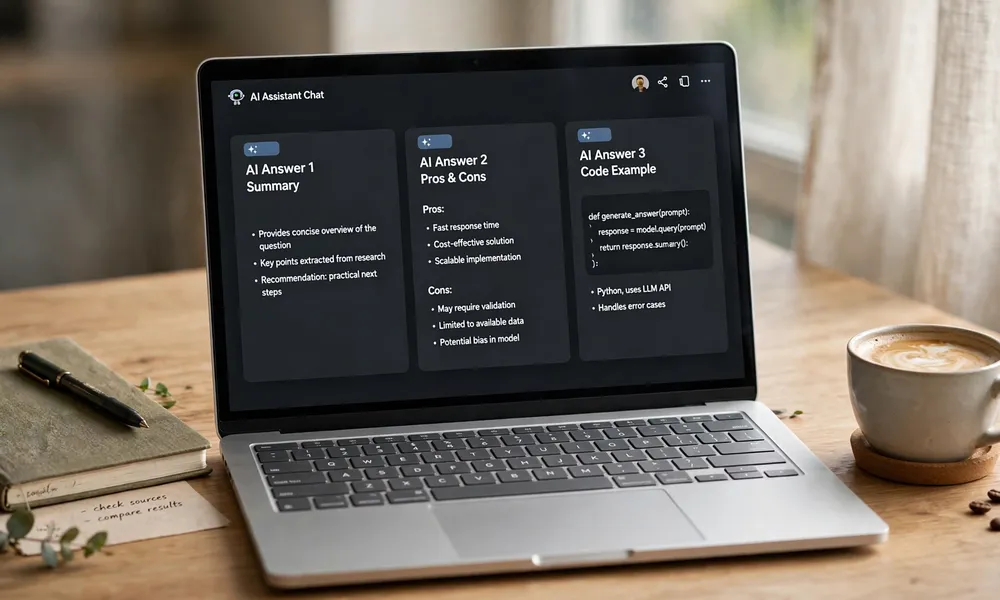
Ask all five platforms for the best project management tool for a small agency and you will get five different shortlists. The prompts are identical; the sources, the weighting, and the phrasing are not. Perplexity will cite the pages it read. Google AI Overviews will favour the pages that already rank well. That variance is why measurement has to be per platform: a single average hides the platform where you are invisible. Your provider should show you, for each of the five, how often you appear and which sources each platform cites.
What a service costs in 2026
Pricing in this field is still settling, and the figures below come from a published study, not from any single agency. A First Page Sage study from October 2026, based on 1,146 quotes from 214 agencies, puts the median GEO and AEO retainer at $6,850 a month, above the median traditional SEO retainer of $4,740 a month. Memorable Design prices by scope and quote only, so treat these numbers as market benchmarks.
| Service tier | Typical monthly range | Median | Best suited to |
|---|---|---|---|
| Starter | $1,800 to $4,200 | $2,950 | Small brands, one market, a narrow prompt set |
| Growth | $4,500 to $11,000 | $7,400 | Mid-market brands tracking several platforms |
| Advanced | $11,000 to $22,000 | $14,600 | Competitive categories with heavy citation work |
| Enterprise | $22,000 to $60,000+ | $31,500 | Large brands, many markets, many product lines |
Sector and scale change the figure. The same study found a median of $8,640 a month for B2B SaaS brands, among the most competitive categories in AI answers. Tracking software is a separate line: AI visibility tools typically cost from $50 to $1,000 or more a month. Ask how many platforms the tracking covers, because a tool that only watches ChatGPT cannot report on the other four.
The work that earns mentions
Begin with positioning. AI platforms favour brands they can describe in one clean sentence: the most affordable invoicing tool for freelancers, the best CRM for small law firms, the most reliable hosting for WooCommerce stores. If your positioning is vague, the model will choose a competitor it can describe instead. Rewrite your key pages so each one states plainly who the product is for, what it costs, and how it compares.
Then build the corroboration. Complete your profiles on the review platforms your buyers trust, earn genuine customer reviews, and keep those profiles current. Work with the comparison sites and publications your category’s prompt tests show up most often, and give them accurate facts, pricing, and customer stories to quote. Keep your own pages fresh, because AI platforms favour current sources. For smaller businesses, this work overlaps with the fundamentals of being findable at all, which is why our SEO services for small business cover the same groundwork. Finally, fix the technical layer: check that AI crawlers can reach your pages and that your structured data is clean. If the technical basics are new to you, our guide to what SEO is and how it works explains the foundations before you spend on the AI layer.
Measuring AI visibility: the four numbers that matter
Measurement is genuinely about four things, and a provider who cannot report all four is not measuring the work. Share of voice in AI answers is your share of brand mentions and citations compared with competitors. Citation frequency is how often your pages are linked as sources. Branded prompt coverage is how often you appear when the question names your category. Referral traffic is the visits those answers send you, visible in your analytics.
Each of these needs the same discipline: the same prompt list, run several times per platform, on a fixed schedule, with competitors tracked alongside you. AI answers vary from run to run, so a single test proves nothing. A credible report shows the average across runs, the dates, and the prompt list itself, so you can repeat the test and check the numbers. Several tools now do the tracking: Profound, Scrunch, Peec AI, Athena HQ, Brandlight, the Semrush AI Toolkit, Ahrefs Brand Radar, and Writesonic’s AI visibility tool. The tools make the results visible; they do not replace the work of earning the mentions. Our SEO service page sets out what a managed service typically covers.
Red flags that should end the conversation
Some promises are warnings in disguise. A guaranteed mention on every platform is the clearest of them, because no provider controls what five different models say. A single screenshot of one good answer is another, since one answer proves nothing about the other forty-nine prompts. So is a report that covers only ChatGPT while the proposal promised all AI search, or a refusal to share the prompt list and the raw data. Watch for providers who sell AI visibility as a new label on an unchanged SEO retainer, and for anyone who wants to create dozens of thin pages stuffed with your brand name. A confident provider will agree to a three-month trial with clear exit terms and a baseline report in the first month.
Your pre-signing checklist
- Baseline report across all five platforms, on a named prompt list, tested more than once per platform.
- Named competitor set tracked on the same prompts, so share of voice is relative.
- Clear scope: how many prompts, platforms, pages rewritten, and outreach each month.
- Monthly reporting with raw prompt data per platform, citation counts, and AI referral traffic.
- Tooling named in the contract: which AI visibility platform is used, what it covers, and who pays.
- Realistic timeline in writing: three to six months before results are judged.
- No guarantees of mentions or rankings, and no long lock-in before a trial period.
- Full fee in writing, including extras and what happens if the scope changes.
Frequently asked questions
What are AI visibility services?
They increase how often your brand is mentioned, cited, and recommended inside AI-generated answers across ChatGPT, Google AI Overviews, Gemini, Perplexity, and Copilot, through prompt testing, content and technical fixes, third-party coverage, and ongoing measurement.
Which AI platforms should I track?
At minimum, ChatGPT and Google AI Overviews, because they reach the most buyers. Add Gemini, Perplexity, and Copilot when your buyers use them: technical buyers lean towards Perplexity, while buyers inside Microsoft tools meet Copilot first. Your provider should justify the platform list from your audience.
How long does AI visibility take to improve?
Some citations appear within weeks if your pages are already strong. Stable, repeatable mentions across platforms usually take three to six months, because each platform’s picture of your brand changes only as new sources get cited consistently.
How much do AI visibility services cost?
Market benchmarks put the median GEO and AEO retainer at around $6,850 a month, with starter scopes from roughly $1,800 to $4,200 and enterprise work from $22,000 to $60,000 or more. Tracking software is often an extra $50 to $1,000 or more a month.
Is AI visibility the same as SEO?
No, but they overlap. SEO aims to rank your pages in search results. AI visibility aims to get your brand named and cited inside an AI-generated answer, where there may be no list of links at all. Google AI Overviews still reward strong SEO, while ChatGPT and Perplexity reward third-party coverage more. The measurement is different.
Does AI visibility bring website traffic?
It can, and you should measure it directly. AI platforms send referral traffic when users click the citations in their answers, and those visits show up in your analytics. Much of the value is harder to see: buyers who first meet your brand inside an answer and arrive later by a direct search. Track both the clicks and the mentions.
Conclusion
AI visibility is not one channel but five, and the brands that win are the ones with clear positioning, consistent third-party coverage, and the patience to be measured properly. Start by asking each platform your buyers’ questions this week. The gaps will tell you whether you need help and what that help should cost. Then hire on evidence, not on promises.