

ChatGPT visibility services help your brand get cited and recommended inside ChatGPT answers, so that when a buyer asks for the best option in your category, your name appears in the reply. They work by shaping the sources ChatGPT draws on: your website, review sites, comparison pages, and the third-party coverage it treats as evidence. This is a new service, and it is easy to buy badly.
Here is the direct answer. A good service starts by testing the exact prompts your buyers actually type, records where your brand appears and where it does not, then fixes the gaps: clearer product pages, stronger reviews, and mentions on the sites ChatGPT cites most. Expect to pay a median of around $6,850 a month for a serious GEO retainer, and expect three to six months before results are stable enough to judge.
I have spent more than twenty years doing this work, and I have watched search change shape several times. ChatGPT is the biggest change since Google itself, because the answer now arrives before the click. A brand that is never mentioned in the answer may never be considered at all. This guide explains how ChatGPT chooses what to say, and how to tell a genuine programme from a repackaged SEO retainer.
In short
- What it is: work that raises how often ChatGPT cites and recommends your brand.
- How it works: prompt testing, source analysis, content fixes, review and mention building, and tracking.
- Cost: median GEO retainer around $6,850 a month, from roughly $1,800 to $22,000 and more.
- Evidence: before-and-after prompt tests showing your brand in more answers, with citations.
- Time: three to six months before results are stable enough to judge fairly.
What ChatGPT visibility services actually do
A ChatGPT visibility service, sometimes sold as a GEO or AI visibility service, has one job: make your brand show up inside ChatGPT answers to buying questions. That is narrower than traditional SEO. Google rankings are about ten blue links. ChatGPT gives one answer, and the brands it names are the shortlist.
The work starts with prompt research: the provider lists the questions your buyers ask ChatGPT, from broad questions such as the best CRM for a small law firm to comparisons between named tools, then runs each prompt repeatedly and records which brands appear and which pages are cited. That baseline is the foundation; without it, nobody can prove the work did anything. The service then splits into three kinds of work: quotable content, third-party authority, and technical fixes so the crawler can reach your pages. Our guide to GEO versus SEO versus AEO explains where ChatGPT visibility sits alongside Google rankings and answer engines generally.
How ChatGPT decides which brands to cite
ChatGPT does not rank websites the way Google does. When you ask it a question, it draws on what it learned in training and, for current topics, on live web search, then writes an answer and attaches citations to the pages that support its claims. The brands it names are the ones that appear consistently across the sources it trusts for that topic.
The single most important factor is source diversity. ChatGPT leans on review sites, comparison roundups, forums, and editorial coverage far more than on a brand’s own website, because independent sources corroborate the claim. A page on your own site saying you are the best option carries little weight. Ten independent pages saying the same thing carries a great deal.
Where ChatGPT gets its information
For product and service questions, ChatGPT’s web search pulls from the open web, and the sources it cites cluster in a few places: review platforms where customers rate products, comparison articles that rank options side by side, news and trade publications, community discussions on sites such as Reddit and YouTube, and the brands’ own documentation pages. A visibility service should show you exactly which sources ChatGPT cites for your category, because those are the pages worth improving first.
What makes ChatGPT recommend one brand over another
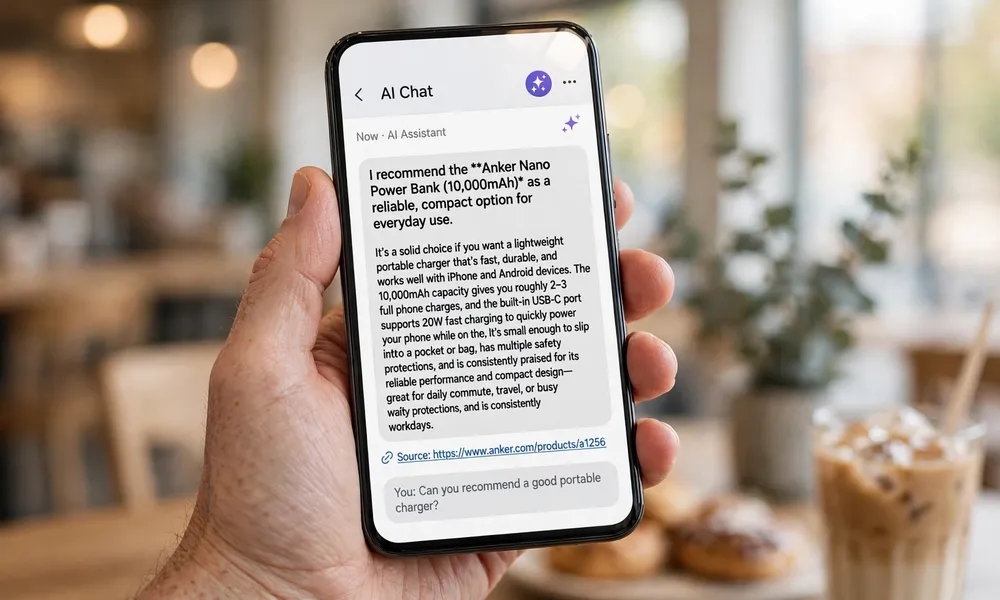
Recommendation is different from citation. A citation means ChatGPT linked to your page as a source. A recommendation means it named your brand as one of the best options. Citations are the easier win. Recommendations require the evidence to point in your favour across many sources.
Clarity wins here. ChatGPT favours brands it can describe confidently in one sentence: the best CRM for small law firms, the most affordable invoicing tool for freelancers, the most reliable managed hosting for WooCommerce stores. If your positioning is vague, the model has nothing clean to say about you, and it will choose a competitor it can describe instead. Freshness matters too: a page last updated two years ago will lose ground to a competitor’s page updated last month.
What a ChatGPT visibility service costs in 2026
Pricing in this field is still settling, and the ranges below come from a published study rather than from any single agency. A First Page Sage study from October 2026, based on 1,146 quotes from 214 agencies collected between July and October 2026, puts the median GEO and AEO retainer at $6,850 a month, above the median traditional SEO retainer of $4,740 a month. Memorable Design prices by scope and quote only, so treat these figures as market benchmarks.
| Service tier | Typical monthly range | Median | Best suited to |
|---|---|---|---|
| Starter | $1,800 to $4,200 | $2,950 | Small brands, one product, a narrow prompt set |
| Growth | $4,500 to $11,000 | $7,400 | Mid-market brands with several product lines |
| Advanced | $11,000 to $22,000 | $14,600 | Competitive categories with heavy citation work |
| Enterprise | $22,000 to $60,000+ | $31,500 | Large brands, many markets, multiple products |
Sector matters. The same study found a median of $8,640 a month for B2B SaaS brands, among the most competitive categories in ChatGPT answers. Tracking software is a separate cost: AI visibility tools typically run from $50 to $1,000 or more a month. Some agencies include the tooling in the retainer; others charge it separately, so ask which applies before you compare quotes.
The work that actually moves the needle
Start with the prompts. Sit with your sales team and list the twenty questions buyers ask before they choose a supplier, then ask ChatGPT each one and write down what it says. The gaps will be obvious: questions where you never appear, questions where a competitor is recommended first, and questions where the answer about you is wrong or out of date.
Next, fix the pages ChatGPT already cites for your category. If a comparison article ranks your product third, find out why, and give the author a reason to move you up: better pricing clarity, a feature they missed, a customer they can quote. If a review site shows a thin profile for your brand, complete it and add real customer reviews. Then fix your own site: every key page should answer, in plain language, what the product does, who it is for, what it costs, and how it compares.
How to measure ChatGPT visibility honestly
The honest metrics are citation frequency, meaning how often your pages are linked as sources; recommendation frequency, meaning how often your brand is named as an option; branded prompt coverage, meaning how often you appear when the question names your category; and referral traffic from ChatGPT, visible in your analytics as visits from chatgpt.com.
The difficulty comes from variability. ChatGPT answers change from run to run, so a single test proves nothing. A credible provider tests each prompt several times and reports the average, with the dates and the prompt list attached, and tracks competitors on the same prompts. Ask for the raw data, not just a chart. Several tools track this for you: Profound, Scrunch, Peec AI, Athena HQ, the Semrush AI Toolkit, Ahrefs Brand Radar, and Writesonic’s AI visibility tool. None replaces the underlying work, but they make the results visible.
Red flags that should end the conversation
Some promises are warnings in disguise. A guaranteed first recommendation in ChatGPT is the clearest of them, because no provider controls what the model says. A promise to get you cited hundreds of times in the first month is another, since citations at that speed usually come from low-quality pages ChatGPT will soon stop citing. So is a refusal to share the prompt list, or a report showing only a single cherry-picked screenshot. Watch for providers who sell ChatGPT visibility as a bolt-on to an unchanged SEO retainer. Before you hire anyone, it helps to know how to hire an SEO consultant, because the same discipline applies: evidence first, promises second.
Your pre-signing checklist
- Baseline prompt report: your brand’s appearance across a named list of buyer prompts, tested more than once.
- Named competitor set tracked on the same prompts, so results are relative.
- Clear scope: how many prompts, pages rewritten, and outreach each month.
- Monthly reporting with raw prompt data, citation counts, and referral traffic.
- Tooling named in the contract, and who pays for it.
- Realistic timeline in writing: three to six months before results are judged.
- No guarantees of recommendations, and no long lock-in before a trial period.
- Full fee in writing, including extras and what happens if the scope changes.
Frequently asked questions
What are ChatGPT visibility services?
They increase how often your brand is cited and recommended inside ChatGPT answers, through prompt testing, content and structured data fixes, review and mention building on third-party sites, and ongoing tracking.
How long does it take to get cited by ChatGPT?
Some citations appear within weeks if your pages are already strong. Stable, repeatable recommendations usually take three to six months, because ChatGPT’s picture of your brand changes only as new sources appear and get cited consistently.
How much do ChatGPT visibility services cost?
Market benchmarks put the median GEO and AEO retainer at around $6,850 a month, with starter scopes from roughly $1,800 to $4,200 and enterprise work from $22,000 to $60,000 or more. Tracking software is often an extra $50 to $1,000 or more a month.
Is ChatGPT visibility the same as SEO?
No. SEO aims to rank your pages in Google’s results. ChatGPT visibility aims to get your brand named and cited inside an AI-generated answer, where there is no list of ten links. The two overlap in content and authority work, but the measurement differs. Our SEO agency versus in-house comparison can help you decide who should own this work.
Can I improve my ChatGPT visibility without an agency?
Yes, for the basics. Test your own buyer prompts, fix your product pages so the facts are clear and quotable, complete your review profiles, and add structured data. An agency earns its fee on scale: more prompts, more outreach, and reporting you can trust. Our SEO pricing guide for 2026 sets out the wider market ranges.
Does ChatGPT visibility bring website traffic?
Sometimes, and you should measure it directly. ChatGPT sends referral traffic when users click the citations in its answers, and you can see those visits in your analytics. Much of the value is invisible: buyers who first meet your brand inside an answer and arrive later by a direct search.
Conclusion
ChatGPT visibility is a real service with real results, and it is also a field full of repackaged promises. The difference is evidence: a baseline prompt report, a named competitor set, monthly data you can check, and a provider who will say plainly what they cannot guarantee. Start by testing your own buyer prompts this week.