
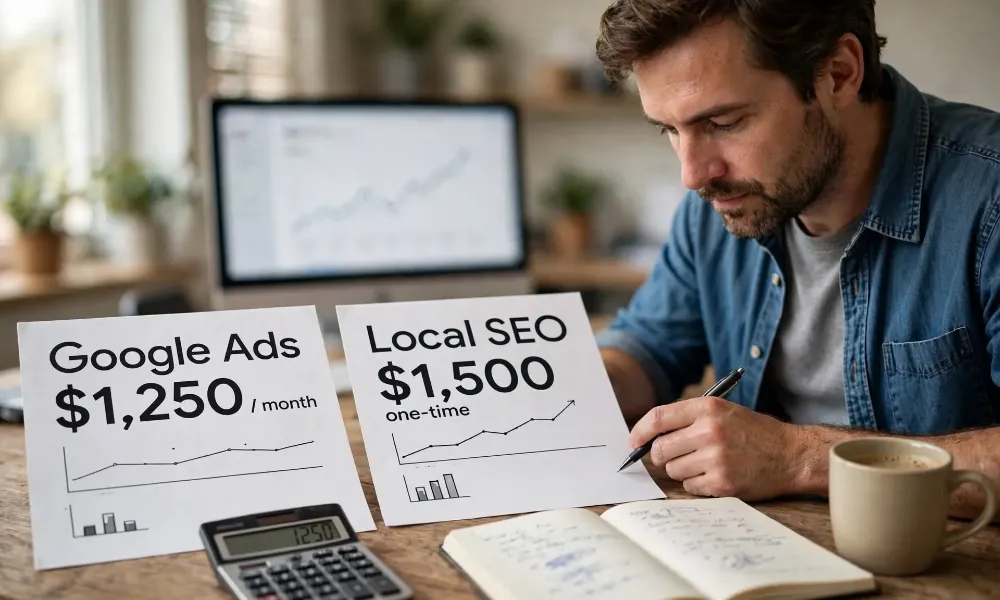
If you run a small business that serves a specific area, the question of local seo vs google ads is really about how customers in your town find you today and how they will find you next year. Both channels put you in front of nearby buyers. They differ enormously in cost, speed, and how long the results last.
Here is the direct answer. Google Ads puts your business at the top of local search results within hours and generates leads this week, but every lead has a price that never goes away.
Local SEO earns you placement in the map pack and organic results, costs far less per lead once it works, and keeps working after the effort stops, but it takes months to build. If you need customers now, start with Google Ads. If you want to own local search for the next several years, invest in local SEO from day one and let the two feed each other.
I have helped small local businesses with this exact decision for more than two decades, and the winners almost always run both in the right order. Let me show you how each channel actually behaves for a local business, what each one really costs, and the simple framework that tells you where your budget belongs.
How Local Customers Actually Find Small Businesses
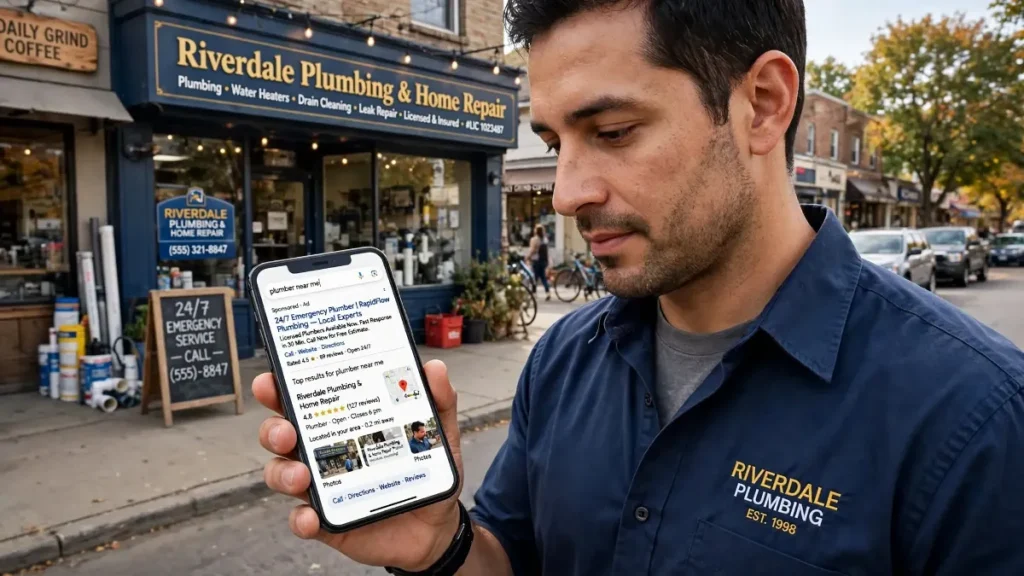
Before comparing channels, it helps to see what a local buying moment looks like. When someone needs a plumber, a dentist, or a pizza place, they pull out their phone and search. That search is one of the most valuable moments in all of marketing, because the person has a need, a location, and almost always an intention to buy within hours or days.
Those local searches get answered in two places. The map pack, that block of three local businesses with reviews and directions, captures a huge share of clicks. The organic results below it capture most of the rest. Local SEO earns you those positions. Google Ads places you above and beside them with sponsored labels.
The key insight is that both channels answer the same search. The customer does not care whether they clicked a paid ad or a map listing. They care which business looks most trustworthy and closest to their need. This means the two channels are not rivals so much as two doors into the same room, and the smartest small businesses control both doors.
Google Ads for Local Businesses: Fast Leads at a Price
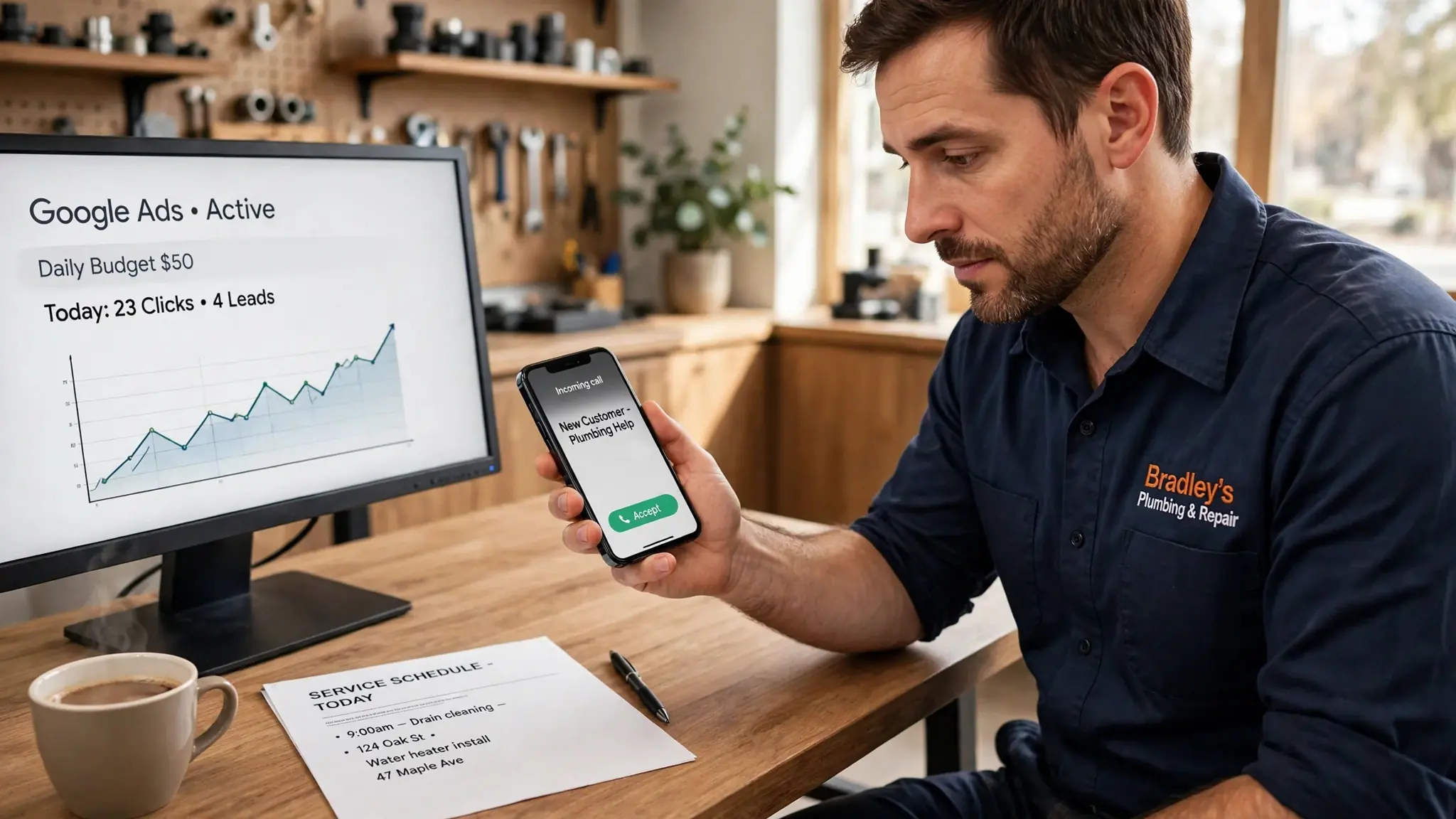
Google Ads for a local business is refreshingly direct. You choose service keywords, draw a radius around your city, set a budget, and your ads appear when nearby people search. Calls and form fills start arriving within days, sometimes within hours.
This speed makes ads the fastest path to local leads that exists. A brand new business with no website authority can fill its calendar with paid traffic while everything else catches up. Ads also give you precise control. You decide exactly which services to promote, which neighborhoods to cover, and how much to spend each day, and you can change any of it in minutes.
The costs are where small businesses get surprised. Local service keywords are among the most expensive clicks in advertising, because every competitor in town bids on the same phrases and one customer can be worth thousands. It is common for a single click to cost more than a pizza, and many clicks never become customers. The business must track cost per booked job carefully, or the budget quietly funds curiosity instead of revenue.
The deeper cost is dependency. Google Ads is a tap you pay for monthly. Turn it off and the leads stop instantly, with nothing built that you own.
Local SEO for Small Businesses: Slow Build, Lasting Asset
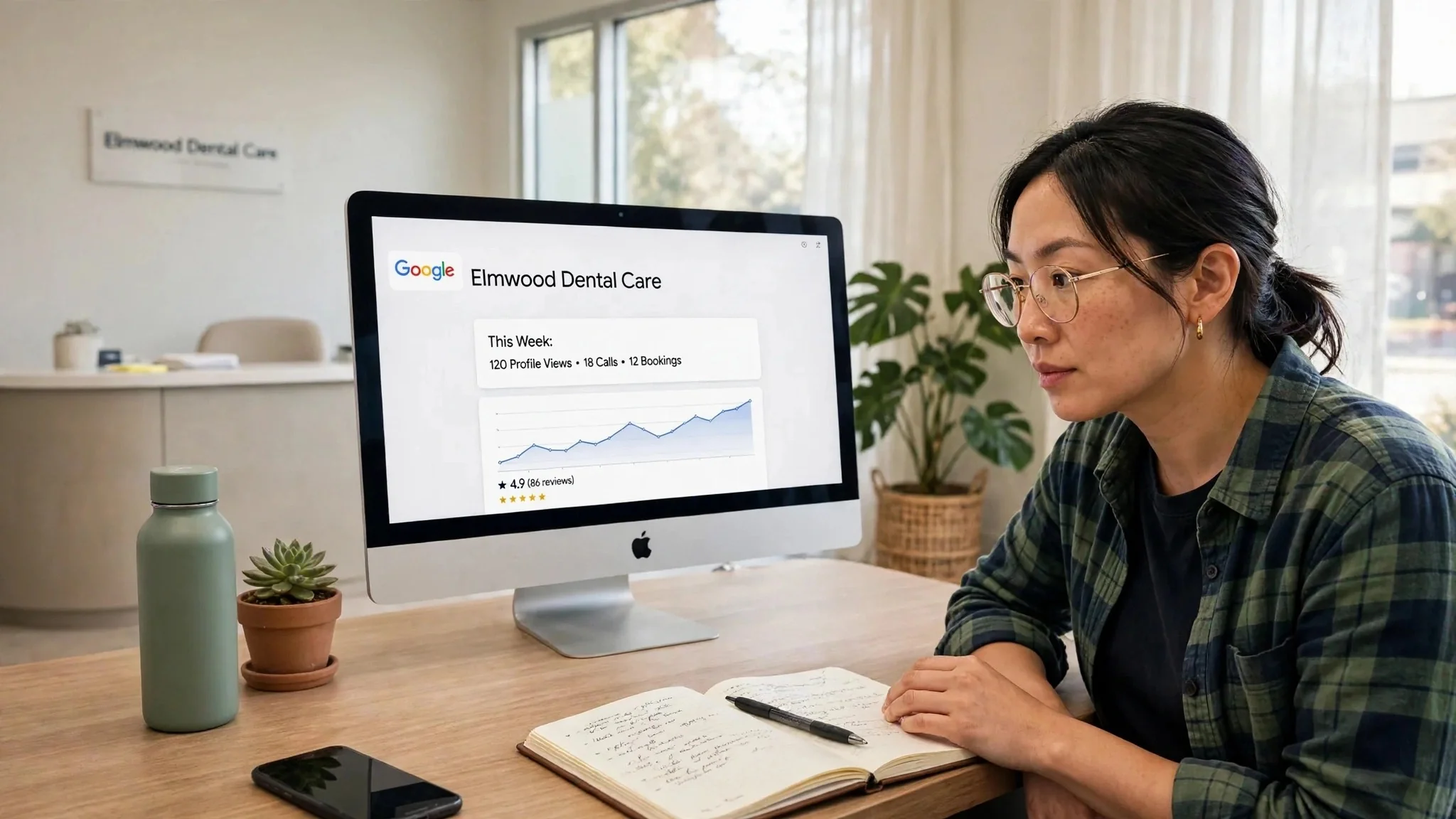
Local SEO is the work of earning visibility in the map pack and local organic results without paying per click. It rests on a few pillars: a complete and active business profile, consistent name, address, and phone details across the web, reviews that keep arriving, and pages on your website that clearly describe your services and service area.
When local SEO works, it transforms a small business. The map pack alone captures a large share of local clicks, and placement there costs nothing per visitor. Reviews visible in that map listing do the selling before anyone reaches your website. A business sitting in the top three map positions with a hundred strong reviews receives a steady stream of calls that no competitor can outbid, because the position is earned rather than auctioned.
The tradeoffs are real. Local SEO takes three to six months of consistent effort before positions move, and competitive markets take longer. It requires ongoing work, because rankings reflect recent activity and fresh reviews. And results depend partly on factors outside your control, like the age of competing businesses and their review counts.
But the economics are unmatched. Once earned, local positions deliver leads at a tiny fraction of paid costs, and they persist through months when you cannot invest. Our guide on what SEO is and how it works covers the compounding logic behind this in the broader search picture.
The Honest Cost Comparison
Let us compare the two channels the way a small business budget actually behaves.
Google Ads costs are immediate, predictable, and permanent. You pay for every click forever, auction prices rise as competitors arrive, and the day you stop paying, the leads stop arriving. For a rough sense of scale, many local service businesses pay meaningful money per lead on an ongoing basis, forever.
Local SEO costs are delayed, then nearly free. The investment lands upfront in time and effort, spread over months with little visible return at first. Then positions arrive, leads flow without per lead fees, and the marginal cost of the next customer approaches zero. Reviews keep compounding trust while ad budgets only buy temporary placement.
The crossover point is usually somewhere between month six and month twelve. Before that, ads produce cheaper leads. After that, local SEO produces dramatically cheaper leads, and the gap widens every quarter.
Small businesses that rely on ads alone often find their marketing costs climbing every single year, while businesses that built local SEO enjoy falling costs and rising lead flow.
Local SEO vs Google Ads: How to Decide Where Your Budget Goes
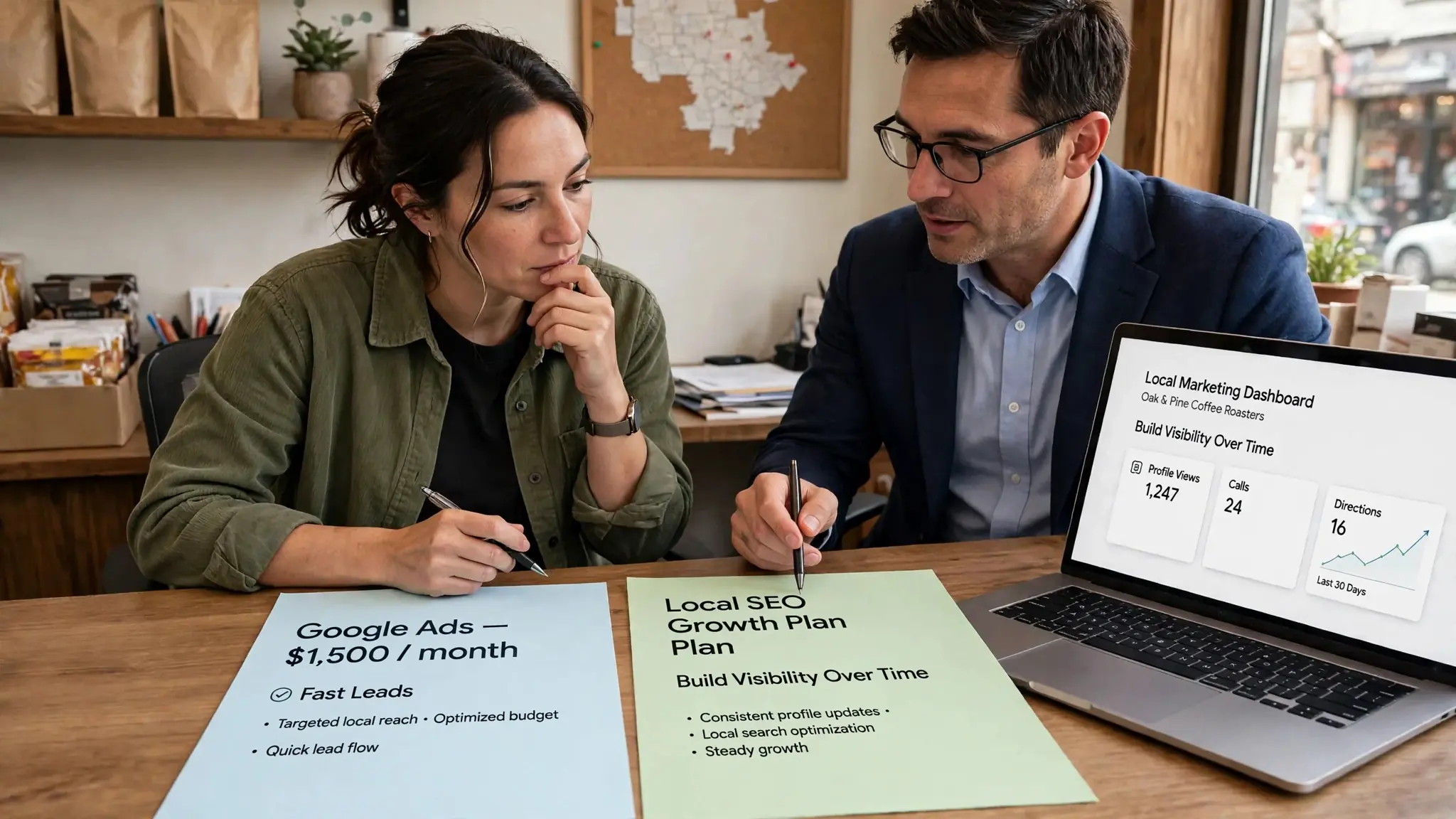
Four questions will steer you to the right answer for your situation.
First, how new is your business? A new business with no reviews and no rankings needs ads to generate customers while its local presence builds. An established business with a solid review base may find local SEO delivers better returns immediately. Second, how urgent is your pipeline? If you need revenue this month, ads are the only channel that complies. Third, how competitive is your market?
In a city where every competitor runs aggressive ads, click prices punish ad dependence, and earning map pack placement becomes even more valuable. Fourth, what is a customer worth? High value local customers justify expensive clicks in the short term while SEO matures.
The pattern I recommend most often looks like this. Run Google Ads on your most profitable services to keep the phone ringing and to learn which phrases actually book jobs. In parallel, build your local SEO foundations: complete business profile, review generation with every customer, service pages for each offering, and location details search engines can verify.
After six to twelve months, as map pack positions arrive, shift budget away from the keywords you now rank for organically, and reinvest in expansion. The ads buy time and data; the SEO builds the asset. Platform behavior matters here too, and our comparison of Google Ads versus Meta Ads explains when social ads belong beside this mix.
Mistakes That Drain Local Budgets
Small businesses repeat a short list of mistakes on both channels, and fixing them usually matters more than any clever tactic.
On the Google Ads side, the biggest mistake is sending ad clicks to a homepage instead of a focused page about the exact service advertised. The second is ignoring call tracking, which makes it impossible to know which ads produce revenue. The third is broad targeting that shows ads outside the real service area.
On the local SEO side, the biggest mistake is neglecting reviews, because review count and freshness heavily influence map pack placement, and a profile with eleven reviews loses to one with two hundred regardless of website quality.
The second mistake is inconsistent business details across the web, which confuses search engines about which business is which. The third mistake is quitting at month three, before local rankings have time to move.
On both sides, the deepest mistake is measuring clicks instead of customers. The number that matters is cost per booked job, and every other metric is a distraction from it.
Frequently Asked Questions
Is local SEO or Google Ads better for a small business?
Google Ads is better when you need leads immediately, and local SEO is better for long term growth at a lower cost per lead. Most small businesses benefit most from running ads first while building local SEO in parallel.
How long does local SEO take to work?
Expect three to six months of consistent effort before meaningful map pack movement, and up to a year in competitive markets. Reviews and profile activity usually produce the earliest signals.
Can I do local SEO myself?
Yes. The foundations, a complete business profile, steady review generation, and clear service pages, are manageable for any business owner. Competitive markets eventually benefit from specialist help.
Do Google Ads help local SEO?
Not directly, because paid placement does not improve organic rankings. Indirectly they help, because ads reveal which keywords convert and generate customers whose reviews strengthen your local presence.
What should a small business budget for both channels?
A workable starting point is a modest monthly ad budget you can sustain for ninety days, plus consistent weekly time on local SEO foundations. Splitting too little across both usually starves each of results.
