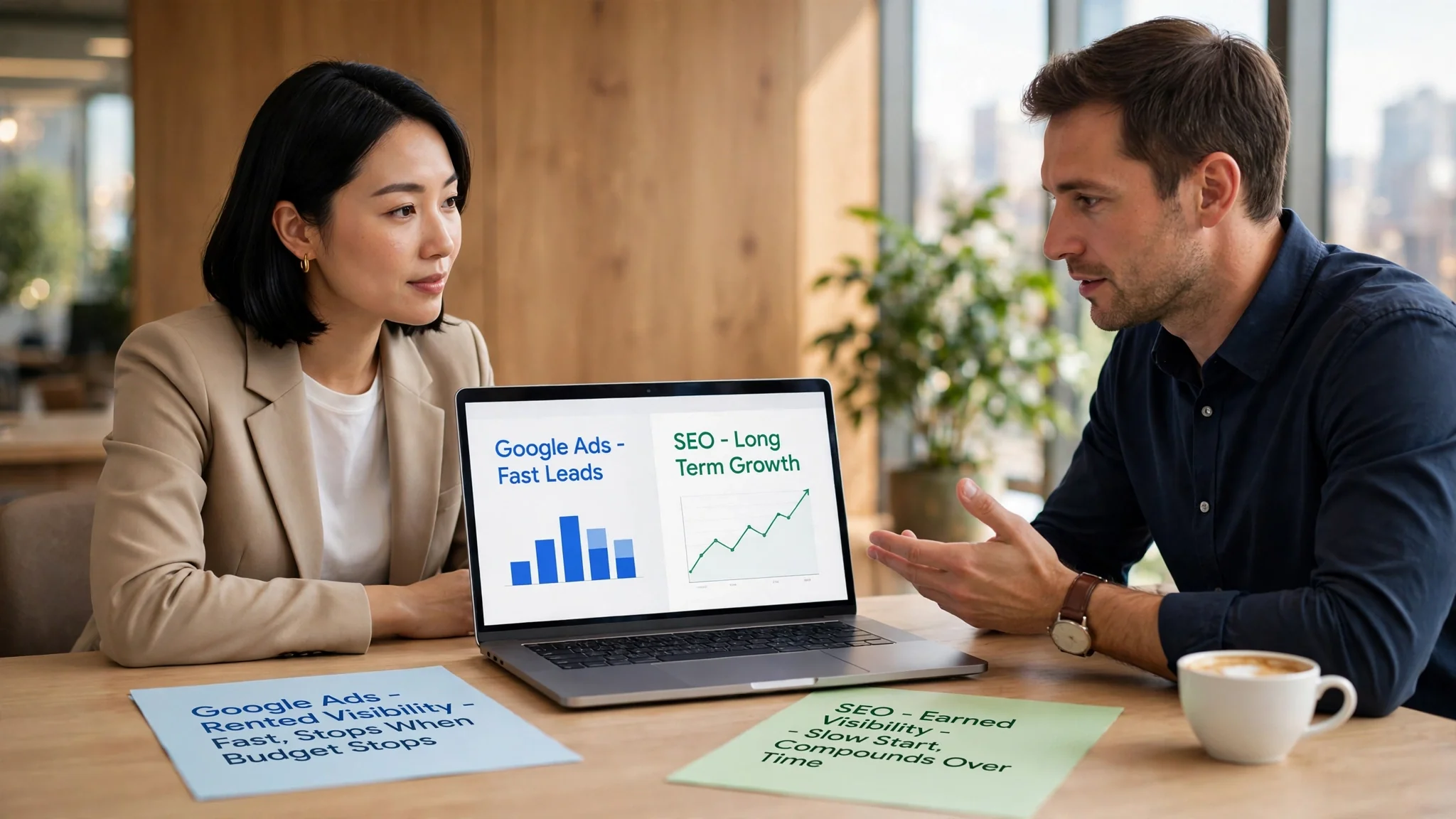
If you are weighing seo vs google ads as your main source of leads, you are choosing between two engines that run on opposite principles. One builds visibility that compounds over time. The other buys visibility that appears immediately and disappears the moment you stop paying. Both generate real leads. The question is which kind of leads your business needs right now.
Here is the direct answer. Google Ads brings leads faster and works better when you need pipeline this month, because it puts you in front of people actively searching for what you sell.
SEO brings better leads over time at a lower cost per lead, because visitors who find you organically arrive with more trust and convert more reliably. If your business is new or hungry for immediate cash flow, start with Google Ads. If you are building for the next few years, SEO will outperform it on nearly every metric that matters.
I have run both channels for businesses across dozens of industries over more than twenty years, and the pattern holds everywhere. Let me walk you through how each channel actually produces leads, what each one truly costs, and a framework for deciding where your first dollar belongs.
The Fundamental Difference: Earned Visibility vs Rented Visibility

Every practical difference between these two channels flows from one idea. SEO earns visibility. Google Ads rents it.
With Google Ads, you bid on keywords, and your ad appears near the top of the results within hours. You get prime placement immediately, but you pay for every click, and the placement vanishes the moment your budget stops. It works like leasing a shop on the busiest street in town. Great location, high rent, and the landlord can raise the rent whenever competition increases.
With SEO, you publish content, improve your pages, and build authority until search engines rank you organically. Nobody charges you per visitor. The tradeoff is time, because ranking takes months of consistent work before the traffic compounds. It works like owning the building. Slow to acquire, cheap to hold, and it appreciates the longer you keep it.
Neither principle is good or bad. Renting is often the right move when you need traffic now and cannot wait a year. Owning is almost always the better deal when you can be patient. The businesses that struggle are the ones that rent forever without ever building anything they own.
Lead Quality: Which Visitor Converts Better

This is where the comparison gets interesting, because click quality and lead quality are not the same thing.
Google Ads leads arrive with explicit intent. The person typed a commercial phrase, saw your ad, clicked, and called or filled a form. When the campaign is targeted well, these leads convert quickly, sometimes on the first touch. The weakness is that paid traffic includes bargain hunters comparing prices across five ads, and some clicks come from people who will never buy but still cost you money.
SEO leads behave differently. Someone who found you through a helpful article or an organic search result has usually consumed some of your thinking before contacting you. They arrive pre educated and pre disposed to trust you, which is why organic leads often close at higher rates and higher values. The weakness is that SEO also attracts researchers with no intention to buy yet, so some volume is softer.
Across the accounts I have managed, organic leads consistently close at better rates than paid leads, and paid leads consistently arrive faster. If your sales team can handle slower but richer conversations, SEO wins on quality. If you need conversations this week, Google Ads wins on timing.
The Real Cost Comparison
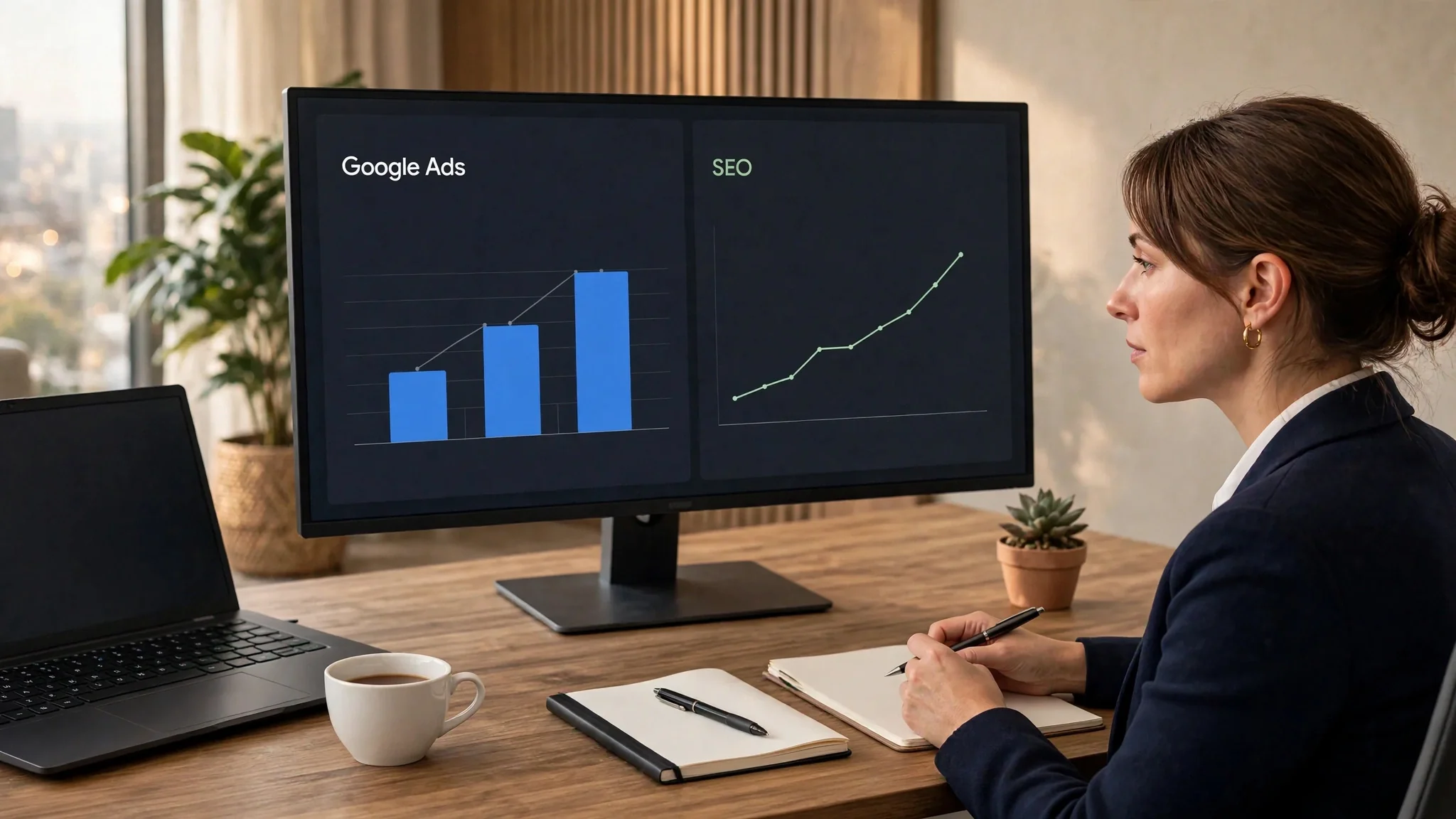
Beginners compare a cost per click with nothing and conclude ads are expensive and SEO is free. Both halves of that sentence are wrong.
Google Ads costs are immediate and transparent. You set a budget, you pay per click, and competitive industries pay shocking prices per click because one customer can be worth thousands. The key metric is cost per lead, and for most local and B2B services, paid leads carry a real per lead price that never goes away.
SEO costs look invisible because no platform sends you an invoice per visitor. But SEO is not free. It costs either your time or money for content, expertise, and patience, spread across months before returns arrive. The difference is what happens after. Once a page ranks, the marginal cost of the next visitor approaches zero, while ad costs only climb as competitors enter the auction.
Here is the honest summary. In the first six months, Google Ads almost always produces leads at a lower total cost because SEO has not compounded yet. From year two onward, SEO almost always produces leads at a lower cost per lead, and the gap widens every quarter. Businesses that never invest in SEO end up renting all their traffic at prices that rise forever. Our guide on what SEO is and how it works explains the compounding mechanics behind this shift in detail.
Speed, Control and Predictability
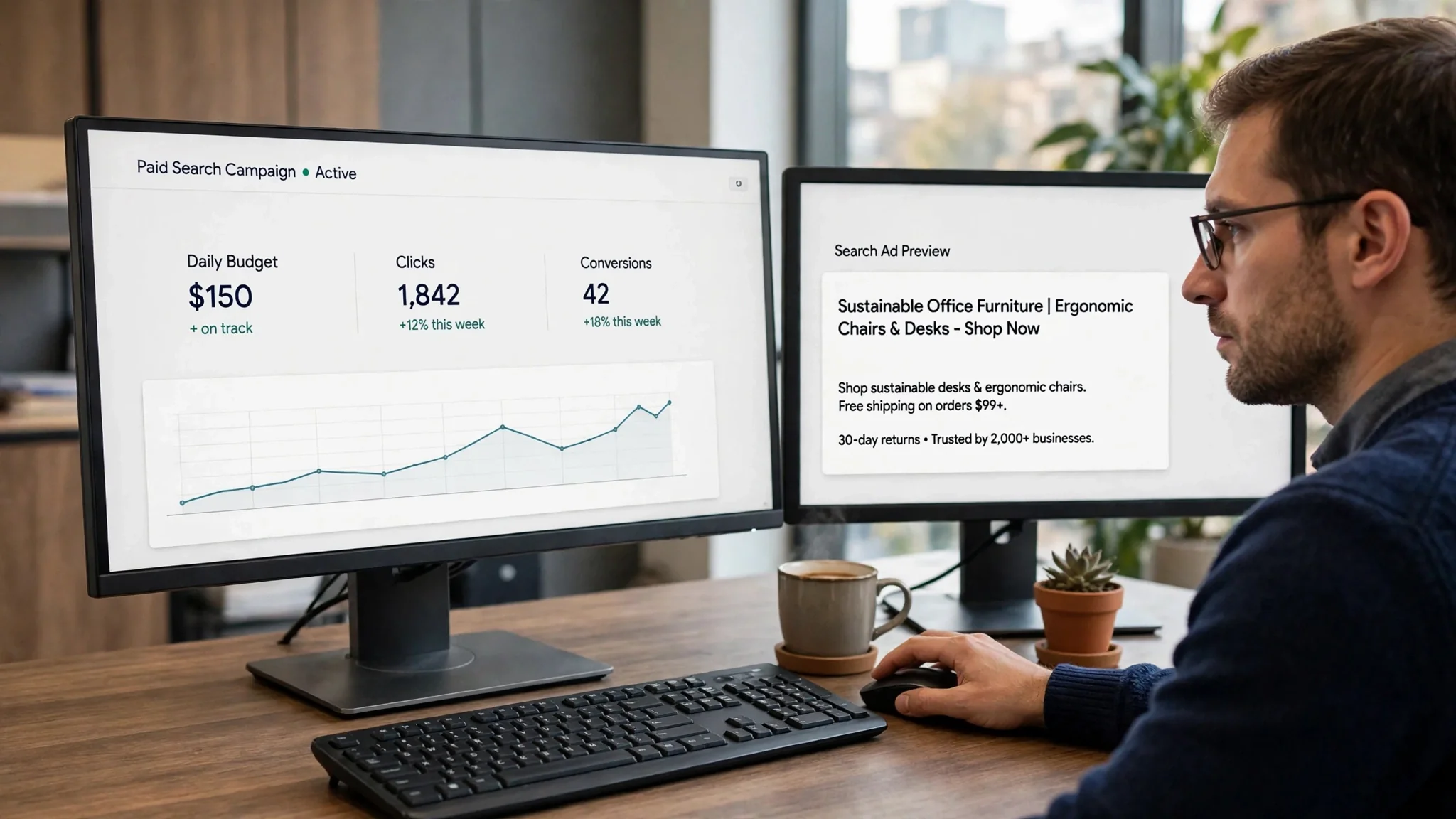
Speed is Google Ads territory, and it is not close. A campaign built today can generate leads this week. This makes ads unbeatable for launches, promotions, seasonal pushes, and businesses that need revenue now to survive long enough for SEO to matter.
Control also belongs to ads. You choose the exact keywords, the exact message, the exact landing page, and the exact budget, and you can switch any of it within hours. SEO gives you influence, not control. You shape what search engines see, but they decide when and where you rank.
Predictability splits the difference. Ad costs are predictable and rising. Organic traffic is less predictable month to month but more stable year over year, because a diversified library of rankings rarely collapses the way a single ad campaign does when auction prices jump.
SEO vs Google Ads: How to Choose Based on Your Situation
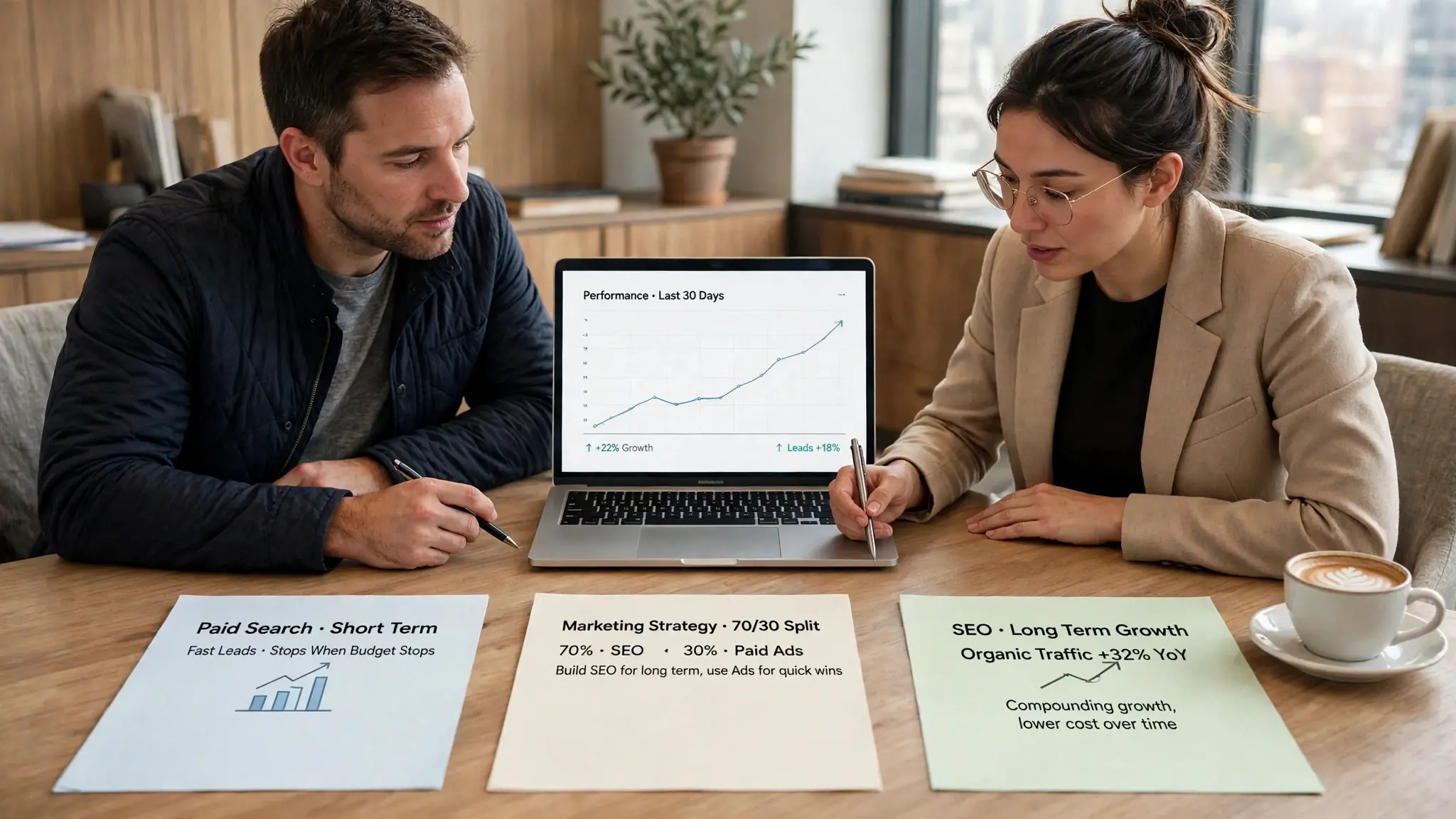
Forget abstract pros and cons. Answer four questions and the right channel usually becomes obvious.
First, how quickly do you need leads? If the answer is this month, Google Ads is your channel, full stop. Second, what is the value of one customer? High value customers justify expensive paid clicks while SEO matures.
Third, how competitive is your market? In brutally competitive auctions, ads get expensive fast, which makes building organic visibility even more valuable. Fourth, what happens after the first sale? If customers return or refer, SEO's trust building compounds in ways ads never will.
For most businesses the answers point to a sequence rather than a choice. Run Google Ads to generate leads and learn which keywords convert while your SEO foundation builds.
Then use that conversion data to prioritize your content, so the pages you build target phrases already proven to produce customers. Over time, shift budget toward whichever channel produces cheaper qualified leads for your specific business, and let the other support it.
How ads behave within that mix depends on the platform too, and our comparison of Google Ads versus Meta Ads covers the paid side of that decision for local service businesses.
Mistakes That Waste Budget on Both Channels
A short list of mistakes does more damage than any algorithm change, on both sides.
On the Google Ads side, the biggest mistake is sending paid traffic to a weak website. Expensive clicks land on slow, confusing pages, and the budget quietly funds bounces. The second mistake is treating all clicks as equal instead of tracking which keywords produce booked revenue.
On the SEO side, the biggest mistake is quitting at month three, right before compounding begins, because early traffic looks flat. The second mistake is publishing content nobody searches for, which produces beautiful articles with zero demand. Keyword research before writing prevents this completely.
On both sides, the deepest mistake is measuring leads without measuring lead quality. A cheap lead that never closes is the most expensive lead you can buy, and a full pipeline of unqualified names teaches you nothing except how to burn budget faster.
Frequently Asked Questions
Is SEO or Google Ads better for small businesses?
Google Ads usually fits better when a small business needs leads immediately, and SEO fits better for long term growth at a lower cost per lead. Most small businesses benefit from running ads first while building organic visibility in the background.
Which is cheaper per lead, SEO or Google Ads?
Google Ads is usually cheaper per lead in the first six months. SEO becomes dramatically cheaper per lead from year two onward, because ranked content produces traffic without per click costs.
How long does SEO take compared to Google Ads?
Google Ads generates leads within days of launching. SEO typically takes three to six months to produce meaningful leads and twelve months to compound seriously.
Can I run Google Ads and SEO at the same time?
Yes, and it is often the strongest approach. Ads capture demand now and reveal which keywords convert, while SEO builds owned visibility that lowers your dependence on ad spend later.
Which brings higher quality leads?
Organic SEO leads usually convert at higher rates because they arrive with more trust. Google Ads leads arrive faster but often need more qualification before they buy.