
The top ai visibility tools for optimization shift your digital strategy from simple keyword tracking to conversational share of voice. Memorable Design deploys these modern platforms to capture direct brand citations across generative search interfaces. This comprehensive guide helps you select the right engine to scale your organic presence.
Key Takeaways
-
Deploying the top ai visibility tools for optimization allows brands to track their real-time share of voice inside platforms like ChatGPT, Perplexity, and Google AI Overviews.
-
True optimization requires shifting focus from simple keyword positions to conceptual entity relationships and multi-engine citation loops.
-
Utilizing the top ai visibility tools for optimization reveals exactly which third-party media sources, forums, and database nodes feed generative models.
What Is Top AI Visibility Tools for Optimization and Why Does It Matter?
Generative models control user discovery today. Consumers do not click through ten blue links anymore, and they expect automated engines to summarize choices instantly. This shift means traditional position tracking fails to capture how buyers interact with your brand, so you need the top ai visibility tools for optimization to find your exact conversational footprint.
AI search engines pull data from deep web layers, reformat it into paragraphs, and present it directly to users. If your brand does not appear inside that specific generated text, you lose the customer completely. Using the top ai visibility tools for optimization lets you monitor your presence within these conversational responses across multiple generative models.
Difference Between SEO, GEO, AEO, and AI Visibility Optimization
Understanding modern organic discovery requires separating four closely linked strategies:
-
SEO (Search Engine Optimization): Focuses on optimizing web pages to rank high on traditional search engine results pages for specific keywords.
-
GEO (Generative Engine Optimization): Adapts content so large language models can easily discover, synthesize, and prioritize your brand inside text summaries.
-
AEO (Answer Engine Optimization): Concentrates on getting your site cited as a trusted source by conversational interfaces that answer direct user queries.
-
AI Visibility Optimization: Blends all three strategies together while tracking real-time citation frequencies, brand sentiment, and conversational share of voice.
The top ai visibility tools for optimization combine these fields into one simple dashboard.
Why Brands Need AI Visibility Beyond Google Rankings
A top position on traditional Google search engines no longer guarantees website traffic. Google AI Overviews occupy the entire top space of the screen on both mobile and desktop views, and users read these auto-generated paragraphs and skip the traditional organic links below them.
Millions of professionals use ChatGPT Search, Claude, and Perplexity as their primary discovery hubs, and these platforms ignore traditional keyword stuffing entirely. Brands must choose the top ai visibility tools for optimization to measure their digital presence across these platforms to avoid sudden traffic drops.
How LLMs Decide Which Brands to Cite
Large Language Models (LLMs) do not guess which companies to recommend to users, but they process text through sophisticated data algorithms that prioritize credibility, clarity, and structural alignment. LLMs calculate choices using three primary factors:
-
Entity Co-occurrence: The model scans the web to see how often your brand name appears next to core industry terms.
-
Citation Authority: The engine checks if authoritative directories, niche industry journals, and trusted news hubs link to your content.
-
Information Scannability: The crawler evaluates if your text uses clear semantic structures, bullet points, and clean JSON-LD schema sheets.
The top ai visibility tools for optimization analyze these exact three factors to spot your brand weak points.
SEO vs GEO vs AEO vs AI Visibility
| Attribute | SEO | GEO | AEO | AI Visibility |
| Primary Target | Traditional Search Indexes | Generative Synthesizers | Direct Conversational Feeds | Multi-Engine Eco-systems |
| Core Metric | Keyword Rank Position | Synthesis Rate | Direct Citation Frequency | Total Share of AI Voice |
| Content Style | Long-form Keyword Content | Dense Fact-Based Context | Q&A Conversational Snippets | Entity-Driven Collections |
| Success Goal | Organic SERP Traffic | Model Fragment Insertion | Direct Solution Recommendation | Cross-Platform Discoverability |
How We Evaluated the Top AI Visibility Tools for Optimization
We ran the top tracking systems through rigorous tests to evaluate their technical depth and daily usability. This methodology ensures you invest in stable, high-performance optimization platforms.
AI Platform Coverage
The top ai visibility tools for optimization must monitor more than one engine to provide real value. We tested how accurately each software crawls and parses data from ChatGPT, Google AI Overviews, Gemini, Claude, Perplexity, and Microsoft Copilot.
Tracking Capabilities
We analyzed how deeply these platforms extract specific performance metrics from live model chats. We graded tools based on their ability to isolate citation tracking, brand mentions, prompt monitoring, entity recognition, competitor monitoring, and overall share of AI voice. The top ai visibility tools for optimization must handle all of these metrics simultaneously.
Pricing, Ease of Use, and Integrations
We weighed the entry-level and enterprise subscription costs against actual feature limits. We evaluated dashboard design to ensure your growth teams can export clean files without hitting technical blockages, and we tested API connections to confirm the data syncs smoothly with your active marketing software.
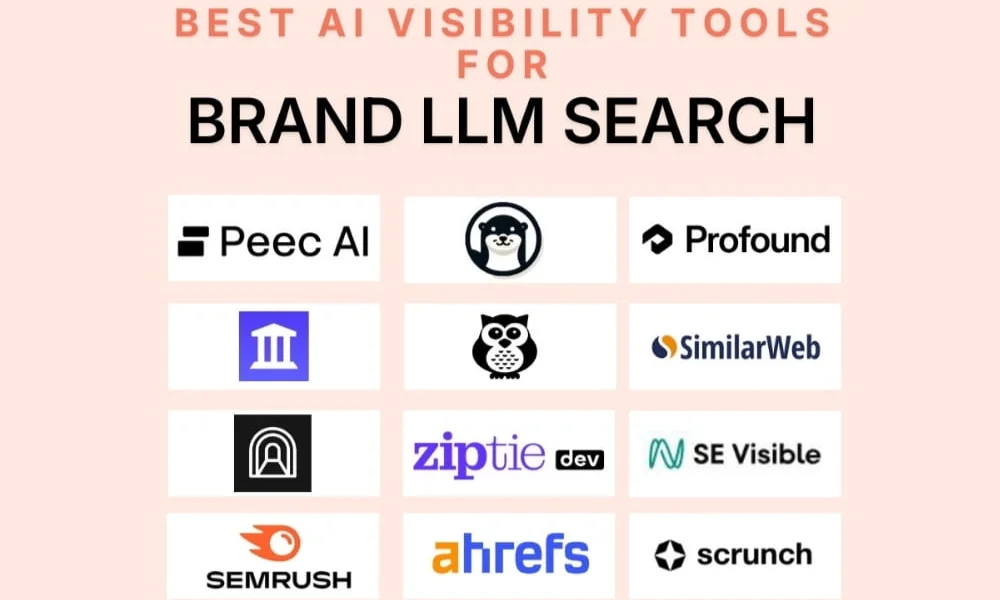
10 Top AI Visibility Tools for Optimization Compared
| Tool | Best For | AI Platforms Supported | Free Plan | Pricing | Overall Rating |
| Profound | Enterprise Intelligence | ChatGPT, Perplexity, Gemini, AIO, Copilot, Claude | No | Starts at $499/mo | 4.8 / 5.0 |
| Semrush Toolkit | Existing SEO Power Users | Google AI Overviews, Gemini, Perplexity | No | Add-on from $99/mo | 4.5 / 5.0 |
| Otterly.AI | In-Depth GEO Auditing | ChatGPT, Perplexity, AIO, Gemini, Copilot | No | Starts at $29/mo | 4.7 / 5.0 |
| Peec AI | Actionable B2B SaaS Tracking | ChatGPT, Perplexity, Gemini, Copilot | 7-Day Trial | Starts at $100/mo | 4.6 / 5.0 |
| SE Ranking Tracker | SEO-to-GEO Transitions | Google AI Overviews, ChatGPT, Gemini, Perplexity | 14-Day Trial | Bundle from $129/mo | 4.4 / 5.0 |
| AthenaHQ | Fast Competitive Mapping | ChatGPT, Perplexity, Gemini, Claude | No | Starts at $99/mo | 4.3 / 5.0 |
| Scrunch AI | Programmatic Content Scale | ChatGPT, Perplexity, Gemini, Claude, Copilot | No | Starts at $250/mo | 4.7 / 5.0 |
| Goodie AI | Early-Stage Startups | ChatGPT, Perplexity, Gemini | Yes | Starts at $39/mo | 4.1 / 5.0 |
| Rankscale | Automated Brief Generation | ChatGPT, Perplexity, Google AI Overviews | No | Starts at $149/mo | 4.2 / 5.0 |
| Mangools Grader | Simplified Visual Auditing | Google AI Overviews, ChatGPT | 10-Day Trial | Starts at $49/mo | 4.0 / 5.0 |
Top AI Visibility Tools for Optimization Reviews
This breakdown provides concise real-world profiles of the leading platforms to help you choose the right tracking system for your workflow.
1. Profound
-
Overview: Simulates thousands of complex user prompts simultaneously to track enterprise-grade model data.
-
Key Features: Real-time frontier model tracking and comprehensive database source mapping.
-
Core Advantage: Dissects the entire engine ecosystem at once, pointing out the exact external domains that outrank you inside model training sets.
2. Semrush AI Visibility Toolkit
-
Overview: Integrates generative tracking modules directly into the classic daily search marketing dashboard.
-
Key Features: Maps traditional keywords to modern conversational phrases and flags sudden data drops.
-
Core Advantage: Bridges the gap between old-school link positions and new-school conversational summaries without requiring a new interface layout.
3. Otterly.AI
-
Overview: Delivers a dedicated Generative Engine Optimization workspace to protect organic brand presence.
-
Key Features: Automated prompt discovery suggestions and a visual Perception Map quadrant.
-
Core Advantage: The built-in GEO Audit Tool reviews your specific URLs to provide a practical checklist for AI crawler readability.
4. Peec AI
-
Overview: Focuses heavily on high-intent B2B SaaS queries to track commercial software recommendations.
-
Key Features: Automated classification of third-party sources and native Looker Studio data connectors.
-
Core Advantage: Simplifies complex data streams into clear visibility scores, letting teams monitor long conversational prompts without clutter.
5. SE Ranking AI Visibility Tracker
-
Overview: Combines traditional position monitoring with modern answer engine tracking for budget-conscious teams.
-
Key Features: Automated phrase clustering and customizable PDF executive reporting templates.
-
Core Advantage: Provides an affordable entry point for growing companies to transition systematically from basic link tracking to deep generative optimization.
6. AthenaHQ
-
Overview: Uses automated scraping models to build real-time scorecards of your brand equity inside AI answers.
-
Key Features: Competitor gap analysis maps and rapid narrative shift alert systems.
-
Core Advantage: Maps the exact brand pairings that engines make, showing you how models group your company with industry rivals.
7. Scrunch AI
-
Overview: Operates as a highly scaled optimization system built for enterprise teams managing thousands of URLs.
-
Key Features: Programmatic optimization loops and developer-ready API data endpoints.
-
Core Advantage: Handles high prompt volumes and enterprise procurement effortlessly, acting as a complete management layer for large content operations.
8. Goodie AI
-
Overview: Provides an accessible, entry-level visibility framework tailored for early-stage startups.
-
Key Features: Quick-glance visibility scores and zero-configuration workspace setups.
-
Core Advantage: Eliminates technical entry barriers, allowing any new business to see what modern conversational engines say about their brand.
9. Rankscale
-
Overview: Bridges the gap between raw tracking data and content execution by generating optimized briefs.
-
Key Features: Keyword-to-prompt conversion maps and direct content production workflow tools.
-
Core Advantage: Tells copywriters exactly what phrases to include to earn the next citation instead of just showing historical data drops.
10. Mangools AI Search Grader
-
Overview: Applies a simplified approach to tracking your presence inside automated search displays.
-
Key Features: Color-coded difficulty scores and rapid single-URL verification checks.
-
Core Advantage: Simplifies complex data to help small marketing teams spot visibility shifts without getting bogged down in analytics.
Which Are the Leading AI Visibility Optimization Tools for Different Business Types?
Selecting the leading ai visibility optimization tools requires matching software features with your specific business model. Different operations require distinct tracking speeds, depth, and reporting tools.
Best for Agencies and SaaS Companies
Agencies need highly polished, client-ready white-label reports and multi-client workspaces, and they look for the best ai search visibility tools to prove their campaign ROI. Otterly.AI and Peec AI lead this space because they combine detailed prompt testing with simple dashboard exports.
SaaS companies, on the other hand, require deep tracking of high-intent comparison queries. Peec AI stands out here by monitoring transactional prompts like Which software integrates with Salesforce? to ensure your product appears when buyers are making decisions, making it one of the best llm optimization tools for ai visibility.
Best for Ecommerce, Enterprise, and Content Publishers
Enterprise organizations require robust data scale, strict security compliance, and direct API access. They need the best ai optimization tools for visibility to protect high-volume product catalogs. Profound and Scrunch AI fit this model perfectly by tracking thousands of prompts simultaneously across global regions. Content publishers need rapid tracking to protect their ad revenue from automated search scraping, so they deploy ai visibility tracking tools to adapt.
Tools like Rankscale and the Semrush Toolkit help publishers monitor their traffic footprints and find new topic areas quickly, and they act as the best ai tools for enhancing visibility on media sites.
Tool Recommendations by Business Model
| Business Type | Recommended Tool | Why |
| Marketing Agencies | Otterly.AI | Delivers polished client-facing dashboards and comprehensive GEO site audits. |
| SaaS Companies | Peec AI | Focuses on bottom-of-funnel comparison prompts and tracks direct software buyer intent. |
| Ecommerce Brands | SE Ranking | Combines product keyword positions with localized Google AI Overview carousel tracking. |
| Enterprise Brands | Profound | Monitors thousands of global prompts across models with advanced security. |
| Local Businesses | Mangools Grader | Keeps tracking affordable and simple for small regional operations. |
| Content Publishers | Rankscale | Turns citation data drops directly into practical content briefs for writers. |
Best AI Search Visibility Tools vs Traditional SEO Platforms
Traditional platforms cannot accurately track conversational search layouts because they use outdated metric frameworks, and relying solely on standard tools creates massive data blind spots for your brand. This is why you must invest in the best ai search visibility tools to see your true market share.

Keyword Rankings vs AI Citations
Traditional software tracks static keyword rankings by looking for your exact URL inside standard lists, but the best ai search visibility tools track real-time citations inside conversational responses instead. An AI engine might synthesize your content and link to you inside a footnote, even if your site sits on page two of traditional search results.
Prompt Visibility and Entity Monitoring
Standard tools monitor isolated keywords, but modern consumers type long, descriptive questions into search bars. The best ai search visibility tools monitor these complex prompts continuously to see how model changes impact your visibility. These modern tools check your brand’s entity associations, ensuring engines recognize you.
Traditional SEO vs AI Visibility Tools
| Feature | Traditional SEO Tool | AI Visibility Tool |
| Primary Metric | Keyword Position (1-100) | Recommendation Share of Voice (%) |
| Data Scraping Source | Clean HTML SERP Layouts | UI Model Scraping & Live API Streams |
| Query Structure | Short-Tail Head Keywords | Long Conversational Prompt Strings |
| Competitor Analysis | Overlapping Domain Ranking Lists | Cross-Model Co-occurrence Mapping |
| Brand Sentiment Track | Not Available | Active Positive/Negative Text Auditing |
Best LLM Optimization Tools for AI Visibility
To rank well inside conversational engines, you must optimize your site for large language models. Using the best llm optimization tools for ai visibility helps you shape how models read, understand, and recommend your business.
-
LLM Optimization and Prompt Optimization: These platforms test different prompt variations to see which questions trigger your brand name, helping you map out user behavior patterns.
-
Citation Monitoring and AI Mentions: Tools trace exactly which online sources the models pull data from, and this shows you where to pitch your digital PR stories and guest posts.
-
Knowledge Graph Optimization: Software checks your presence inside foundational data nodes like Wikidata and Wikipedia, and this ensures engines recognize your brand as a verified industry authority.
The best llm optimization tools for ai visibility turn these backend data points into a clear checklist for your developers.
Best AI Optimization Tools for Visibility: Which Features Actually Matter?
Investing in the best ai optimization tools for visibility requires looking past surface-level features to focus on core technical capabilities.
Citation Tracking and Prompt Monitoring
The software must identify the exact links that engines include in their footnotes. If a tool only tells you that you appeared without specifying the page, you cannot scale your success, so the best ai optimization tools for visibility always map out the exact source URLs. Continuous prompt monitoring is equally vital because models update their behavior weekly, meaning your visibility can shift overnight.
Share of AI Voice and Entity Recognition
Share of AI voice calculates your overall brand presence across thousands of related queries, giving you a clear metric to show stakeholders. Entity recognition tracks the conceptual connections models make with your brand name, and the best ai optimization tools for visibility ensure engines recommend your company for the right product searches.
Competitor Monitoring and Brand Mention Analysis
You must monitor your main rivals to see which third-party blogs feed their visibility, and your tool should also track unlinked brand mentions. The best ai optimization tools for visibility parse these mentions to build your authority footprint.
AI Visibility Tracking Tools Explained
Deploying dedicated ai visibility tracking tools replaces guessing with actionable, data-driven marketing decisions. These systems track clear performance metrics to gauge your search readiness:
-
Brand Visibility Score: The overall percentage of times your brand appears inside generated search summaries for your target topics.
-
AI Citation Frequency: A metric that tracks how often models include direct links back to your website pages.
-
Prompt Success Rate: The ratio of different consumer questions that successfully trigger your company as a recommended choice.
-
Citation Authority: A score evaluating the quality and trust levels of the third-party sites that recommend your brand to AI models.
-
AI Recommendation Rate: How often models select your brand as the top choice when users ask for direct product options.
-
Entity Coverage: A percentage showing how well your content covers the related subtopics inside an engine’s knowledge graph.
-
AI Sentiment Score: An automated analysis checking whether models discuss your brand with a positive, neutral, or negative tone.
By mastering these metrics, ai visibility tracking tools give you a complete map of your modern organic footprint.
How to Choose the Best AI Tools for Enhancing Visibility
Finding the best ai tools for enhancing visibility requires balancing your team size, operational budget, and search maturity.
-
Budget and Scale: Enterprise platforms provide deep cross-engine data pools but require significant monthly investments, so smaller teams should start with targeted software. The best ai tools for enhancing visibility must match your resource boundaries.
-
SEO Maturity and Content Volume: If your site lacks basic technical optimization, choose a tool that includes structural recommendations. High-volume programmatic publishers should choose API-driven systems to handle large-scale tracking, and they select the best ai tools for enhancing visibility based on raw crawl speed.
Decision Framework
| If Your Marketing Goal Is To… | Then Choose This Tool… |
| Track deep model data across global corporate markets | Profound |
| Monitor AI presence using your active Semrush workspace | Semrush AI Toolkit |
| Run comprehensive structural site audits for AI engines | Otterly.AI |
| Secure bottom-of-funnel conversions for B2B SaaS lines | Peec AI |
| Keep tracking low-cost while transitioning from basic SEO | SE Ranking |
| Turn model visibility data drops into clear content briefs | Rankscale |
AI Visibility Optimization Workflow
Follow this step-by-step implementation process to systematically audit, build, and expand your conversational search presence.
- Audit Current AI Visibility: Connect your main domain to your tool and load your primary commercial prompt set. Allow the software to run tests across all major models for 48 hours to establish your baseline share of voice and citation frequency.
- Identify Prompt Opportunities: Analyze the prompt reports to find high-intent customer questions where your competitors appear but your brand stays hidden, and isolate the specific questions where engines recommend rival products.
- Build Entity Authority: Update your core brand profiles across foundational databases like Wikidata and Crunchbase, and ensure your company name and core products stay uniform across the web.
- Improve Technical SEO for AI Crawlability: Review your robots.txt file to ensure you allow main model bots like OAI-SearchBot and ClaudeBot to access your pages. Fix broken internal redirects, clean up messy code layers, and deploy clean JSON-LD structured schema sheets.
- Optimize Content for AI Citations: Rewrite key information blocks to state clear, data-backed facts directly at the top of your pages, and use simple sentences and format data into clean Markdown tables.
- Strengthen Topical Clusters: Build out complete, interlinked topic clusters that cover every subtopic within your industry niche, and link supporting articles back to your main product pages using clear, context-rich anchor text.
- Monitor Competitors: Track the third-party review platforms, niche blogs, and forum threads that feed your competitors’ visibility, and launch targeted outreach campaigns to secure mentions on those same external domains.
- Measure AI Visibility Growth: Review your visibility analytics dashboard every week to track shifts in your share of voice, citation frequency, and brand sentiment, adjusting your strategy based on the data.
Conclusion
Succeeding in the modern search landscape requires a dedicated focus on the top ai visibility tools for optimization to secure brand authority. Companies must blend traditional SEO structures with dynamic generative optimizations to maintain their digital relevance across all models, and Memorable Design provides the integrated strategy needed to protect your future search traffic channel.
Frequently Asked Questions
What are AI visibility tools?
AI visibility tools are specialized marketing software systems that monitor how often your brand appears inside generative answers across platforms like ChatGPT, Perplexity, and Google AI Overviews. They track conversational share of voice, direct citation links, and brand sentiment.
Which is the best AI visibility tool?
Profound leads the industry for large enterprise brands needing deep competitive analytics across all major models. Otterly.AI and Peec AI deliver excellent value and actionable audits for fast-growing agencies and B2B SaaS marketing teams.
How do AI visibility tools differ from SEO tools?
Traditional SEO software measures keyword rank positions inside standard search engine link results. AI visibility systems track direct citations, text recommendations, and brand share of voice inside conversational paragraphs across multiple large language models.
Do AI visibility tools track ChatGPT citations?
Yes, modern platforms track brand mentions and direct URL links inside active ChatGPT search sessions. They simulate user chats to see which sources the model references when answering specific industry questions.
Can AI visibility improve Google AI Overviews?
Yes, tracking tools show you which exact sources feed Google’s generative answer boxes. This data helps you update your content layouts and link networks to secure a spot inside the top carousels.
What are the best LLM optimization tools for ai visibility?
Profound, Otterly.AI, and Peec AI stand out as the top choices. These platforms provide prompt tracking, citation source mapping, and detailed competitive benchmarking to help you optimize content for large language models.
Are AI visibility tools useful for small businesses?
Yes, budget-friendly platforms like the Mangools Search Grader and Ubersuggest allow small businesses to monitor their regional presence, ensuring they appear when local consumers use voice search and mobile AI tools.
How often should AI visibility be monitored?
You should track high-level visibility trends weekly because engines update their core models frequently. Run deep competitive audits every month to catch new content gaps and adjust your digital PR strategies.