
Google’s 2026 algorithms prioritize utility-first results, favoring AI automation tools that demonstrate verifiable task execution over purely descriptive content. Search engines now treat platforms capable of autonomous, high-performance workflows as the new gold standard for authority and user intent.
In 2026, marketing is defined by autonomous execution rather than manual oversight, making the right AI agent platforms essential for any team looking to scale operations efficiently. At Memorable.Design, we analyze these powerful tools to ensure your brand leverages true automation to achieve tangible results in a competitive digital landscape.
Key Takeaways:
-
Move Beyond Automation: Shift from static workflow sequences to dynamic, goal-driven AI agents.
-
Performance Over Theory: Prioritize platforms that deliver real-world task completion rather than basic content generation.
-
Integration is Key: Focus on no-code AI tools that plug directly into your current marketing stack.
-
Outcome-Oriented: The best workflow AI tools are those that measurably reduce operational overhead.
What Are AI Agent Platforms for Marketing Automation?
You might think that you are using AI when you set up a simple automated email, but there is a clear divide between basic automation and true agentic power. The market is currently flooded with tools that promise intelligence but deliver nothing more than rigid scripts. Understanding the technical hierarchy of these tools is the only way to avoid wasting your budget on software that cannot actually think.
AI Agent Platforms vs AI Automation Tools vs Workflow AI Tools
To navigate the 2026 landscape, you have to distinguish between the three primary tiers of technology. Most legacy vendors hide their limitations behind buzzwords, so here is the reality of how they actually function:
-
AI Automation Tools act as rule-based workhorses. They follow strict if-then logic you define at the start. They are reliable for repetitive, predictable tasks like syncing form data to a spreadsheet or triggering a welcome email but they break the moment a scenario falls outside their programmed rules.
-
Workflow AI Tools serve as connected systems. They bridge the gap between different apps and services by weaving AI into specific steps. They allow for smarter data processing or dynamic content adjustments within a sequence, yet the overall structure remains a linear, human-scripted path.
-
AI Agent Platforms represent the shift to autonomous decision-making and execution. You give the agent a high-level goal, and it analyzes the environment, plans the steps, selects the necessary tools, and executes the actions. It manages memory across tasks and adapts its strategy in real-time when conditions change.
The core difference is simple: AI automation tools execute your instructions. AI agent platforms exercise judgment.
If you are looking for no-code AI tools that can handle complex marketing operations, you need to prioritize platforms that function as an autonomous principal rather than a scripted assistant. These platforms do not just bridge apps; they manage your marketing outcomes by reasoning through ambiguity something a simple automation rule will never achieve.
Why Marketing Teams Are Moving to AI Agents in 2026
Marketing teams have reached a breaking point. The massive volume of digital channels and the need for constant, hyper-personalized content make manual management impossible. Traditional tools can no longer keep pace. Forward-thinking organizations are now shifting to intelligent systems that think, plan, and execute.
This transformation centers on AI-driven campaign execution. Instead of spending hours configuring triggers in a dashboard, marketers now deploy agents that handle the entire lifecycle of a campaign.
These systems use multi-step reasoning agents to evaluate performance, pivot strategies, and optimize content in real time. Because they possess contextual awareness, they manage tasks like autonomous content and ad optimization without needing a human to approve every minor edit. You achieve better results while significantly reducing operational noise.
Comparison of Marketing Automation Systems
| System Type | Core Capability | Typical Examples | Operational Limit | Primary Use Case |
| Automation Tools | Fixed, rule-based workflows | Zapier, Make | Zero reasoning | Simple data syncing |
| Workflow AI Tools | Connected flows with AI steps | n8n, ActiveCampaign | Limited intelligence | Smart content formatting |
| AI Agent Platforms | Autonomous actions & reasoning | Lindy, CrewAI, Hyper | Complex setup | Full-cycle campaign management |
| Enterprise Agentic Suites | End-to-end orchestration | Salesforce Agentforce, Adobe AJO | Expensive, high integration | Global omnichannel scaling |
| Specialized Ad Agents | Autonomous media buying | Madgicx, AdCreative.ai | Channel-specific | Paid social & ad creative |
The move to agents is about reclaiming time for high-level strategy. When an agent manages the daily grind of monitoring bids or drafting variations, your team can focus on creative direction. These platforms are not just doing work faster; they are accomplishing tasks that were previously impossible to automate because they require actual, real-time judgment.
How AI Agent Platforms Work in Marketing
To understand how these platforms function, think of them as a digital employee. They do not just follow a list of rules. Instead, they use four key layers to get work done.
Agent Architecture
-
Planning Layer: This is the brain. It takes your main marketing goal and breaks it down into small, logical steps. It plans the best path forward before it starts.
-
Memory Layer: Agents keep track of what happened before. They remember your brand voice, past customer interactions, and campaign results. This ensures everything stays consistent over time.
-
Tool Execution Layer: This is the hands. It allows the agent to log into your CRM, pull data, or launch an ad. It makes the agent a doer, not just a talker.
-
Feedback Loop Optimization: The agent watches how well its work performs. If a campaign does not get clicks, it analyzes the data, adjusts the strategy, and tries a new, better approach.
Marketing Workflow Execution Example
See how an agent handles a full marketing cycle, from finding a lead to closing the sale.
| Stage | What the Agent Does | What You Get |
| Collect | Finds and sorts new leads | A clean, organized lead list |
| Process | Puts leads into specific groups | Personalized audience lists |
| Execution | Sends emails and messages | Customer outreach at scale |
| Optimization | Tests different ad headlines | Higher conversion rates |
| Reporting | Updates your growth stats | A clear view of your ROI |
What Makes a Great AI Marketing Agent Platform?
In 2026, you should look for tools that do more than just promise AI. You want platforms that prove they can handle real work reliably and securely.
Key Factors for Choosing Your Platform
| Factor | Importance | Why It Matters |
| Automation Depth | High | Can it finish the task from start to finish? |
| Integrations | High | Does it connect easily to your current tools? |
| AI Reasoning | High | Can it make smart decisions on its own? |
| Compliance | High | Does it keep your customer data safe? |
| Workflow Design | Medium | Is it built for actual marketing tasks? |
| Scalability | Medium | Can it grow as your business grows? |
| Ease of Use | Low | Is it easy for your team to learn? |
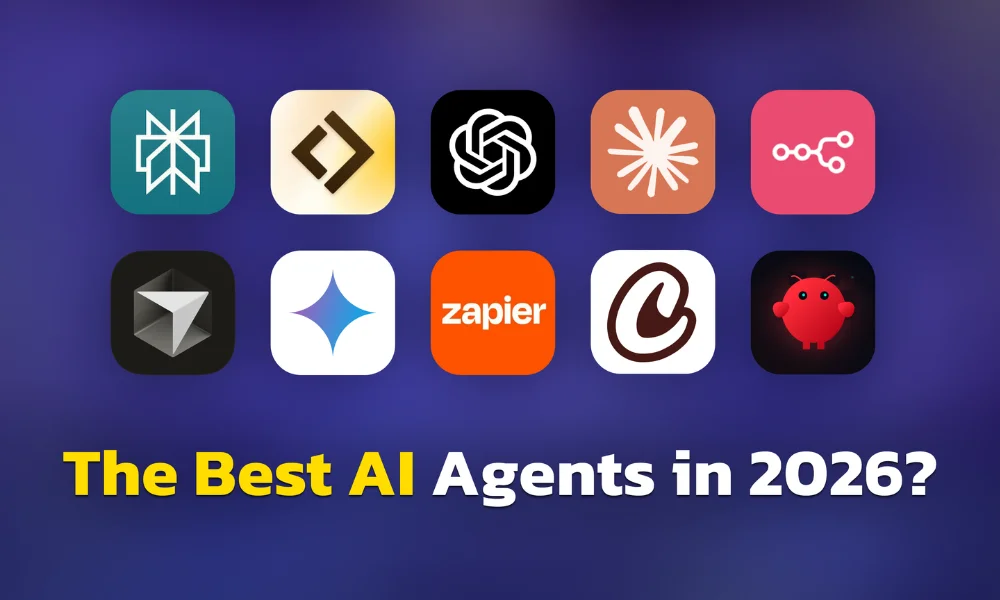
10 Best AI Agent Platforms for Marketing Automation in 2026
The market for AI platforms is crowded, but only a few deliver the autonomy required for true marketing scale. Here are the top 10 platforms categorized by their specific strengths and ideal use cases.
1. Lindy AI: Best No-Code AI Marketing Agent
Lindy excels at handling complex, multi-step marketing operations without requiring you to write code.
-
Best Use Case: Full-cycle campaign management and lead routing.
-
Marketing Strength: It learns from your brand voice and can manage outreach, lead scoring, and CRM updates simultaneously.
-
Weakness: Can become expensive as your volume of agent interactions scales.
-
Ideal Users: SMB marketing teams needing a digital employee for day-to-day operations.
2. Zapier AI Agents: Best Workflow AI Tool for Beginners
Zapier has transformed from a simple connector into a powerful agentic platform.
-
Best Use Case: Connecting disparate apps to trigger intelligent actions.
-
Marketing Strength: Unmatched library of over 9,000 app integrations.
-
Weakness: Better for linear workflows than for complex, open-ended autonomous research.
-
Ideal Users: Marketers who are new to AI and need to connect existing tools quickly.
3. Make.com AI Workflows: Best Visual Automation Builder
Make provides a highly visual canvas for mapping out intricate, multi-branching marketing funnels.
-
Best Use Case: Complex, multi-step lead and campaign orchestration.
-
Marketing Strength: The Router feature lets you split lead flows into parallel actions across different channels.
-
Weakness: The credit-based pricing model requires careful monitoring as you scale.
-
Ideal Users: Mid-market teams that need highly customized, visual automation logic.
4. n8n: Best Open-Source Workflow AI Tool
n8n offers a self-hosted or cloud-based environment that gives developers full control over their data.
-
Best Use Case: Secure, high-volume data processing and custom pipelines.
-
Marketing Strength: Unrestricted control over your workflows and data privacy.
-
Weakness: Requires technical knowledge for setup and maintenance.
-
Ideal Users: Developers and data-focused marketing teams with strict privacy requirements.
5. Gumloop (Best Data + Marketing Automation Agent)
Gumloop bridges the gap between raw data analysis and actionable marketing tasks.
-
Best Use Case: Research-heavy tasks like competitor monitoring and content briefing.
-
Marketing Strength: Combines deterministic steps with AI reasoning for repeatable processes.
-
Weakness: Best for recurring tasks; less effective for simple, one-off chat requests.
-
Ideal Users: Teams that need to formalize repetitive data-driven research workflows.
6. HubSpot AI Agents: Best CRM Marketing Automation Platform
HubSpot integrates agentic capabilities directly into your primary source of customer data.
-
Best Use Case: Full-funnel lifecycle management.
-
Marketing Strength: Agents act with full awareness of your CRM history, ensuring personalization is always grounded in real data.
-
Weakness: Tied strictly to the HubSpot ecosystem; not a standalone do anything tool.
-
Ideal Users: Marketing teams already embedded in the HubSpot ecosystem.
7. Salesforce Agentforce: Enterprise AI Agent Platform
Agentforce brings autonomous decision-making to the massive Salesforce ecosystem.
-
Best Use Case: Large-scale omnichannel marketing and enterprise orchestration.
-
Marketing Strength: Deep integration with enterprise-grade data and governance.
-
Weakness: High complexity and cost; overkill for smaller organizations.
-
Ideal Users: Large enterprises needing global, secure marketing automation.
8. CrewAI: Best Multi-Agent Marketing System for Developers
CrewAI allows you to orchestrate teams of specialized agents that "talk" to each other to complete goals.
-
Best Use Case: Complex research, planning, and content creation tasks.
-
Marketing Strength: Multi-agent collaboration mimics a real human team.
-
Weakness: High barrier to entry; requires programming expertise.
-
Ideal Users: Technical teams building custom agent systems from scratch.
9. Microsoft Copilot Studio: Best Enterprise AI Integration
Copilot Studio leverages the power of the Microsoft 365 stack to build agents that work where you already live.
-
Best Use Case: Internal business workflows and enterprise knowledge management.
-
Marketing Strength: Excellent security and governance for large organizations.
-
Weakness: Less specialized for pure marketing funnel growth compared to dedicated tools.
-
Ideal Users: Enterprises deep in the Microsoft ecosystem.
10. StackAI: Best AI Agent Builder for Business Workflows
StackAI provides a low-code environment focused on back-office and operations automation.
-
Best Use Case: Automating data-heavy business tasks and internal marketing operations.
-
Marketing Strength: Highly reliable for regulated verticals requiring strict compliance.
-
Weakness: Enterprise-focused sales motion can lead to long procurement cycles.
-
Ideal Users: Large businesses needing secure, enterprise-grade back-office automation.
Comparison of Marketing Automation Systems
| Platform | Type | Best For | No-Code? | Marketing Use Case | Starting Price |
| Lindy | AI Agent | SMB Marketing | Yes | Email + CRM Automation | $50/mo |
| Zapier | Workflow AI | Beginners | Yes | App Automation | $20/mo |
| Make | Workflow AI | Visual Workflows | Yes | Campaign Orchestration | $10/mo |
| n8n | Workflow AI | Developers | No | Advanced Pipelines | Free / $24/mo |
| HubSpot AI | CRM AI | Marketing Teams | Yes | Full Funnel Automation | $50/mo (base) |
| Agentforce | Enterprise AI | Large Orgs | Partial | Enterprise Marketing | Contact Sales |
AI Agent Marketing Use Cases
Agents are changing how we handle daily marketing operations by taking on tasks that previously required human intuition and manual effort.
| Use Case | AI Agent Action | Marketing Output |
| Lead Generation | Auto-scraping + smart scoring | Highly qualified leads |
| Email Marketing | Creating personalized sequences | Higher click-through rates |
| Ad Campaigns | Real-time budget optimization | Lower cost-per-acquisition (CPA) |
| Social Media | Autonomous content creation + posting | Consistent engagement growth |
| Customer Journeys | Dynamic path personalization | Improved conversion rates |
AI Agent Platforms vs. Workflow AI Tools
It is vital to understand that these two technologies solve different problems. Most high-performing teams now use them in combination to create a balanced, reliable marketing stack.
-
Workflow AI Tools are your train on tracks. You map out every step in advance, and the system executes it with perfect consistency. These tools are ideal for AI automation tools that require strict rules, such as data syncing or compliance-heavy processes where you cannot afford deviation.
-
AI Agent Platforms are your autonomous drivers. You give them a destination (a goal), and they decide the best route to take. They use no-code AI tools and reasoning to handle tasks that are too messy or unpredictable for a fixed script.
| Feature | Workflow AI Tools | AI Agent Platforms |
| Control | Human-scripted (Fixed) | Autonomous (Decision-based) |
| Reliability | Extremely high (Predictable) | Moderate (Needs monitoring) |
| Best For | Repetitive, rule-based tasks | Open-ended, complex goals |
| Flexibility | Low (Follows the path) | High (Adapts to context) |
The most effective marketing strategies use workflow AI tools for the plumbing moving data and triggering events and AI agent platforms for the thinking, such as reading unstructured feedback, writing nuanced content, or adjusting bids in real-time. Do not try to solve everything with an agent; use the right tool for the specific layer of your marketing funnel.
Risks, Limitations, and Governance
Moving from manual tasks to autonomous agents brings real responsibilities. To protect your brand, you must manage these four core risks.
-
Data Privacy: Agents connect to your private customer data. Ensure they only access what is necessary and use secure, private connections to prevent leaks.
-
AI Hallucinations: Agents sometimes confidently present incorrect information. Always force your agents to verify facts against your own internal database rather than relying on public internet knowledge.
-
Compliance and Regulations: Laws like GDPR require you to explain why a system made a specific decision about a customer. You must keep clear, simple logs of every automated action your agents take.
-
Over-Automation: If you automate every single touchpoint, your brand will sound robotic and disconnected. Always keep a human in the loop for sensitive messages to ensure your brand voice stays authentic.
Pro Tip: Create a simple kill switch policy. If an agent starts acting strange or missing the mark, be ready to pause it immediately. Your strategy should always be Human-led, AI-executed.
The Future of AI Marketing (2026–2030)
Marketing is changing fast. Over the next few years, we will stop just using tools and start working alongside autonomous systems that can actually think and solve problems.
-
Self-Running Systems: Instead of you manually updating ads or emails, your systems will watch the market and make changes on their own. They learn from every success and failure to get better every day.
-
Your Digital Team: Think of AI agents as specialized digital employees. They will handle the boring, repetitive work like researching competitors or organizing leads, which leaves you free to focus on the big, creative decisions.
-
Agent-to-Agent Shopping: Soon, a customer's personal AI assistant will talk directly to your company’s AI. They will compare your products, ask questions, and handle the purchase without a person ever needing to visit your website.
-
Smarter Ad Spending: Ad management will stop being a guessing game. AI systems will test different options in the background, move your budget to the best-performing channels, and stop wasting money on ads that do not work.
How to Get Ready
-
Keep Your Data Clean: Make sure your website and product info are clear and organized so these AI shoppers can find exactly what they need.
-
Stay Involved: Treat your AI tools like members of your team. Give them clear goals, check their work, and always keep your own brand values at the center of the strategy.
-
Build Trust: As these systems start making deals on your behalf, your brand’s honesty and reputation will become your most important competitive advantage.
Conclusion
We are moving from simple automation to a new era of autonomy, where marketing systems learn, adapt, and handle complex tasks on their own. By combining AI agent platforms, workflow AI tools, and no-code AI tools into one smart ecosystem, you can finally move past repetitive busywork to focus on the big-picture strategy that actually drives growth.
At Memorable.Design, we focus on designing future-ready systems where AI agent platforms, workflow AI tools, and no-code AI tools come together to redefine marketing automation in 2026 and beyond.
Frequently Asked Questions
What are AI agent platforms for marketing?
They are smart tools that act like digital assistants. Instead of just following basic instructions, they use logic to plan and finish entire marketing projects from start to finish on their own.
Which is the best AI agent platform in 2026?
It depends on your goals. Lindy is great for simple business tasks, while n8n is perfect for tech-focused teams. If you already use HubSpot or Salesforce, their built-in agents are often the smartest choice for your specific workflow.
Are AI automation tools the same as AI agents?
Not quite. Automation tools are like a conveyor belt they do exactly what you set them to do. AI agents are more like a smart teammate you give them a goal, and they figure out the best way to get it done.
Do no-code AI tools replace marketers?
Definitely not. They just take the boring, repetitive chores off your plate. This gives you more time to focus on the creative work, big-picture strategy, and building real relationships with your customers.
What is the difference between workflow tools and AI agents?
Workflow tools follow a strict, pre-set path that you build. AI agents are more flexible they look at the task, decide on the best route, and make adjustments on the fly if things change.
