
Google core update recovery is a process, not a quick trick. You confirm the drop, study what changed, audit your content, and improve the pages that matter most. Then you measure and adjust. Sites recover by raising real quality, not by gaming the system.
Google core update recovery starts with one honest truth: your rankings did not vanish by accident. A core update reshuffled how Google reads quality, and your site landed on the wrong side of that shift. At memorabledesign, we have guided growth brands through these drops for years, and the pattern is always the same. Panic does not fix rankings. A clear plan does.
This guide gives you that plan. We will show you how to diagnose the damage, decide what to fix, and rebuild trust with both readers and search engines.
What Is a Google Core Update?
A core update is a broad change to how Google ranks pages. It does not target one site or one tactic. A drop is not always a penalty. A penalty is a manual action for breaking rules. A core update drop is different. Google simply re-decided who deserves the top spots, and your competitors looked stronger this time.
So the fix is not undo a violation. The fix is earn the ranking back by being clearly more useful. That mindset shapes your whole google core update recovery.
Why Your Site Lost Rankings
Most drops come from content that no longer signals enough quality, experience, or trust compared to competing pages. A few common causes show up again and again. Your content may feel thin next to deeper resources. It may lack real experience. It may chase keywords instead of answering the question.
Weak pages also drag down strong ones, since Google judges site-wide patterns. And slow, cluttered design pushes users away fast, which sends a bad signal too. This is why google core update recovery is both a content and a design job.
The Memorable Recovery Loop: Our Core Update Recovery Framework
We built a simple model to keep recovery focused. We call it the Memorable Recovery Loop. It has five stages, and you repeat them as data comes in.
- Confirm. Verify the drop is tied to a core update, not a tracking glitch.
- Diagnose. Find which pages and topics lost the most, and study why.
- Improve. Rebuild content quality, experience signals, and page design.
- Strengthen. Clean up weak pages and grow real authority.
- Measure. Track rankings and traffic, then loop back with new insight.
This loop keeps google core update recovery practical. You always know what stage you are in and what comes next.
Step-by-Step Google Core Update Recovery
Recover by confirming the update timing, auditing affected pages, raising content and design quality, and giving Google time to re-evaluate your site.
1: Confirm the Drop Lines Up With an Update
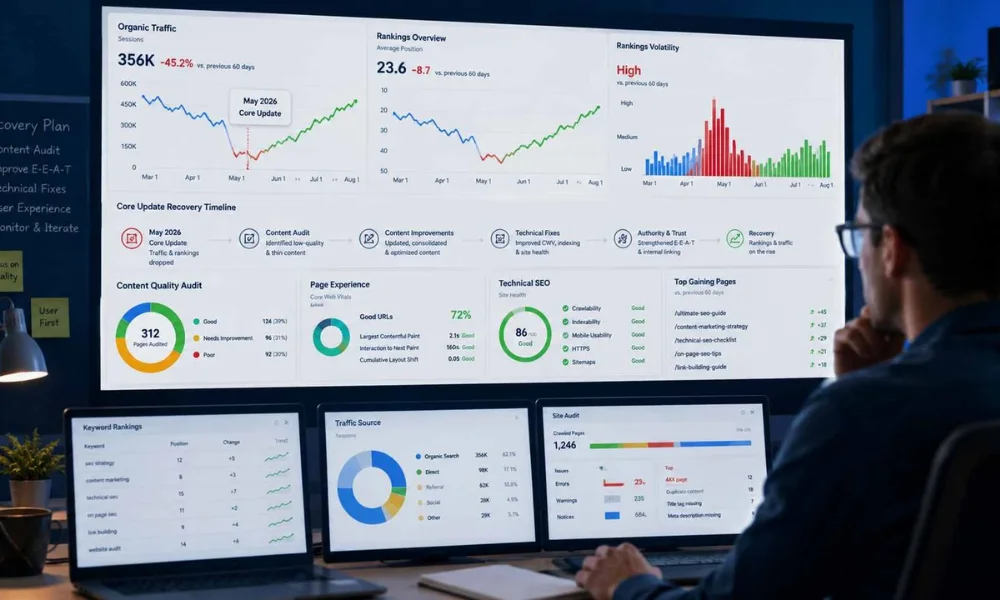
First, match your traffic loss to a known core update date. Open Google Search Central and check the ranking updates log. Then compare those dates to the moment your traffic fell. If the drop starts near an update rollout, you are dealing with a core update issue. If it does not line up, look for other causes like a redirect mistake or a technical bug.
2: Find the Pages That Lost the Most
Next, open Google Search Console. Compare the months before and after the update. Sort by clicks and impressions lost so you can see which pages took the hit. Group those pages by topic. Often a whole cluster drops together, which points to a quality gap in that subject. This makes your google core update recovery far more focused.
3: Audit Content Against Quality Signals
Now read your losing pages as a skeptical user would. Does this page answer the query fully? Does it show real experience? Would a reader trust it over the pages now ranking above you? Compare your page side by side with the new top results. Look for depth, clarity, fresh data, and genuine expertise. The gap you find is your roadmap.
4: Improve the Pages That Matter
Then rewrite and upgrade. Add first-hand insight, real examples, and clear answers near the top. Cut filler. Fix the title and structure so the page reads cleanly and loads fast. Do not change everything at once. Improve your highest-value pages first, since those drive the most revenue.
5: Clean Up Weak Pages Across the Site
After that, look at thin or outdated pages that add little value. Improve them, merge them, or remove them. A leaner, stronger site sends a better quality signal overall. This step helps the whole domain, not just the pages you fixed. Strong sites recover faster.
6: Strengthen Real Authority
Then build genuine authority. Earn links from respected sites, publish original insight, and show that experts stand behind your content. Authority is the backbone of lasting google core update recovery.
7: Measure and Repeat
Finally, watch your data over weeks, not hours. Track rankings, clicks, and engagement. Recovery is gradual, and the next core update often confirms the gains you earned.
How Long Does Recovery Take?
Most sites see real movement over weeks to months, and full recovery often arrives during the next core update. Patience is part of the job. Google does not re-rank your improved pages instantly. The system needs to re-crawl, re-assess, and trust your changes.
So set honest expectations. You may see early signs within a few weeks as Google re-crawls. Bigger gains often show up at the next core update. Real google core update recovery rewards steady effort, not panic edits.
Smart Moves vs Costly Mistakes
| Smart Recovery Move | Costly Mistake |
|---|---|
| Audit and improve top pages first | Rewriting random pages with no data |
| Add real experience and depth | Stuffing keywords for quick wins |
| Fix slow, cluttered page design | Ignoring user experience |
| Remove or merge thin pages | Leaving weak pages to drag the site |
| Wait and measure over weeks | Reverting changes after a few days |
| Build genuine authority | Buying low-quality links |
Real-World Use Cases
Consider a growth brand that publishes helpful guides but also keeps dozens of thin, old blog posts. After a core update, traffic falls across the whole blog. The fix is rarely one page. We improve the strong guides, then prune the weak posts, and trust returns across the site.
Now picture a service business with great content but a slow, dated website. Users bounce before reading. Here, google core update recovery depends heavily on design. We rebuild the page speed and layout, and the content finally gets a fair shot.
These cases show why Memorable Design joins SEO and design. One without the other leaves easy wins on the table.
Benefits of a Structured Recovery Process
A clear process gives you control. You stop guessing and start fixing the right things in the right order. That saves time and money. It also protects future traffic. Sites that recover through real quality tend to hold up better in later updates. You are building a stronger foundation.
Most of all, it ties traffic to revenue. Smart google core update recovery improves both rankings and the path to purchase.
Limitations and Honest Expectations
Recovery is not guaranteed for every page.
- Some lost rankings reflect stronger competitors who simply earned the spot. In those cases, you must outwork them.
- Speed is also out of your hands. You can control the quality of your fixes, but Google controls the timeline. Promises of instant recovery are red flags.
- And not every drop is content related. Technical issues and tracking errors can mimic an update hit. Always confirm the cause before you start your google core update recovery work.
Common Mistakes That Slow Recovery
The biggest mistake is impatience.
- Brands change their pages, see no instant lift, and revert within days. That resets the clock.
- Another mistake is chasing tactics over quality. Keyword stuffing, thin AI spam, and shady links sink sites now. Build for the reader instead.
- A third mistake is fixing the wrong pages. Let Search Console guide your google core update recovery, not gut feeling.
Best Practices for Lasting Visibility
Lead with real experience. Show that a person with hands-on knowledge created the content. First-hand insight is hard to fake and easy for readers to trust. Keep pages focused and clear. Answer the main question fast, then add depth. Pair that with clean design and quick load times so users stay and engage.
Maintain the whole site, not just star pages. Refresh old content and remove dead weight. Strong domains recover faster.
Expert Tips From Memorable Design
Recovery is not about tricking the algorithm, says Ruslan Smirnov, founder of Memorable Design and an SEO specialist with more than twenty years of experience. It is about proving, page by page, that you deserve the spot. We treat SEO and design as one system because users judge both at once, and so does Google.
He adds a practical rule. Fix the pages closest to revenue first. A recovered service page changes the business.
Industry Trends Shaping Recovery in 2026
Search now blends classic results with AI answers.
- Google AI Overviews, AI Mode, and tools like ChatGPT Search, Gemini, Claude, and Perplexity pull from trusted, well-structured pages. Clear, citable content wins more placements.
- Quality signals keep rising. Google leans harder on experience and trust, so generic content fades fast. Brands that show real expertise gain an edge during every core update.
- User experience also carries more weight. Fast, clean, mobile-friendly design is no longer optional. This is why google core update recovery now depends on content and design working together.
Future Outlook: 2026 to 2028
Expect core updates to keep rewarding genuine helpfulness. As AI floods the web with average content, original insight and proven experience will only grow in value. AI search will also reshape recovery. Pages built to answer questions clearly will earn both rankings and AI citations. Brands that ignore this shift lose visibility on two fronts.
The smart move is to build durable quality now. Treat each google core update recovery as a chance to strengthen your whole site, and future updates become tailwinds.
Conclusion
A core update drop feels brutal, but it is not the end. With a clear plan, you can diagnose the damage, raise real quality, and earn your rankings back. Google core update recovery rewards brands that focus on the reader and respect the timeline.
If your traffic dropped and you want a clear path forward, Memorable Design can help. Book a free SEO audit, and we will show you where your site stands and what your recovery roadmap looks like.
Frequently Asked Questions
How long does Google core update recovery take?
It usually takes weeks to months. Early signs may show within a few weeks, but full recovery often arrives at the next core update, when Google re-scores the whole landscape.
Can you fully recover from a Google core update?
Yes, many sites recover fully, but not automatically. It depends on raising real content quality, fixing design and trust issues, and clearly outperforming the competitors who replaced you.
Is a core update drop a penalty?
No. A penalty is a manual action for breaking rules. A core update drop means Google re-decided which pages rank best. You were outranked, not punished.
Should I change my content after a core update?
Yes, but only with data. Use Search Console to find the pages that lost traffic, then improve those first with real experience, depth, and clarity.
Do Google core updates reverse on their own?
Rarely. Waiting alone seldom restores rankings. Google reassesses at the next core update, but it rewards real improvement. Active fixes drive recovery, not passive waiting.
