
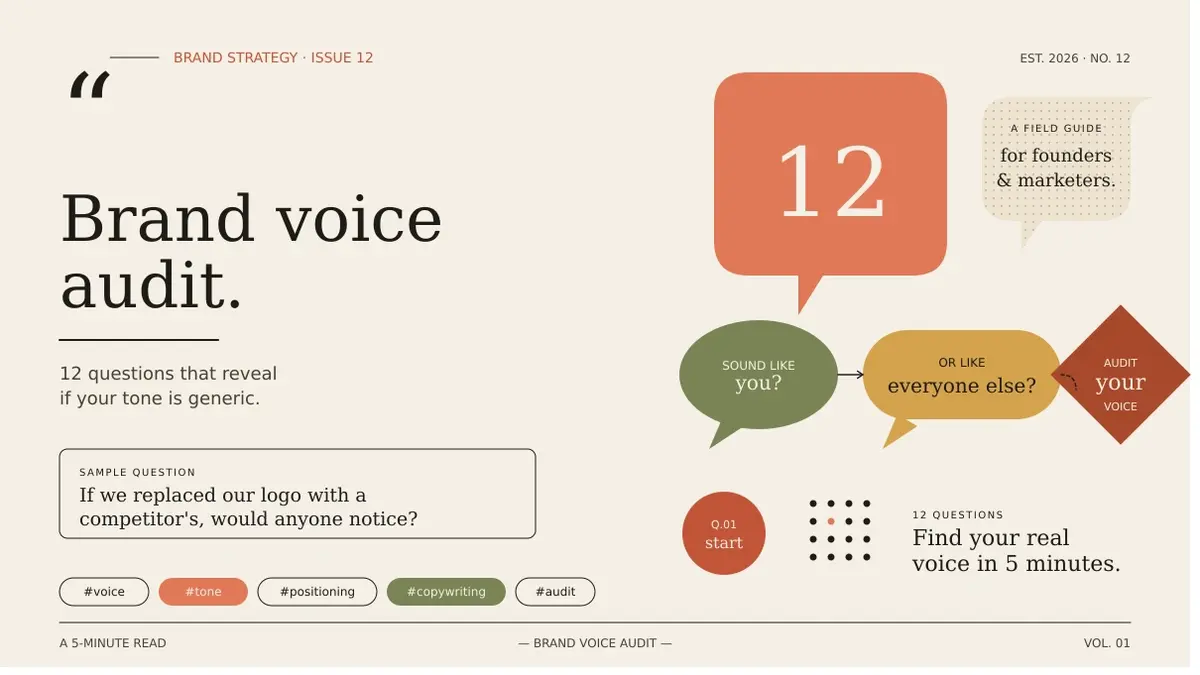
The blog outlines how to conduct a brand voice audit to ensure your business's communication is unique, consistent, and reflects its values. It emphasises the importance of having a distinct personality in a digital world full of AI-generated content. The audit process involves reviewing past content and defining clear boundaries for your brand's tone, such as being professional but not stuffy or witty but not sarcastic.
If you removed your logo from your website, would your customers still recognize your brand just by reading the text? For most businesses, the answer is a sobering "no." In a digital landscape saturated with AI-generated filler, a distinct personality is the only thing standing between you and total obscurity. A brand voice audit is the process of evaluating your written and verbal communication to ensure it is unique, consistent, and reflective of your values. By asking specific, pointed questions about your content, you can identify where your personality is flat and replace it with a tone that resonates.
A thorough brand voice audit typically involves reviewing your last six months of content across social media, emails, and your website. To escape the trap of being generic, you must define your "We are X, but we are not Y" boundaries. For example, you might be professional but not stuffy, or witty but not sarcastic. Using a tone of voice framework helps you document these nuances so every writer on your team hits the same notes. At Memorable Design, we believe that clarity is the foundation of charisma; without a deep dive into your current messaging, you are simply shouting into a void of beige.
Why a Brand Voice Audit Is Non-Negotiable in 2026
The internet is currently facing a "sameness" crisis. As more companies rely on basic AI prompts to churn out blog posts, the average brand has become a repetitive echo of its competitors. This is why a brand voice audit is no longer a luxury for big corporations—it is a survival tactic for everyone.
When your voice is generic, you lose trust. Trust is built on the feeling that there is a real human or a dedicated group of experts behind the screen. If your tone shifts from "corporate robot" on LinkedIn to "chaotic teenager" on TikTok, your audience gets confused. Confusion is the ultimate conversion killer. By conducting a systematic review, you align your messaging with your brand personality test results, ensuring that every touchpoint reinforces who you are.
12 Questions to Reveal a Generic Tone
To help you get started, we have compiled the ultimate checklist. These questions are designed to strip away the "marketing speak" and expose the true character or lack thereof in your writing.
1. Does this sound like a human wrote it?
Read your latest Instagram caption or email blast out loud. If you find yourself tripping over complex jargon or sentences that lack a natural rhythm, you have a generic problem. A brand voice audit should prioritize "ear-testing" your content.
2. Is our vocabulary too safe?
Generic brands use words like "innovative," "passionate," and "solutions-oriented." These words have been stripped of meaning. Search for brand voice examples of companies like Mailchimp or Old Spice; they use specific, colorful language that paints a picture rather than a spreadsheet.
3. Can I identify our "Non-Negotiable" words?
Every brand should have a list of words they love and words they ban. If you don't have a "Never Use" list, your tone will naturally drift toward the middle of the road.
4. Who are we talking to—really?
If your content is written for "everyone," it is written for no one. A generic tone often stems from a fear of alienating a secondary audience. A tone of voice framework requires you to pick a side and speak directly to your ideal customer's specific pains and joys.
5. What is our "Vibe" on a Brand Personality Test?
Think of your brand as a person. Are they the reliable mentor or the rebellious innovator? If you haven't taken a brand personality test for your business lately, you might be trying to play too many roles at once.
6. Do we use active or passive voice?
Passive voice ("Our goals were achieved") is the hallmark of a boring brand. Active voice ("We crushed our goals") shows energy and accountability.
7. How do we handle mistakes?
A generic brand uses a PR-vetted apology. A brand with a voice shows vulnerability. Does your "404 Error" page make people smile, or is it a dead end?
8. Is our humor consistent?
If you make a joke on Twitter but are dead serious in your newsletter, your brand feels disjointed. A brand voice audit tracks these inconsistencies across platforms.
9. Are we following the "Industry Standard" too closely?
Look at your three biggest competitors. If your website looks like their website and sounds like their website, you aren't a brand; you're a commodity.
10. Does our tone change based on the customer’s emotional state?
A good tone of voice framework includes "emotional modulation." You should sound different in a celebration email than you do in a technical support ticket, yet the core personality remains recognizable.
11. What is our stance on trending slang?
Nothing kills a brand's authority faster than using slang that doesn't fit its age or industry. If you’re a law firm using Gen-Z slang, you’ve likely failed your brand personality test.
12. Could this content be published by any other company?
This is the ultimate "Generic Filter." If you can swap your name for a competitor’s and the post still makes perfect sense, it’s time for a total brand voice audit.
Building a Tone of Voice Framework
Once you’ve identified that your voice is a bit stale, you need a structure to fix it. A tone of voice framework is more than just a list of adjectives. It is a functional document that guides every piece of content you produce.
| Element | Definition | Example for a Bold Brand |
| Tone | The emotional quality of the communication. | Confident and punchy. |
| Voice | The unwavering personality of the brand. | The "Challenger." |
| Punctuation | Rules for emojis, exclamations, and caps. | Occasional bolding; no exclamation points. |
| Format | How the text is physically laid out. | Short paragraphs; one-sentence hooks. |
At Memorable Design, we use this framework to ensure that our internal communications reflect our commitment to creativity. By documenting these rules, you take the guesswork out of writing and ensure that even a new freelancer can sound like they’ve been with you for years.
Analyzing Successful Brand Voice Examples
The best way to understand how to escape the generic trap is to look at those who have already done it. Looking at brand voice examples helps you see how "rules" are applied in the real world.
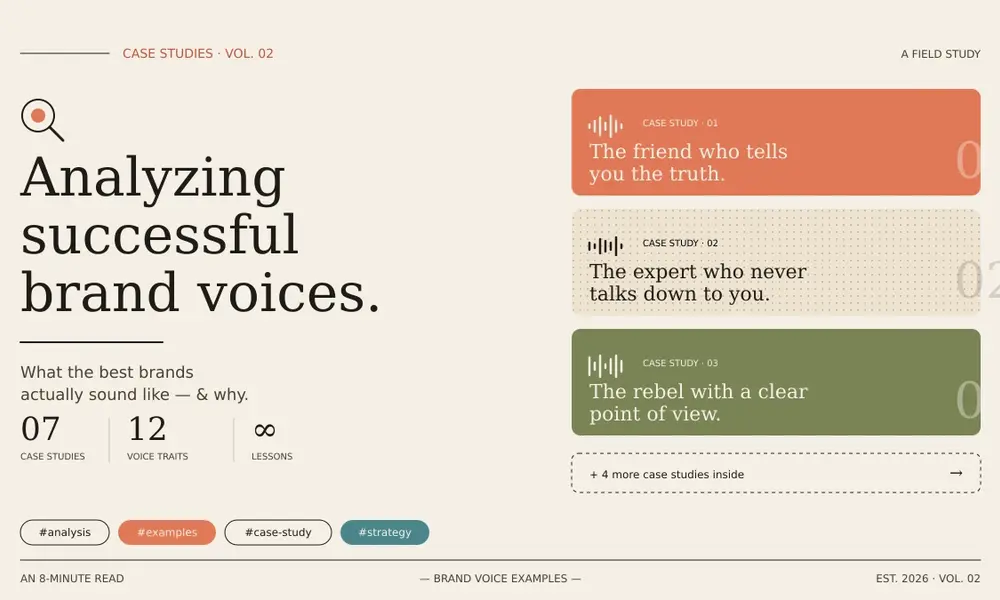
Take a company like Liquid Death. Their voice is aggressive, hilarious, and completely irreverent. They treat water—a basic commodity—like a heavy metal concert. Their brand voice audit would likely reveal that they never use the word "hydration" in a boring way. Instead, they talk about "murdering your thirst."
On the opposite end, look at Patagonia. Their voice is grounded, urgent, and deeply ethical. They don't use hype or clickbait. They use clear, documentary-style prose that reflects their brand personality test results as an "Explorer/Protector." Both brands are wildly successful because they picked a lane and stayed in it.
Steps to Execute Your Own Audit
Doing a brand voice audit doesn't have to be an overwhelming task. You can break it down into manageable phases to ensure you're getting helpful, actionable data.
Phase One: Content Collection
Gather samples from every corner of your business. Include internal memos, customer service scripts, "About Us" pages, and social media posts. You need a birds-eye view of your communication habits.
Phase Two: Pattern Identification
Look for the common threads. Are you overusing certain buzzwords? Is your sentence structure repetitive? Note where the tone feels "off" compared to your goals. This is often where a brand personality test can help you see the gap between who you think you are and how you actually sound.
The Role of Visuals in Your Brand Voice
While this guide focuses on words, your voice is heavily influenced by your visual choices. Typography, color palettes, and imagery all "speak" to the audience. At Memorable Design, we often find that a brand's voice is hindered by visuals that don't match the tone.
If your writing is bold and adventurous, but your website uses soft pastels and thin fonts, there is a disconnect. A brand voice audit should ideally coincide with a visual audit. When your words and your design are in sync, you create a cohesive experience that feels "Premium" and trustworthy.
Summary of Audit Findings
- Audit Frequency: You should perform a brand voice audit at least once a year or after any major pivot.
- The Power of No: A strong voice is defined as much by what it isn't as what it is.
- Frameworks Save Time: Use a tone of voice framework to onboard new team members and maintain consistency.
- Humanity Wins: In the age of AI, the most "Memorable Design" is one that sounds like a real person.
- Test Your Personality: Use a brand personality test to find your core archetypes (e.g., The Sage, The Hero, The Magician).
Conclusion: Don't Be a Wallflower
The biggest risk in modern marketing is being ignored. A generic brand voice is safe, but "safe" doesn't build empires. By conducting a rigorous brand voice audit, you give yourself permission to be different. You move away from industry cliches and toward a way of speaking that truly connects with your customers.
At Memorable Design, we believe that every word you publish is an opportunity to strengthen your bond with your audience. Use these 12 questions to gut-check your current content and build a tone of voice framework that serves as a lighthouse for your brand. Stop settling for "fine" and start aiming for unforgettable. When you find your true voice, the right customers won't just listen—they will join the conversation.
Frequently Asked Questions
What is a brand voice audit exactly?
A brand voice audit is a comprehensive review of all your brand's communications. The goal is to ensure your tone is consistent, aligns with your values, and stands out from competitors. It identifies "generic" language and replaces it with specific, personality-driven content.
How do I use a brand personality test for my business?
A brand personality test helps you assign human traits to your company. By determining if your brand is, for example, "Sophisticated" or "Rugged," you can then choose vocabulary and a tone of voice framework that reflects those specific traits.
Can you provide some unique brand voice examples?
Certainly. Brand voice examples like Duolingo (playful and slightly threatening), Dove (nurturing and empowering), and Harley Davidson (rugged and rebellious) show how a distinct tone creates a loyal community that a generic brand could never achieve.
Why do I need a tone of voice framework?
Without a tone of voice framework, your messaging will be inconsistent. A framework acts as a "style guide" for your personality, ensuring that whether a CEO or an intern is writing a post, it always sounds like it's coming from the same brand.
How often should I update my brand voice?
While your core values shouldn't change often, your tone should evolve with the culture. Revisiting your brand voice audit results every 12 to 18 months ensures you aren't sounding "dated" or out of touch with your audience's current needs.
