
Relaunching a website is an exciting milestone for any brand. It brings fresh visuals, improved user experiences, and updated messaging. However, without a dedicated plan, a design update can quickly turn into an organic search disaster. The secret to preserving your hard-earned rankings lies in following a comprehensive website redesign seo checklist.
A thorough website redesign seo checklist ensures that your search visibility, incoming traffic, and domain authority remain protected throughout the rebuild. By addressing common redesign mistakes early and executing a precise migration seo strategy, you can launch a modern site without losing your position on search engine results pages.
Why a Redesign SEO Checklist Is Essential
Design agencies excel at creating beautiful layouts, but technical search optimization is rarely their main focus. When a site undergoes structural changes, page URLs, navigation hierarchies, and code frameworks shift. Without a structured website redesign seo checklist, critical technical elements get overlooked.
Executing a systematic website redesign seo checklist prevents sudden drops in traffic. It ensures that search engine crawlers transition smoothly from your old site structure to your new platform without losing contextual history.
Preserving Accumulated Search Authority
Your current website has built up trust over years of activity. Every backlink, indexed URL, and historical ranking contributes to your overall domain authority. A precise website redesign seo checklist ensures this equity transfers directly to your new pages rather than disappearing during the launch.
Preventing Revenue-Crushing Traffic Drops
Losing rankings after a launch directly impacts incoming leads and sales. Avoiding standard redesign mistakes keeps your digital sales funnel active, preventing the costly downtime associated with trying to recover lost search positions after the fact.
The Core Website Redesign SEO Checklist
Protecting your organic traffic requires a disciplined approach before, during, and after launch day. Dividing your process into distinct phases helps keep your development team focused on high-priority technical safeguards.
1. Pre-Launch Benchmarking and Mapping
Before touching a single line of code, document your existing site metrics. Skipping this preparation step is one of the most frequent redesign mistakes teams make.
-
Crawl and Benchmark Your Current Site: Run a complete crawl of your existing domain to export all live URLs, title tags, meta descriptions, and header structures.
-
Identify Top-Performing Pages: Map out the pages that drive the most organic traffic and backlinks. These high-value assets require strict protection during your migration seo execution.
-
Block Staging Environments: Ensure your staging site uses
noindextags or HTTP authentication. This prevents search engines from indexing draft pages as duplicate content before launch.
2. Executing Precision Migration SEO
The transition phase requires absolute technical accuracy. Implementing strong migration seo protocols ensures search engine bots follow your site structural updates without getting lost.
-
Create a Detailed 301 Redirect Map: Match every old URL to its exact counterpart on the new site structure. Avoid redirecting all old pages indiscriminately to the homepage, as this dilutes page relevance.
-
Preserve On-Page Content and Headers: Keep core copy, target keywords, and heading structures consistent on high-ranking pages. Drastic content changes can trigger ranking fluctuations.
-
Update Internal Links and Canonical Tags: Ensure all internal body links and canonical tags point directly to the new, live URL structures rather than relying on redirect chains.
3. Post-Launch Technical Verification
Once the new site goes live, your work is not finished. Systematic post-launch testing catches minor issues before they impact your long-term organic performance.
-
Submit Updated XML Sitemaps: Upload your clean, updated sitemap to Search Console immediately after launch to prompt fresh crawling.
-
Monitor Crawl Errors and 404 Pages: Watch your crawl error reports daily during the first two weeks to catch missing redirects or broken links.
-
Verify Analytics and Conversion Tracking: Confirm that your measurement tags, pixel tracking, and event goals operate correctly across all newly published pages.
Comparing Agency Approaches: Standard vs. SEO-First Redesign
Understanding how standard agency approaches differ from an SEO-first methodology highlights why following a website redesign seo checklist is so critical to your bottom line.
| Process Step | Standard Agency Approach | SEO-First Redesign Strategy |
| URL Architecture | URLs are rewritten freely to match new visual navigation labels. | Existing URL structures are preserved whenever possible to retain authority. |
| Redirect Management | Basic redirects applied after launch as 404 errors appear. | Comprehensive 301 redirect map executed before site deployment. |
| Content Preservation | Copy is heavily trimmed or rewritten purely for visual aesthetics. | High-performing copy and keyword placement are protected during design updates. |
| Staging Protocols | Staging sites are left open, risking duplicate content indexing. | Staging environments are strictly password-protected and hidden from search bots. |
Avoiding Common Redesign Mistakes (E-E-A-T)
Search engines prioritize user-centric design, site security, and structural clarity. Relying on real-world technical experience helps you avoid costly redesign mistakes that degrade overall site quality.
Protecting Trust Signals and UX Metrics
Design updates should enhance user experience rather than add unnecessary visual obstacles. Clean usability signals trust directly to both search engines and site visitors.
-
Maintain Core Web Vitals Performance: Avoid overloading your new design with oversized image files, complex animations, or bloated script libraries that slow down mobile load times.
-
Retain Verification Records: Keep ownership verification records, schema markups, and security certificates active during the domain transition.
-
Ensure Accessible Mobile Navigation: Test menu structures and tap targets thoroughly on mobile devices to maintain seamless accessibility.
Eliminating Technical Friction
Even minor technical flaws can prevent search crawlers from indexing your new layout properly.
-
Audit Robot Directives: Double-check that your live
robots.txtfile does not accidentally block search crawlers from accessing key site assets after deployment. -
Eliminate Redirect Chains: Avoid chaining multiple redirects together (URL A to URL B to URL C). Direct 301 links preserve full authority transfer.
-
Check Language and Regional Tags: If operating a multi-regional site, verify that all hreflang tags match your updated site architecture.
Actionable Execution Checklist
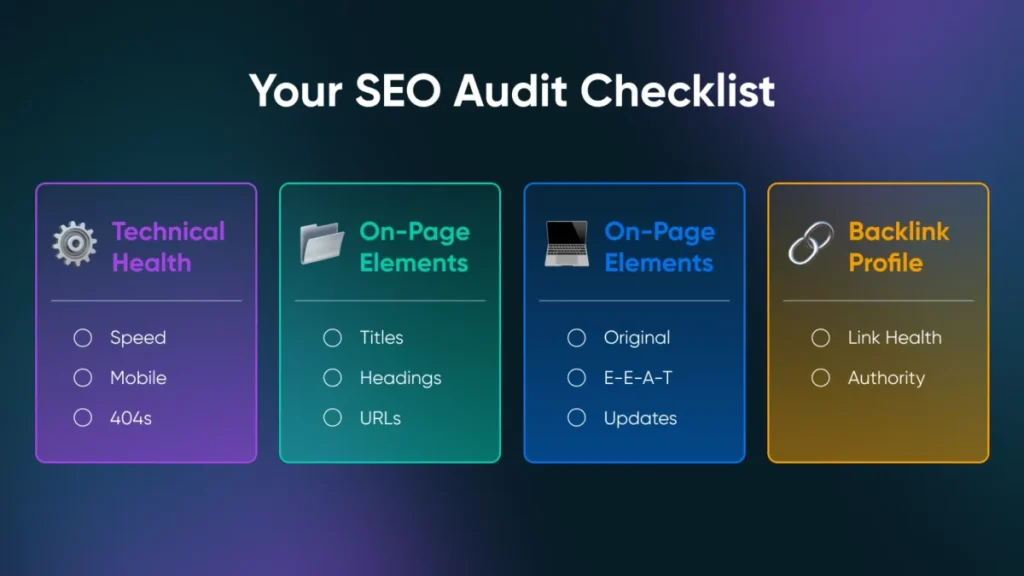
Use this step-by-step checklist to guide your team through a seamless site transition without compromising search rankings.
Summary for Growth
A site rebuild should accelerate your digital growth, not reset your search engine progress. By adhering to a rigorous website redesign seo checklist, managing your migration seo carefully, and actively avoiding technical redesign mistakes, you protect your organic traffic while upgrading your brand identity.
If you are planning a site update and need experienced technical guidance to protect your rankings, explore the high-converting web solutions at memorabledesign.com.
Frequently Asked Questions
Why is a website redesign seo checklist necessary before launching a new site?
A website redesign seo checklist ensures that existing search engine rankings, domain authority, and incoming organic traffic are protected during major site architectural changes.
How does migration seo prevent organic traffic drops?
Targeted migration seo uses structured 301 redirects, canonical tag alignments, and careful URL mapping to pass historical authority seamlessly from old pages to new destinations.
What are the most damaging redesign mistakes companies make?
The most damaging redesign mistakes include deleting high-ranking content without backups, failing to map 301 redirects prior to launch, and accidentally leaving noindex tags on live production environments.
How long does it take for search engines to process a site migration?
Depending on site size and crawl frequency, search engines typically take anywhere from two weeks to two months to fully crawl, process, and re-index a newly migrated website.
Should I change all my URL structures during a redesign?
No. Changing URL structures unnecessarily forces search engines to relearn your site hierarchy. Keeping existing, high-ranking URL paths intact whenever possible is best practice.
