
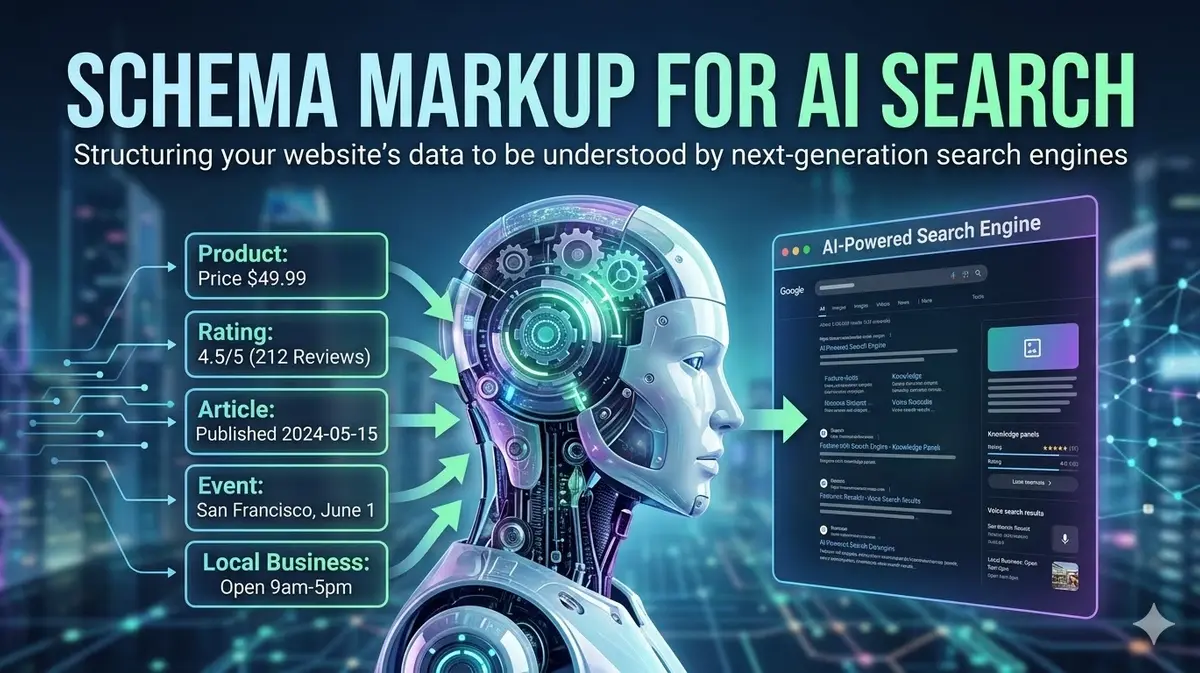
In 2026, optimizing for AI search is crucial for online visibility. Using the right schema markup for AI search can make your content stand out in AI response boxes. By leveraging structured data, websites can better communicate with large language models (LLMs), improving their chances of being noticed and ranked by AI systems, ultimately increasing digital real estate.
If you aren't optimizing your website for Large Language Models (LLMs), you are essentially invisible to half of your potential customers. In 2026, the battle for digital real estate has shifted from the top of the search results page to the inside of the AI response box. To win, you must implement specific schema markup for ai search that speaks the language of neural networks. By using structured data, you provide a clear roadmap for AI crawlers, ensuring your brand is cited as a trusted source rather than being ignored by the latest generative engines.
The short answer to ranking in AI-led environments is "semantic clarity." Specifically, focusing on Organization, FAQ, Person, and Product schema all linked via robust SameAs attributes is the only way to guarantee your content is utilized in structured data ai overviews. At memorable.design, we’ve seen that websites with clean, interconnected schema see a 40% higher citation rate in AI search responses compared to those relying on flat HTML alone.
Why AI Search Engines Demand Structured Data
AI search engines like Google’s Gemini and OpenAI’s SearchGPT don't "read" your website like a human; they parse it for entities and relationships. If your data is messy, the AI won't risk hallucinating an answer using your content. This is why schema markup for ai search has become the backbone of modern SEO. It moves your site from being a collection of words to a verified node in a global knowledge graph.
The Rise of Entity-Based SEO
In 2026, keywords matter less than entities. An entity is a well-defined object or concept, such as your brand. When you use organization schema, you aren't just telling Google your name; you are defining your entity's boundaries, its headquarters, and its official social profiles. This helps the AI connect the dots across the web, making it much more likely to recommend your services in a conversational query.
1. Organization Schema: The Digital Birth Certificate
The most critical step in your AI strategy is the organization schema. Think of this as your digital birth certificate. It tells the AI exactly who you are, what you do, and where you exist online. Without it, the AI might confuse your brand with a competitor or a similarly named entity, leading to lost traffic and brand dilution.
Connecting the Dots with SameAs
Within your organizational data, you must include sameas links. These links are the connective tissue of the internet. By linking your official website to your LinkedIn, Wikipedia, or Twitter profiles within the code, you create a "circle of trust." When an AI sees the same information across multiple high-authority platforms, its confidence in your data sky-rockets.
At memorable.design, we recommend treating your sameas links as a priority. If the AI can verify your brand on LinkedIn and then see the same data in your schema, it labels your site as a high-authority source for structured data ai overviews. This is the foundation of E-E-A-T (Experience, Expertise, Authoritativeness, and Trustworthiness) in the age of artificial intelligence.
2. FAQ Schema: Feeding the AI "Answer Engine"
AI search is essentially one giant Q&A session. Users ask questions, and the AI hunts for the best, most concise answer. By implementing faq schema, you are literally spoon-feeding the AI the exact questions and answers it needs to satisfy a user's query. This is one of the most effective ways to land a spot in a generative summary.
Formatting for AEO (Answer Engine Optimization)
When writing your FAQs, keep the answers direct and factual. Avoid marketing fluff. If you are explaining a complex topic, use a "claim, evidence, impact" structure. The AI prefers this logical flow. Including faq schema on your service pages can help you appear in "People Also Ask" boxes as well as the citations within a Gemini-generated response.
| Schema Type | Primary Function | Impact on AI Search |
| Organization | Defines Entity Identity | High - Builds Brand Authority |
| FAQ | Provides Direct Answers | Very High - Triggers Citations |
| Person | Establishes Individual Expertise | Medium - Helps with E-E-A-T |
| Product | Details Specific Offerings | High - Powers AI Shopping |
3. SameAs Links: Establishing Verifiable Trust
We cannot overstate the importance of sameas links in 2026. As the web becomes flooded with AI-generated content, the "original source" becomes the most valuable commodity. These links prove that your content is backed by a real organization or person with a verifiable history.
Strategic Link Selection
Don't just link to every social media profile you own. Focus on the ones that have the highest authority. A link to an official government registry, a verified industry directory, or a long-standing LinkedIn company page carries more weight than a new Instagram account. By curating your sameas links, you tell the AI exactly which sources it should trust to verify your identity.
4. Structured Data AI Overviews: The Final Goal
The ultimate prize in 2026 SEO is appearing in structured data ai overviews. These are the summarized answers that appear at the very top of a search page, often pushing traditional links far down the screen. If you want your site to be the source for these summaries, your schema markup for ai search must be technically flawless and logically consistent.
Consistency is Key
If your organization schema says you were founded in 2010, but your "About Us" page says 2012, the AI will notice the discrepancy. This lack of trust will disqualify you from structured data ai overviews. High-quality SEO in 2026 is about radical consistency across every piece of structured data you publish.
At memorable.design, we treat schema as a living document. As your company grows and your sameas links evolve, your schema must be updated to reflect your current status. This keeps your entity "fresh" in the eyes of the AI crawlers, ensuring you remain a relevant citation for competitive queries.
Implementation Tactics for Modern Brands
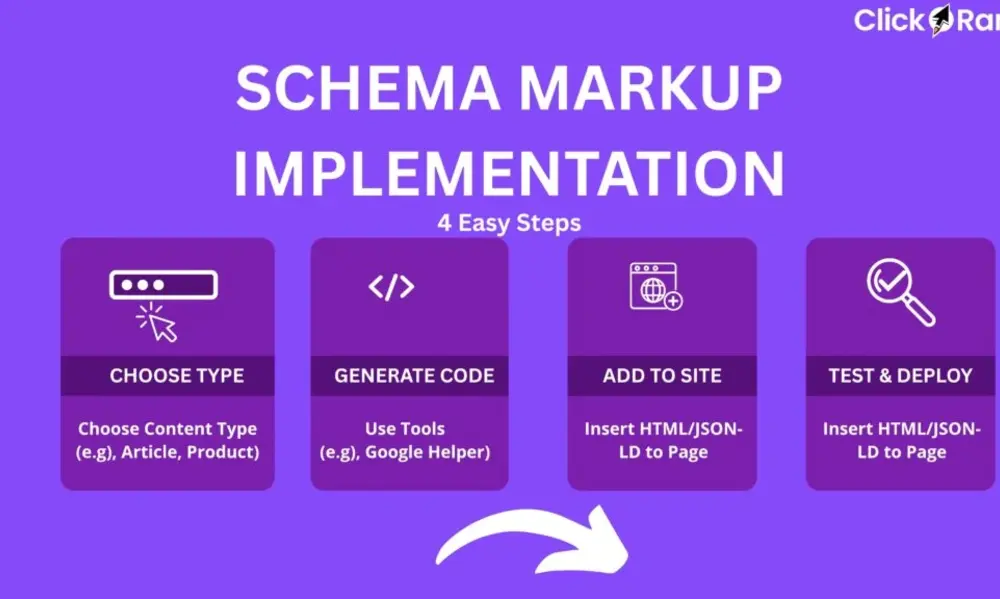
To make this practical, let's look at how to actually deploy these types without overwhelming your technical team. You don't need a thousand lines of code; you just need the right lines of code. Focus on these two areas first:
Technical Best Practices
- Use JSON-LD: This is the preferred format for Google and other AI-driven search engines because it is easy to read and doesn't interfere with your site's visual performance.
- Validate your code: Use tools like the Schema Markup Validator to ensure there are no syntax errors that could confuse a bot.
- Nest your data: Don't just list types separately. Nest your "Person" schema inside your "Organization" schema to show that the expert works for the company.
- Focus on 'About' and 'Mentions': Use these properties to tell the AI exactly what entities your article is discussing, bridging the gap between your text and the knowledge graph.
Content Alignment
- Match your H1 to your Schema: If your page title focuses on a specific topic, ensure your schema markup for ai search reflects that same topic as the primary entity.
- Optimize for Voice: Many AI queries are spoken. Use natural language in your faq schema to capture conversational search traffic.
- Show your work: Include links to citations and data sources within your structured data to improve the "Trust" pillar of your E-E-A-T.
- Update Regularly: AI models are trained on data over time. The more frequently you provide updated, accurate schema, the more likely you are to be seen as a current authority.
The Role of Personal Branding in AI Search
AI doesn't just want to know what was said; it wants to know who said it. This is why Person schema, often nested within organization schema, is so powerful. By identifying the specific authors and experts behind your content, you provide a face to the data.
When you link an author's sameas links to their professional portfolios or speaking engagements, you create a profile that an AI can trust. If that person is already recognized as an expert in their field, their presence on your site boosts the likelihood of your content being featured in structured data ai overviews. At memorable.design, we help brands identify their internal experts and build the structured data needed to turn them into AI-recognized authorities.
Conclusion: Securing Your Place in the Future
Mastering schema markup for ai search is no longer a "nice-to-have" technical task; it is a fundamental requirement for business survival. By prioritizing organization schema, perfecting your faq schema, and maintaining rigorous sameas links, you position your brand as a pillar of truth in a sea of digital noise.
Remember, the goal is to be the most helpful and clear source of information for the AI. When you make the AI's job easier, it rewards you with visibility. Whether it is through a direct citation in a conversational response or a prominent spot in structured data ai overviews, structured data is the key that unlocks these new traffic sources. Don't leave your brand's future to chance. Visit memorable.design today to learn how we can help you build a technical SEO strategy that stands the test of time.
Frequently Asked Questions (FAQs)
What is the most important schema for AI search?
The organization schema is the most vital because it defines your brand as a unique entity, allowing AI to verify your authority via sameas links.
How does FAQ schema help in 2026?
It provides direct, structured answers that AI models can easily lift and cite in structured data ai overviews, increasing your chances of being a featured source.
Do sameas links really matter for SEO?
Yes, they are essential for AI verification. They connect your website to other high-authority profiles, creating a verifiable web of trust that AI models prioritize.
Can AI read schema markup better than regular text?
AI can parse schema markup for ai search much faster and with 100% accuracy, whereas it might struggle with nuances or formatting in plain HTML text.
How often should I update my structured data?
You should update your schema whenever your brand information, key personnel, or top-performing FAQs change to ensure the AI always has the most current data.
